
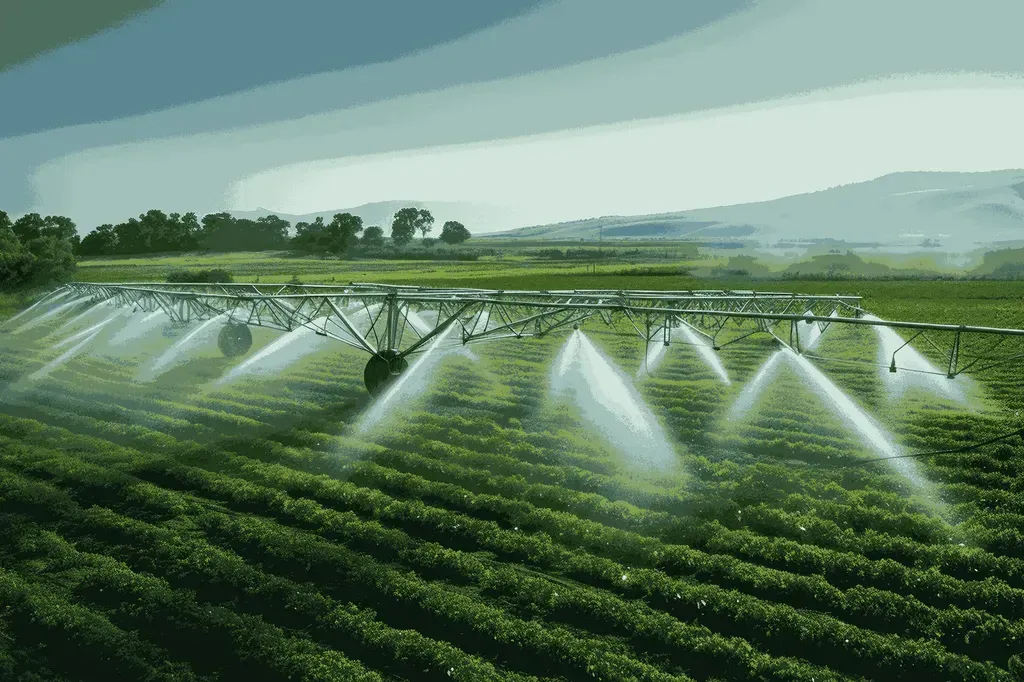
In the heart of Indonesia, researchers have developed a cutting-edge solution that could revolutionize agricultural water management. A team led by Azmi Ade Fitriyanti Ulul from the Department of Civil Engineering at Universitas Islam Malang has designed an IoT-solar energy based automatic irrigation gate system, offering a sustainable and efficient approach to irrigation. The study, published in the BIO Web of Conferences, presents a prototype that integrates renewable energy and digital technologies, potentially transforming the agriculture sector.
The system utilizes photovoltaic energy combined with Maximum Power Point Tracking (MPPT) to optimize energy generation, enabling autonomous operation. This innovation addresses the critical need for efficient water management in agriculture, a sector that consumes approximately 70% of global freshwater resources.
The prototype demonstrated impressive results in laboratory tests, with accurate discharge prediction (R2 > 0.9) and fast response time (<5 s). The MPPT implementation significantly increased energy efficiency by 15-18% compared to conventional solar systems. Moreover, the IoT data acquisition and control showed low communication latency (200-300 ms) and minimal packet loss (< 1%), proving its suitability for real-time irrigation management."This system not only optimizes water usage but also reduces energy costs and environmental impact," said Ulul. "It's a step towards sustainable agriculture, which is crucial for food security and environmental conservation."The commercial impacts of this research are substantial. Farmers could benefit from reduced water waste, lower energy costs, and improved crop yields. The system's scalability makes it suitable for both small-scale farms and large agricultural enterprises. Furthermore, the integration of IoT and renewable energy technologies could drive innovation in the agritech sector, opening up new markets and opportunities.The study also highlights the importance of modelling and laboratory testing in developing sophisticated agricultural technologies. The mathematical model derived from the research could serve as a foundation for future innovations in smart irrigation systems.As the world grapples with climate change and water scarcity, this research offers a promising solution for sustainable agricultural water management. It underscores the potential of combining renewable resources with digital technologies to address global challenges.With further development and commercialization, this IoT-solar energy based automatic irrigation gate system could become a game-changer in the agriculture sector, promoting efficiency, sustainability, and resilience in the face of environmental challenges.