
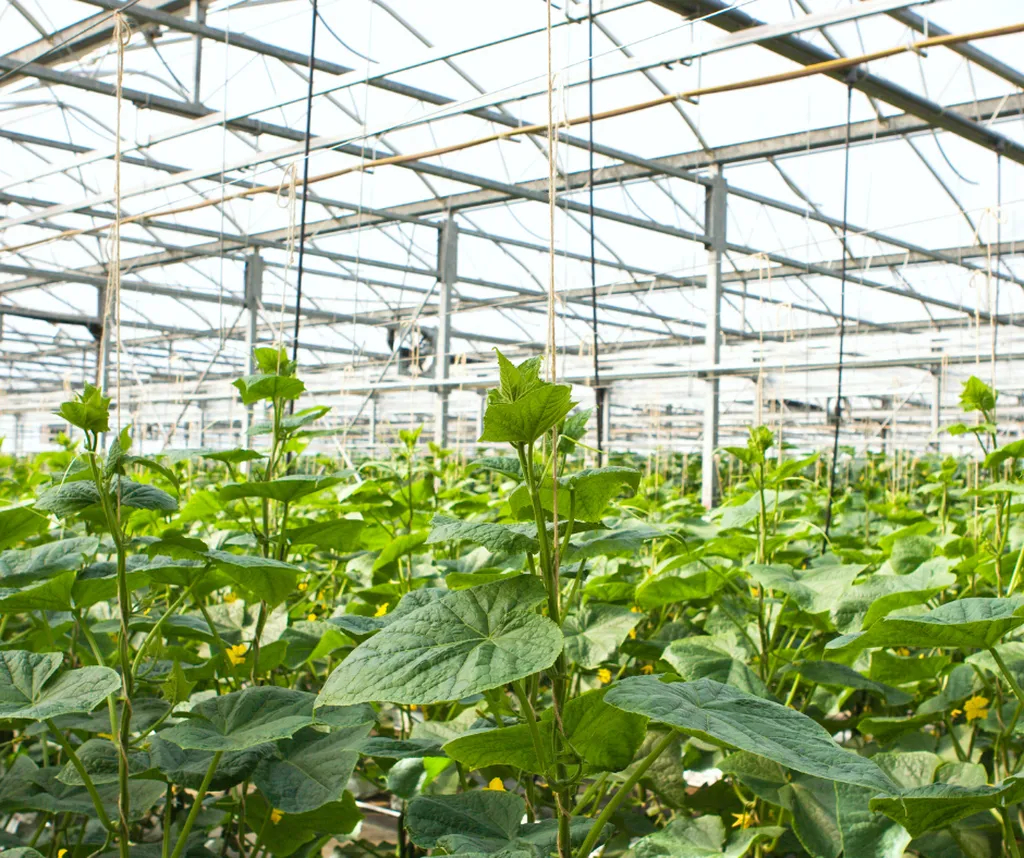
In the quest for sustainable agriculture, scientists are turning to the microscopic world for solutions. A recent study published in *Frontiers in Microbiology* has uncovered a promising ally in the form of a phosphate-solubilizing bacterium, *Bacillus subtilis* Y31, which could revolutionize cucumber cultivation and potentially other crops.
Phosphate-solubilizing bacteria (PSB) are nature’s tiny helpers, enhancing plant growth by making phosphorus more accessible to plants. In intensive cucumber farming, soil degradation often leads to phosphorus deficiency, a bottleneck for crop yield. Enter *Bacillus subtilis* Y31, a novel strain isolated from cucumber rhizosphere soil by a team led by Yu Fu at the College of Food Science and Biology, Hebei University of Science and Technology in China.
The study found that inoculating cucumber plants with Y31 increased greenhouse yields by an impressive 35.30%. “The growth-promoting effects were remarkable,” said Fu, the lead author. “But what’s even more exciting is the potential for this strain to reshape our approach to phosphorus management in agriculture.”
The bacterium’s superpowers don’t stop at phosphorus solubilization. Y31 also secretes multiple enzymes, produces siderophores, and exhibits antagonistic activity against pathogenic fungi. Genome sequencing revealed that Y31 carries genes involved in phosphorus cycling, carbohydrate-active enzymes, and the biosynthesis of 10 secondary metabolites, all contributing to its plant growth-promoting prowess.
The study also shed light on Y31’s impact on the soil microbial community. Inoculation with Y31 reduced the relative abundance of potentially harmful fungi like *Botryotrichum* and *Chrysosporium*, while promoting the growth of beneficial *Penicillium* species. This shift in microbial dynamics could be a game-changer for soil health and plant growth.
The commercial implications of this research are substantial. With the global cucumber market size valued at over $40 billion, even a modest yield increase could translate into significant economic gains. Moreover, the principles underlying Y31’s effectiveness could be applied to other crops, paving the way for more sustainable and productive agricultural practices.
Looking ahead, this research opens up new avenues for exploring and exploiting beneficial soil microorganisms. As Fu noted, “Understanding the intricate interactions between plants and their microbial partners is key to unlocking the full potential of sustainable agriculture.” Future studies could delve deeper into the mechanisms behind Y31’s growth-promoting effects and explore its potential in other cropping systems.
In the face of climate change and soil degradation, innovative solutions like *Bacillus subtilis* Y31 offer a beacon of hope. By harnessing the power of nature’s tiny helpers, we can strive towards a more sustainable and productive future for agriculture.