
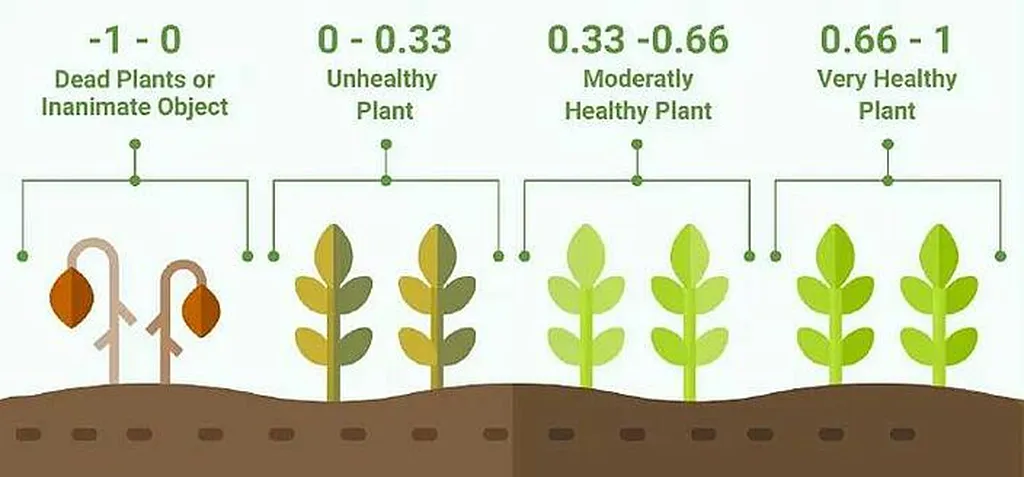
In the rapidly evolving world of precision agriculture, the ability to derive accurate vegetation indices from satellite imagery is crucial for monitoring crop health and optimizing yields. A recent study published in *Frontiers in Remote Sensing* sheds light on how pansharpening— a technique used to enhance the spatial resolution of satellite images—affects the Normalized Difference Vegetation Index (NDVI), a key metric for assessing vegetation health. The research, led by Jan Procházka from the Department of Spatial Sciences at the Czech University of Life Sciences Prague, provides empirical evidence that pansharpening can preserve NDVI values effectively, provided the right algorithms and preprocessing steps are employed.
The study compared five standard pansharpening algorithms using data from PRISMA hyperspectral and Landsat 9 multispectral sensors, alongside ground-truth measurements from field spectrometers and UAV-borne sensors. The findings reveal that while the choice of algorithm does influence accuracy, the overall impact on NDVI values is minimal when using robust methods. “Across algorithms, deviations in NDVI relative to native imagery were statistically insignificant for both sensors,” Procházka noted. “However, algorithm choice affected accuracy, with methods like NN Diffuse and Local Mean and Variance Matching (LMVM) producing the lowest errors.”
For agriculture, these insights are significant. Farmers and agronomists rely on NDVI to make informed decisions about irrigation, fertilization, and pest management. The ability to pansharpen hyperspectral data without distorting NDVI values means that higher-resolution imagery can be used more confidently in precision agriculture. This can lead to more precise and timely interventions, ultimately improving crop yields and sustainability.
The study also highlights the importance of selecting the right pansharpening algorithm. For instance, the Principal Component (PC) Nearest Neighbor method showed larger errors and biases compared to NN Diffuse and LMVM. “NN Diffuse achieved an MAE of 0.049 and a bias of +0.040 for PRISMA, while LMVM yielded an MAE of 0.050 and a bias of +0.016,” Procházka explained. These findings underscore the need for careful algorithm selection to ensure the accuracy of vegetation indices.
Beyond the immediate applications, this research opens up new possibilities for the broader use of hyperspectral pansharpening in agriculture and environmental monitoring. As Jan Procházka pointed out, “Our results provide the first empirical assessment of pansharpening effects on PRISMA hyperspectral NDVI and demonstrate that, with robust algorithms and careful preprocessing, pansharpening does not materially distort NDVI.” This could pave the way for more widespread adoption of hyperspectral imaging in agriculture, enabling even more detailed and accurate monitoring of crop health.
While the study is limited to a single site and growing season, its findings offer a solid foundation for future research. As the agricultural sector continues to embrace technology, the ability to accurately interpret and utilize high-resolution satellite imagery will be paramount. This research not only validates the reliability of pansharpening techniques but also sets the stage for further advancements in the field, ultimately benefiting farmers and the environment alike.