
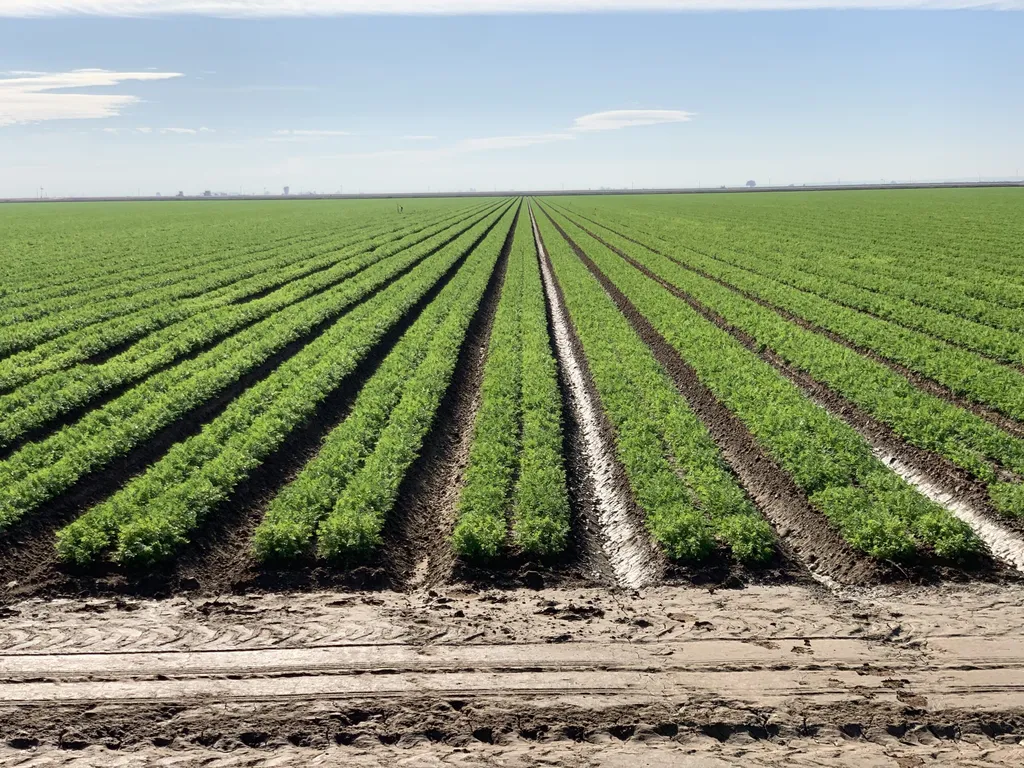
In the ever-evolving landscape of agriculture, understanding the intricate dance between soil chemistry and crop yield is becoming increasingly vital. A recent study published in *Engenharia Agrícola* sheds light on this relationship, focusing specifically on carrot cultivation. The research, led by Gloria M. R. Plazas, delves into the spatial variability of soil chemical attributes and their correlation with carrot yield, offering insights that could revolutionize precision agriculture.
The study, conducted in an irrigated carrot field, established a grid of 100 sampling points to meticulously analyze soil chemical attributes and carrot yield. The findings revealed that while carrot yield exhibited average variability, certain soil attributes like phosphorus, potassium, electrical conductivity, and potential cation exchange capacity showed spatial dependence. This means that these attributes vary predictably across the field, a crucial insight for farmers looking to optimize their yields.
“Our results highlight the importance of spatial characterization of soil chemical attributes as a key tool for supporting precision agriculture,” Plazas noted. This spatial dependence indicates that farmers can tailor their management practices to specific areas of their fields, rather than applying a one-size-fits-all approach. For instance, understanding the distribution of phosphorus and potassium can help in targeted fertilization, reducing waste and increasing efficiency.
However, the study also found that other attributes, such as organic matter and pH, did not exhibit spatial dependence within the 20 m grid. This suggests that alternative sampling strategies might be necessary to capture the full picture of soil variability. “This variability underscores the need for more nuanced and adaptive management practices,” Plazas added.
One of the most significant findings was the direct influence of potential cation exchange capacity on carrot yield. This attribute, which measures the soil’s ability to hold and release nutrients, showed a positive spatial correlation with yield. This means that areas with higher cation exchange capacity tended to produce higher carrot yields, a relationship that farmers can leverage to enhance their productivity.
The commercial implications of this research are substantial. By understanding the spatial variability of soil attributes, farmers can adopt site-specific management practices that maximize yield while minimizing input costs. This precision approach not only boosts profitability but also promotes sustainable agriculture by reducing the overuse of fertilizers and other inputs.
Looking ahead, this research could shape the future of precision agriculture by emphasizing the importance of spatial data in decision-making. As technology advances, tools like remote sensing and machine learning can be integrated with geostatistical analyses to provide real-time, field-specific recommendations. This could lead to a new era of agriculture where every square meter of farmland is optimized for maximum productivity and sustainability.
In the words of Plazas, “The future of agriculture lies in our ability to understand and harness the spatial variability of our fields.” With studies like this paving the way, the agricultural sector is poised to embrace a more precise, efficient, and sustainable future.