
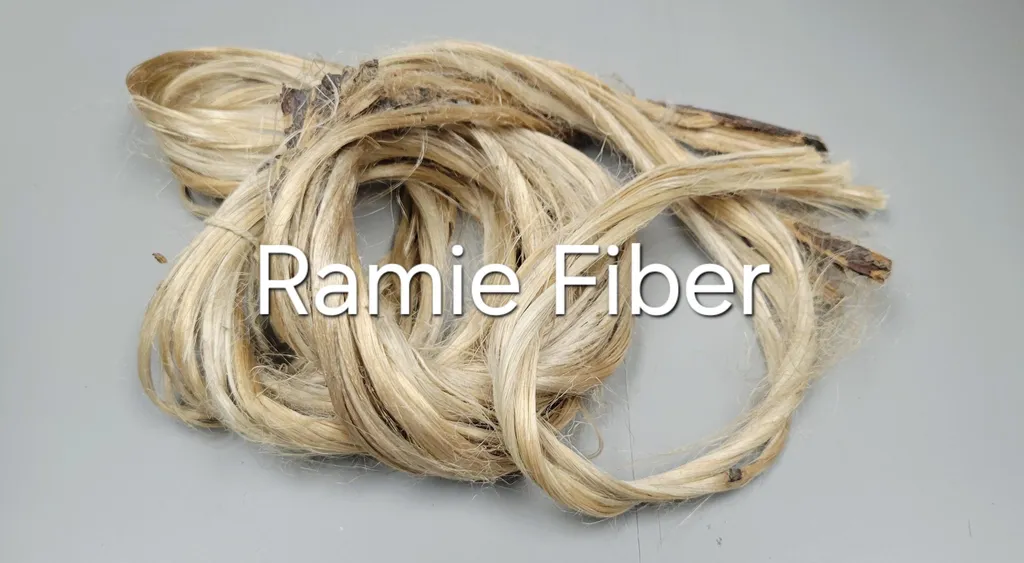
In the quest for sustainable and functional textiles, a team of researchers has turned to an ancient fiber with modern potential: ramie. Published in *Jurnal Sylva Lestari*, a new review paper led by Manggar Arum Aristri from the Research Center for Biomass and Bioproducts at Indonesia’s National Research and Innovation Agency (BRIN) and the Department of Forest Management at Universitas Sebelas Maret, explores the untapped potential of ramie fibers cultivated through agroforestry systems. This research could reshape the textile industry and bolster agricultural economies.
Ramie, derived from the *Boehmeria nivea* plant, is a robust and long-lasting natural fiber that has been used for centuries. However, its potential in modern textile applications has been overshadowed by more common fibers like cotton. The study highlights ramie’s superior tensile strength, mechanical properties, and high cellulose content, making it an ideal candidate for functional textiles. “Ramie fiber is not only strong and durable but also environmentally friendly,” explains Aristri. “Its cultivation through agroforestry systems can improve agricultural welfare, mitigate environmental crises, and contribute to poverty reduction.”
Agroforestry, a land-use system that integrates trees with crops and sometimes livestock, offers a sustainable approach to farming. By combining ramie with other crops, farmers can diversify their income streams while enhancing soil health and biodiversity. This integrated system addresses the growing demand for agricultural land, environmental degradation, and economic challenges faced by rural communities.
The textile industry, particularly in Indonesia, has relied heavily on cotton, which has lower productivity and higher import costs. Ramie’s potential to replace cotton could significantly impact the agricultural sector. “The application of ramie in functional textiles can open new markets for farmers and create a more sustainable supply chain,” says Aristri. “This shift could reduce the environmental footprint of the textile industry and support local economies.”
The review paper emphasizes the need for further research and investment in ramie cultivation and processing technologies. By optimizing agroforestry practices and developing innovative textile applications, ramie could become a cornerstone of sustainable fashion. “The future of textiles lies in sustainable materials like ramie,” Aristri notes. “This research is just the beginning of a broader conversation about how we can integrate environmental and economic goals in the textile industry.”
As the world seeks sustainable solutions to meet growing demands, ramie fibers offer a promising alternative. This research not only highlights the benefits of ramie but also underscores the importance of agroforestry in creating a more resilient and sustainable future. With continued investment and innovation, ramie could revolutionize the textile industry and support agricultural communities worldwide.