
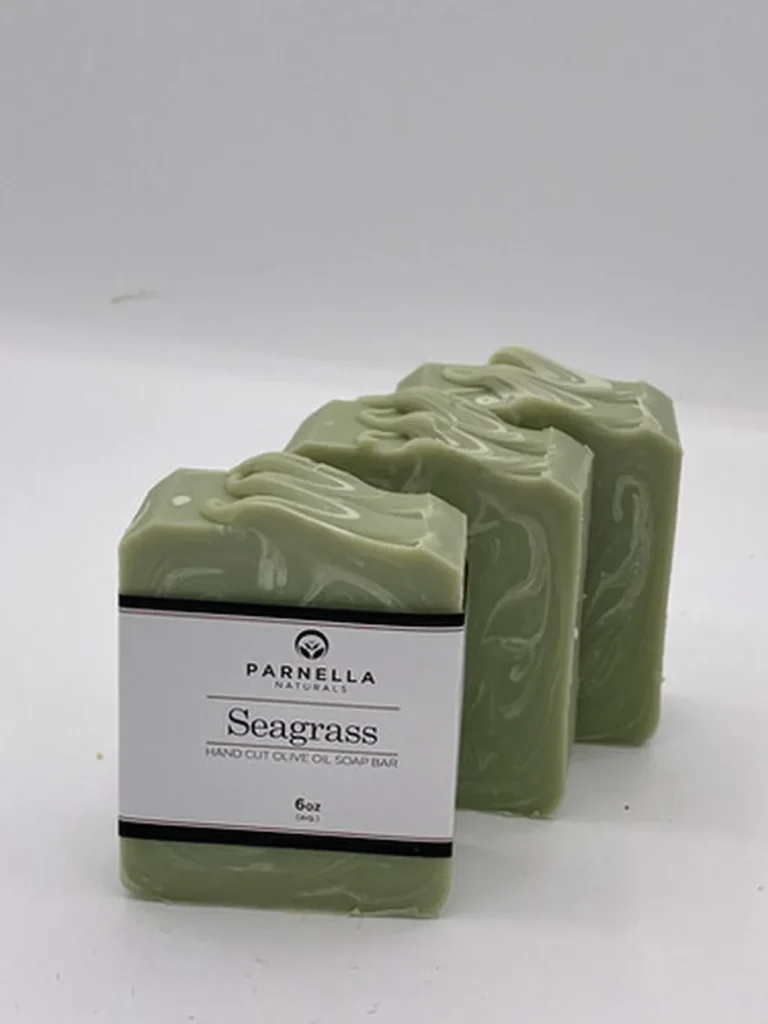
In the bustling world of agritech and sustainable agriculture, a new study has emerged that could potentially revolutionize the skincare industry while providing a boost to the agricultural sector. Researchers from Universitas Brawijaya have been exploring the potential of seagrass, specifically Syringodium isoetifolium, found abundantly in Indonesian waters. Their findings, published in ‘Advances in Food Science, Sustainable Agriculture, and Agroindustrial Engineering’, suggest that this marine plant could be a game-changer in the development of solid soap with enhanced antioxidant properties.
Seagrass, known for its bioactive compounds, has been identified as a promising natural ingredient for skincare products. The study, led by Bambang Susilo, investigated the effect of varying concentrations of NaOH and seagrass extract on the physical characteristics and antioxidant activity of solid soap. The results were promising, to say the least.
The research team employed the ultrasound-assisted extraction (UAE) probe method with 50% ethanol as the solvent to extract the seagrass compounds. They then formulated solid soap with different concentrations of NaOH (20%, 30%, and 40%) and seagrass extract (0%, 5%, 7.5%, and 10%). The quality of the soap was tested for moisture content, pH, and foam stability, while antioxidant activity was measured using the DPPH method to determine the IC50 value.
The findings revealed that increasing the NaOH concentration and seagrass extract level tended to increase the moisture content and pH of the soap. “The highest foam stability was obtained in soap with 20% NaOH and 10% extract,” noted Susilo. Although the differences were not statistically significant, the potential for improvement in soap quality is evident.
Perhaps the most exciting discovery was the increase in antioxidant activity with the addition of seagrass extract. The best result was found in soap with 30% NaOH and 10% extract, which had an IC50 value of 1470.90 ppm. This suggests that seagrass extract could be a valuable addition to skincare products, enhancing their antioxidant properties and potentially offering new health benefits to consumers.
The implications for the agricultural sector are significant. Seagrass farming could become a lucrative industry, providing a sustainable source of income for coastal communities. As Bambang Susilo explained, “This research opens up new possibilities for the agricultural sector, particularly in coastal regions where seagrass is abundant. By developing seagrass-based products, we can create new economic opportunities and promote sustainable agriculture.”
The study also highlights the potential for further research in this area. As the demand for natural and sustainable skincare products continues to grow, the development of seagrass-based formulations could pave the way for innovative new products. The research team’s findings provide a solid foundation for future studies, offering a glimpse into the potential of seagrass as a valuable resource for the skincare industry.
In conclusion, this research not only sheds light on the potential of seagrass as a natural ingredient for skincare products but also underscores the importance of sustainable agriculture. By harnessing the power of seagrass, we can create new opportunities for economic growth and environmental conservation, paving the way for a more sustainable future. As the world continues to search for natural and effective skincare solutions, seagrass may just be the answer we’ve been looking for.