
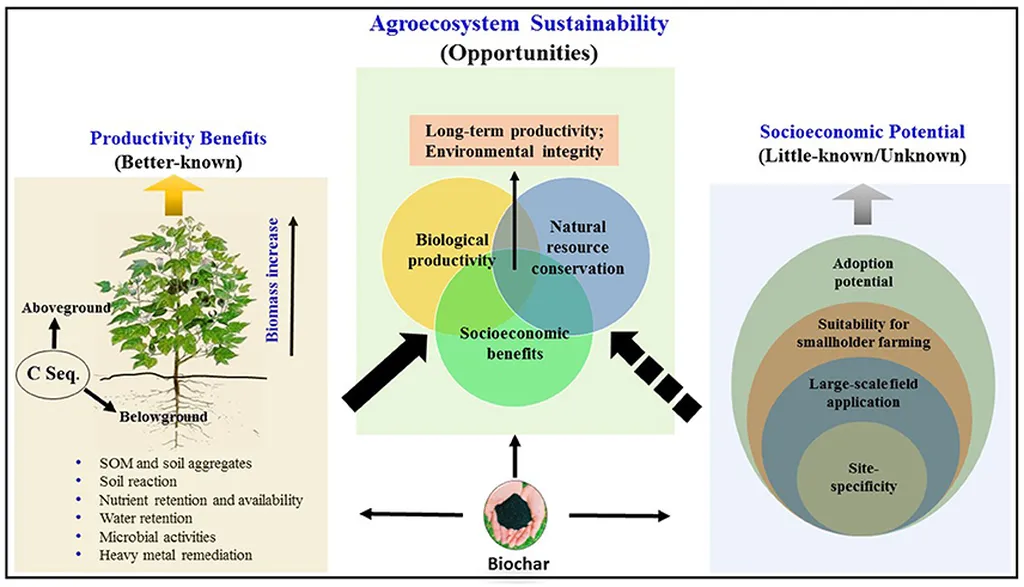
In the quest to combat climate change, scientists and policymakers are increasingly turning to nature-based solutions to reduce atmospheric carbon dioxide (CO₂) while restoring degraded ecosystems. A recent review published in *Energy Science & Engineering* suggests that biochar-based regenerative agriculture could be the most sustainable and practical pathway for long-term carbon sequestration. The study, led by Negin Mirzaei from the School of Engineering and Sustainable Resources at the University of Tehran, compares four main nature-based carbon management (NBCM) approaches: forest and grassland restoration, wetland and blue-carbon ecosystems, urban green spaces, and regenerative agriculture.
The review, which examined papers, patents, and reports published between 2016 and 2024, reveals that biochar-based regenerative systems stand out by showing persistent improvements in soil organic carbon storage, crop productivity, and greenhouse gas mitigation. “Biochar’s environmental durability, combined with its socioeconomic applicability, makes it a bridge between climate science, agriculture, and sustainable development policy,” Mirzaei explains. This finding is particularly significant for the agriculture sector, as it suggests that biochar could play a pivotal role in enhancing soil health and productivity while simultaneously mitigating climate change.
The study identifies several constraints that determine the pace of large-scale adoption of biochar, including production costs, infrastructure requirements, and limited awareness. However, the potential benefits are substantial. Biochar, a carbon-rich product derived from the thermal decomposition of biomass, can enhance soil fertility, increase water retention, and reduce the need for chemical fertilizers. This could lead to significant cost savings for farmers and contribute to more sustainable agricultural practices.
The review also highlights the need for future efforts to focus on field validation across different climates, cost optimization for biomass-to-biochar chains, and supportive policy frameworks to encourage wider adoption. “Future efforts should focus on field validation across climates, cost optimization for biomass-to-biochar chains, and supportive policy frameworks to encourage wider adoption,” Mirzaei emphasizes.
The findings present a clear pathway for scaling NBCM solutions, positioning biochar as a leading nature-based strategy for long-term climate mitigation. For the agriculture sector, this research could shape future developments by promoting the integration of biochar into regenerative farming practices. As the world seeks sustainable solutions to climate change, biochar-based regenerative agriculture offers a promising avenue for reducing carbon emissions while enhancing agricultural productivity and resilience.