
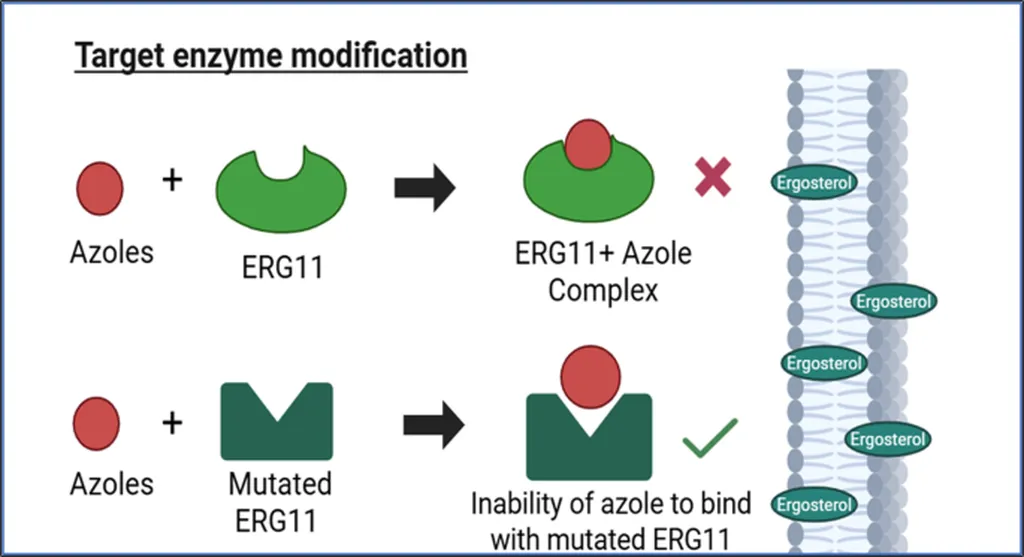
In a significant stride toward understanding and managing fungicide resistance in crop pathogens, a comprehensive study published in *mBio* has unveiled the complex genetic architecture underlying azole fungicide resistance in *Zymoseptoria tritici*, a major wheat pathogen. The research, led by Guido Puccetti from the Laboratory of Evolutionary Genetics at the University of Neuchâtel, Switzerland, offers critical insights that could reshape resistance management strategies in agriculture.
Fungicide resistance poses a substantial threat to sustainable agriculture, with demethylation inhibitors (DMIs) being crucial for controlling crop diseases. However, the rapid and heterogeneous gains in azole resistance across Europe have raised concerns. To dissect the genetic underpinnings of this resistance, Puccetti and his team established a large genome panel spanning 15 sampling years and 27 countries, encompassing 1,394 sequenced and phenotyped strains of *Zymoseptoria tritici*.
Using two complementary assays to quantify resistance levels, the researchers captured fine-grained shifts in DMI resistance over space and time. “The substantial scope in genetic mechanisms underpinning DMI resistance significantly expands our mechanistic understanding of how continent-wide resistance arises in fungal pathogens over time,” Puccetti explained.
The study conducted genome-wide association studies based on a comprehensive set of genotyping approaches for six DMIs. This revealed a vast array of loci encoding target functions, as well as diverse channel, kinase, phosphotransferase, oxidoreductase, and monooxygenase functions. Notably, the diversification of the Cyp51 coding sequence was particularly striking, with new resistant haplotypes emerging in complex configurations and geographic patterns.
One of the key findings was the functional assessment of resistance-associated synonymous mutations in Cyp51. The researchers found that these mutations did not significantly contribute to resistance, suggesting that associations were caused by linkage disequilibrium. This insight is crucial for understanding the evolutionary dynamics of resistance and for developing more effective resistance management strategies.
The implications of this research for the agriculture sector are profound. By unraveling the complexity of concurrent resistance mutation gains, the study provides a roadmap for focusing resistance management practices. “Tracking the fungal wheat pathogen, *Zymoseptoria tritici*, reveals heterogeneous gains in resistance over the past decades across the European continent,” Puccetti noted. This understanding can help farmers and agronomists implement more targeted and effective strategies to combat fungicide resistance, ultimately safeguarding crop yields and ensuring food security.
The study’s expansive new insights into fungicide resistance gains in crop pathogens are particularly relevant for future resistance management strategies. As the agriculture sector continues to grapple with the challenges posed by fungicide resistance, this research offers a beacon of hope and a path forward. By leveraging the findings of this study, stakeholders can develop more resilient and sustainable agricultural practices, ensuring the long-term viability of crop production in the face of evolving pathogen threats.
Published in *mBio* and led by Guido Puccetti from the Laboratory of Evolutionary Genetics at the University of Neuchâtel, Switzerland, this research marks a significant milestone in the ongoing effort to understand and manage fungicide resistance in crop pathogens. As the agriculture sector continues to evolve, the insights gained from this study will undoubtedly shape future developments in the field, paving the way for more effective and sustainable resistance management strategies.