
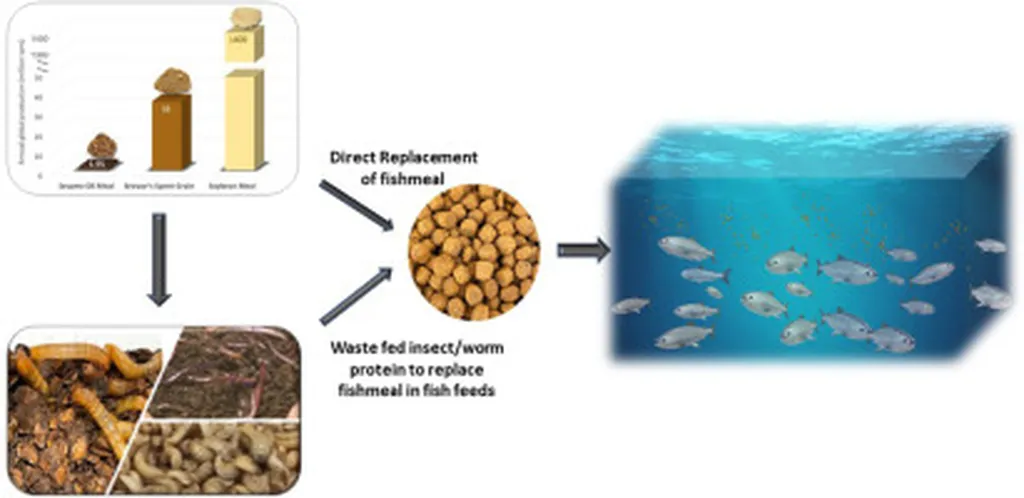
In a significant stride towards sustainable aquaculture, researchers have found that barley worms (Zophobas morio) can effectively replace up to 20% of fishmeal in diets for juvenile leopard coral groupers (Plectropomus leopardus) without compromising growth or muscle quality. This research, published in *Aquaculture Reports*, opens new avenues for reducing reliance on traditional fishmeal, a resource that has faced increasing pressure due to overfishing and environmental concerns.
The study, led by Xin Zhang from the Laboratory of Aquatic Animal Nutrition and Feed at Guangdong Ocean University, explored the effects of substituting fishmeal with barley worm meal (ZMM) in varying proportions—ranging from 5% to 40%. The findings revealed that low levels of ZMM supplementation, particularly between 5% and 10%, not only maintained growth performance and muscle composition but also enhanced intestinal health. Specifically, these levels improved the intestinal mucosal fold width and muscular thickness, which are critical for nutrient absorption and overall fish health.
“Replacing up to 20% of fishmeal with barley worm meal did not significantly affect growth performance or muscle quality,” said Zhang. “However, the most promising results were seen at lower inclusion levels, where we observed improvements in intestinal morphology. This suggests that barley worms could be a valuable ingredient in sustainable aquaculture feeds.”
The research also highlighted changes in gut microbiota, with higher substitution levels (40%) increasing the relative abundance of Sphingomonadaceae. While this finding warrants further investigation, it underscores the potential for barley worms to influence gut health in ways that could benefit fish farming practices.
For the agriculture and aquaculture sectors, these results are a beacon of hope. The global demand for fishmeal has long strained marine ecosystems, and the search for sustainable alternatives has been ongoing. Insect-based meals, such as barley worms, offer a promising solution. They are not only environmentally friendly but also cost-effective, as they can be produced on a large scale with minimal resource inputs.
The commercial implications are substantial. Aquaculture producers could reduce their dependence on fishmeal, thereby lowering production costs and mitigating environmental impact. Additionally, the enhanced intestinal health observed in the study could lead to healthier fish stocks, reducing mortality rates and improving yield.
As the aquaculture industry continues to grow, the need for sustainable and efficient feed solutions becomes ever more critical. This research provides a scientific foundation for developing low-fishmeal feeds that could revolutionize the way we raise fish. While further studies are needed to explore long-term effects and economic feasibility, the findings offer a compelling case for integrating barley worms into aquaculture diets.
In the words of the researchers, “This study provides a scientific basis for developing sustainable, low-fishmeal feeds using barley worms for leopard coral groupers.” The future of aquaculture may well lie in the humble barley worm, paving the way for a more sustainable and profitable industry.