
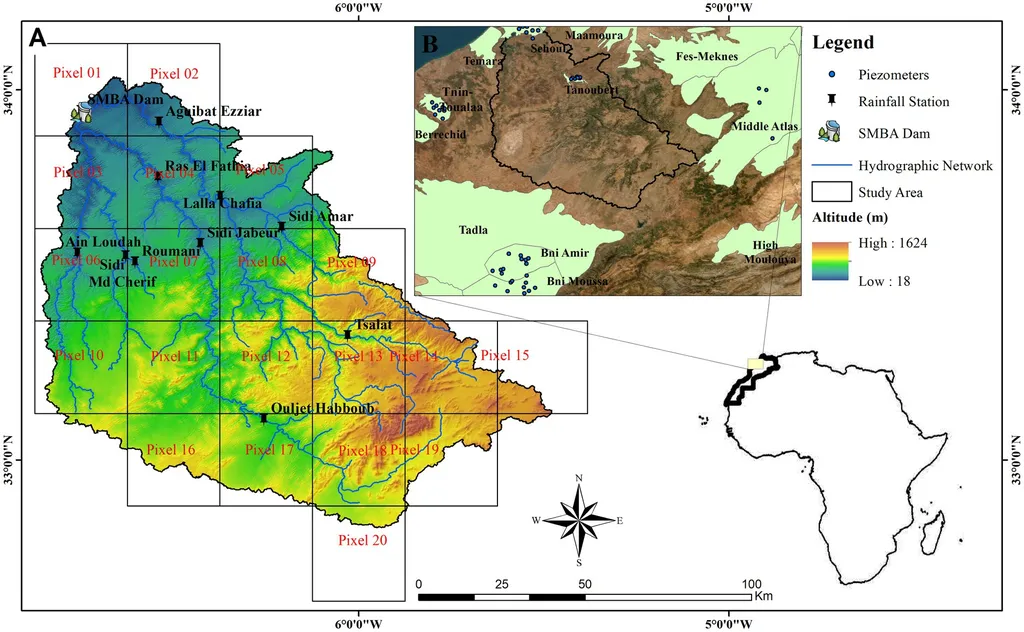
In the face of climate change, understanding drought dynamics has become a critical pursuit, particularly in regions where agriculture and urban systems are under significant stress. A recent study published in ‘The International Archives of the Photogrammetry, Remote Sensing and Spatial Information Sciences’ sheds light on the evolving drought patterns in Morocco’s Rabat-Salé-Kénitra and Casablanca-Settat regions, offering valuable insights for the agriculture sector and water resource management.
The study, led by A. Habib of the Marine Geosciences and Soil Sciences Laboratory at Chouaib Doukkali University, leverages MODIS-Terra satellite data from 2003 to 2023 to analyze key environmental indicators. By examining Evapotranspiration (ET), Leaf Area Index (LAI), and Normalized Difference Vegetation Index (NDVI), the research provides a comprehensive view of water stress, vegetation dynamics, and ecosystem health.
“Our analysis reveals an upward trend in Evapotranspiration, which indicates that the environment is losing more water through evaporation and plant transpiration,” Habib explains. This trend is coupled with fluctuating LAI and a decline in NDVI, suggesting that vegetation is under increasing stress, a clear sign of worsening drought conditions.
The findings have significant implications for Morocco’s agriculture sector, which is a vital part of the country’s economy. As drought conditions intensify, farmers may face reduced crop yields and increased water scarcity, impacting both livelihoods and food security. “The declining NDVI is a red flag for agricultural productivity,” Habib notes. “It underscores the need for adaptive water resource management and sustainable land-use strategies to bolster ecosystem resilience.”
The study’s long-term data analysis provides a robust foundation for understanding drought dynamics, which can inform policy decisions and agricultural practices. By integrating satellite data into monitoring systems, stakeholders can make more informed decisions about water allocation, crop selection, and land management.
Looking ahead, this research could shape the development of more sophisticated drought monitoring tools and early warning systems. “The integration of remote sensing data with ground-based observations can enhance our ability to predict and mitigate the impacts of drought,” Habib suggests. This approach could be particularly beneficial in regions with limited resources for traditional monitoring methods.
Moreover, the study highlights the importance of international collaboration in addressing climate change challenges. By sharing data and expertise, researchers and policymakers can develop more effective strategies for drought management and adaptation.
As climate change continues to pose threats to agriculture and urban systems, studies like this one are crucial for guiding sustainable practices and ensuring food security. The insights gained from this research not only inform immediate actions but also pave the way for future innovations in environmental monitoring and resource management.