
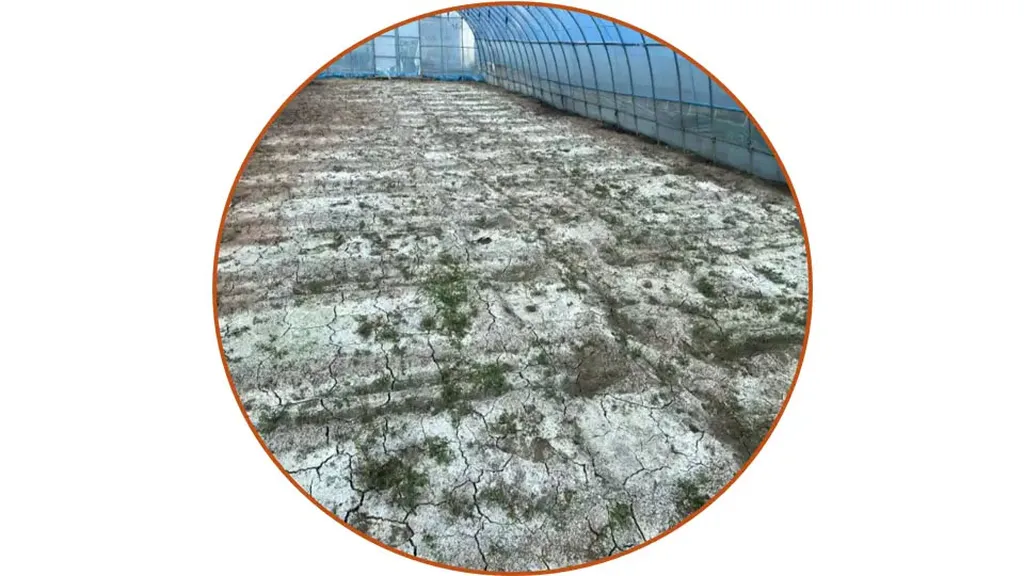
In a groundbreaking development, a bio-based soil amelioration technology has successfully revitalized salinized agricultural land in Shanghai, significantly boosting crop yields and reducing environmental impact. This innovative solution, developed by the Green Technology Bank (Shanghai) Agricultural Technology Co., Ltd., offers a sustainable approach to one of agriculture’s most persistent challenges in coastal regions worldwide.
Shanghai, a bustling metropolis at the mouth of the Yangtze River, has seen its agricultural land steadily diminish due to urban development. The remaining land is largely confined to coastal mudflats and scattered greenhouses used for cultivating fruits and vegetables. However, these lands face a common adversary: salinization, driven by both natural conditions and intensive cultivation.
Within the framework of the WIPO GREEN China Cities Acceleration Project, the Shanghai project, led by the World Intellectual Property Organization (WIPO) and the Green Technology Bank (GTB), has identified a green solution to this pressing issue. The critical challenge for urban agriculture in Shanghai is exemplified by the Shanghai Yuande Fruit and Vegetable Cooperative in Heqing Town, where years of enclosed cultivation have left visible scars on the soil surface, accompanied by soil compaction and poor aggregation.
Soil salinization disrupts soil structure, diminishing its capacity to retain water and nutrients, and severely undermines crop growth. For the greenhouses of Heqing, there has been an urgent need for a green, low-cost, and easy-to-apply solution to the salinization problem.
To tackle this challenge, the Green Technology Bank (Shanghai) Agricultural Technology Co., Ltd. mobilized soil scientists and agronomists for in-depth field research. Considering the specific greenhouse environment and cost factors, the team ultimately adopted a biomass-based material improvement strategy. The core strength of this technology lies in the GTB’s proprietary Special Biomass Thickener (SBT), a formulation of natural organic substances including cellulose, lignin, chitin, algae, and actinomycetes.
The technology addresses salinization through a four-fold mechanism that works across soil chemistry, biology, and physical structure. Marine active chitosan absorbs excess soil salts and metal ions, which helps relieve soil compaction and toxicity. Plant fermentation liquors regulate soil pH while restoring beneficial microbial communities that support plant health. Natural oils coat seeds with a thin protective film, reducing salt’s inhibitory effects on germination and early growth. At the same time, nanofiber protein and lignin hybrids form a mesh-like structure within the soil, improving aeration and enhancing water retention to create more favorable conditions for root development.
The implementation of this technology at the Heqing greenhouse site has yielded remarkable improvements across multiple dimensions: restored soil structure, substantial yield increases, and enhanced fruit quality. Costs have also been significantly reduced—over 40% lower than conventional chemical methods, while overall project expenditure decreased by 30%.
The successful implementation at the Heqing greenhouses has pioneered a new green technology pathway offering a replicable model for the sustainable development of facility-based agriculture in Shanghai. As the core technological force in soil amelioration for salinized land in Shanghai, GTB’s practice at the Heqing greenhouses is now poised for expansion into the coastal mudflat areas of Chongming and Jinshan, among others. By doing so, more salinized land can be transformed from an ecological burden into an agricultural resource, offering a scalable solution for the sustainable development of facility agriculture nationwide.