
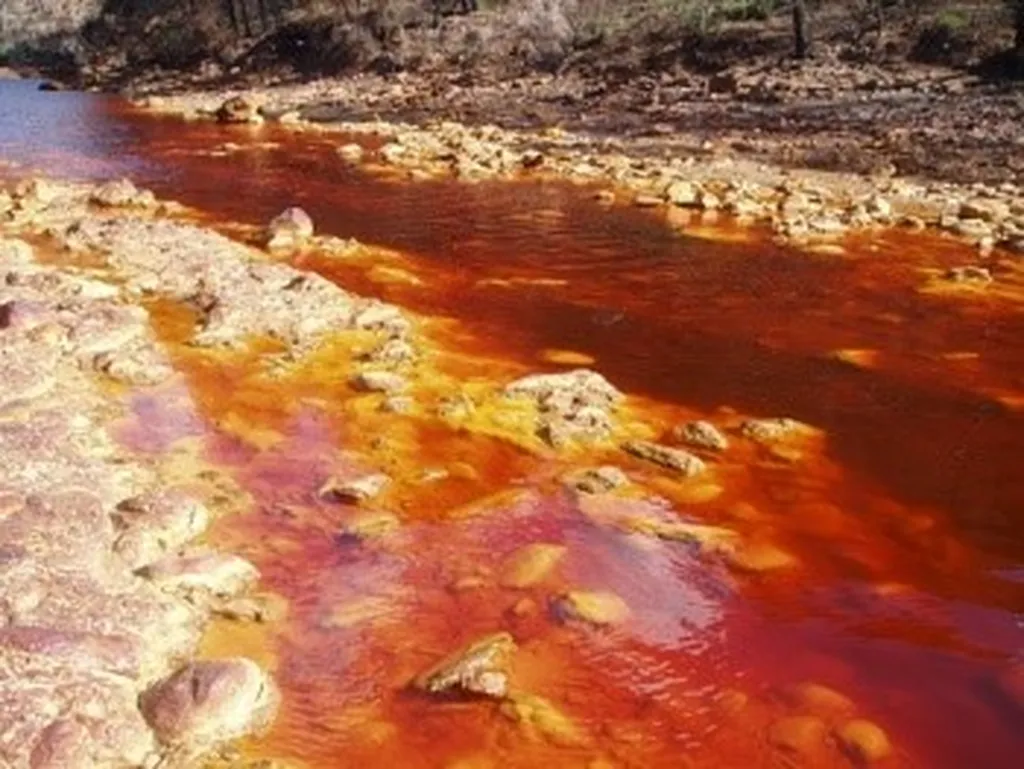
In the heart of South Africa, a groundbreaking study is turning the tables on a longstanding environmental challenge: acid mine drainage (AMD). This notorious byproduct of coal and metal mining, laden with heavy metals and sulfates, has traditionally been a costly and complex waste to manage. However, a new review published in *Desalination and Water Treatment* suggests that AMD could be transformed from a liability into a lucrative resource, with significant implications for the agriculture sector and beyond.
The study, led by Mamile Belina Mahlohla from the Department of Environmental Sciences at the University of South Africa (UNISA), explores the physicochemical characteristics of AMD and identifies potential avenues for resource recovery. “Acid mine drainage is a highly recalcitrant wastewater matrix,” Mahlohla explains. “But within this complex matrix lie valuable resources that can be recovered and reused, turning waste into wealth.”
The research highlights the potential for recovering major metals like iron, aluminum, and manganese, as well as critical minerals such as cobalt, nickel, and rare earth elements (REEs). These recovered materials can be used in various industrial applications, from coagulants and adsorbents to pigments and catalysts. Moreover, the transformation of sulfates into sulfuric acid and water reclamation can provide water security in water-scarce regions.
The commercial impacts for the agriculture sector are particularly noteworthy. The recovery of valuable minerals from AMD can offset treatment costs, making the process self-sustainable. For instance, the global market for REEs is projected to reach USD$14.2 billion by 2033, with a compound annual growth rate of 12%. This suggests that recovering REEs from AMD could be not only profitable but also environmentally beneficial, reducing the need for virgin resource extraction.
The study also delves into the techniques for resource recovery, including precipitation, adsorption, solvent extraction, and ion exchange. Each method offers unique advantages and challenges, but the overarching goal is to minimize the ecological footprint associated with AMD while promoting a circular economy.
As the world grapples with the dual challenges of resource depletion and environmental degradation, this research offers a beacon of hope. By transforming waste into valuable resources, we can reduce our reliance on virgin materials and mitigate the environmental impacts of mining. The study also underscores the importance of further research in this growing field, highlighting knowledge gaps and avenues for future exploration.
In the words of Mahlohla, “The beneficiation and valorization of AMD can provide an important revenue stream, offsetting treatment costs and even making the process self-sustainable.” This vision of a sustainable future, where waste is transformed into wealth, is not just a pipe dream but a tangible reality within our reach. As we look to the future, the insights from this research will undoubtedly shape the development of innovative solutions for waste management and resource recovery.