
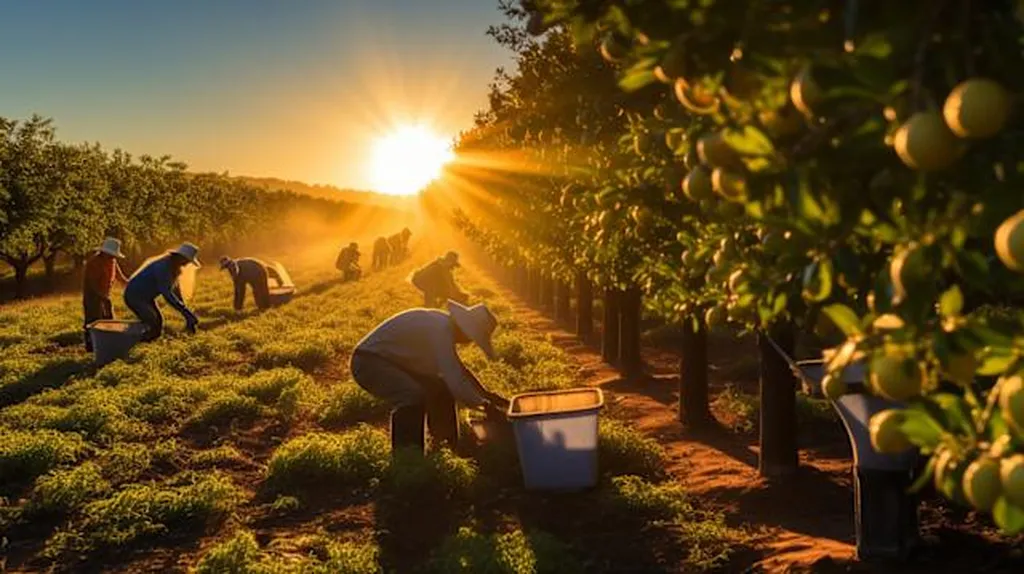
In the heart of South Africa, a groundbreaking study is making waves in the world of precision agriculture, offering a beacon of hope for small-scale farmers grappling with water scarcity and unpredictable weather patterns. The research, led by Alfred Thaga Kgopa from the University of South Africa, explores the dynamic duo of IoT sensors and machine learning algorithms to revolutionize smart irrigation systems.
Imagine a farm where sensors buried in the soil collect real-time data on moisture levels, temperature, and humidity, feeding this information to a central system that learns and adapts to the unique needs of each crop. This is not a futuristic fantasy, but a reality that Kgopa and his team are bringing to life. “We’re harnessing the power of technology to make irrigation more efficient and crops more productive,” Kgopa explains. “This is about giving farmers the tools they need to do more with less.”
The study, published in the International Journal on Food, Agriculture and Natural Resources, compares two machine learning algorithms: Decision Trees (DT) and Support Vector Machines (SVM). Both methods use supervised learning to create optimal irrigation schedules, but SVM comes out on top, reducing false positives and negatives and leading to more precise irrigation control. “SVM’s ability to handle high-dimensional spaces and complex decision boundaries makes it particularly suited for this task,” Kgopa notes.
The commercial implications for the agriculture sector are substantial. With water scarcity becoming an increasingly pressing issue, the ability to use water more efficiently is invaluable. Smart irrigation systems can help farmers conserve water, reduce costs, and increase crop yields, all while promoting sustainable farming practices. “This technology has the potential to transform the way we farm,” Kgopa says. “It’s about creating a more resilient and sustainable agricultural sector.”
However, the journey towards widespread adoption is not without its challenges. The study highlights issues such as data security, connectivity constraints, and cost considerations. Yet, these obstacles are not insurmountable. As technology advances and becomes more affordable, and as farmers become more comfortable with data-driven decision-making, the barriers to entry will continue to fall.
Looking ahead, Kgopa envisions a future where AI-driven irrigation systems are the norm, not the exception. “The goal is to enhance efficient water use, strengthen food security, and support sustainable farming methods,” he says. To get there, he calls for further research to improve algorithm accuracy, expand real-world trials, and tackle scalability challenges.
In the meantime, the study serves as a powerful reminder of the potential that lies at the intersection of agriculture and technology. As the world grapples with the challenges of climate change and a growing population, innovations like these will be crucial in shaping a more sustainable and food-secure future. For small-scale farmers, the message is clear: the future of farming is smart, and it’s within reach.