
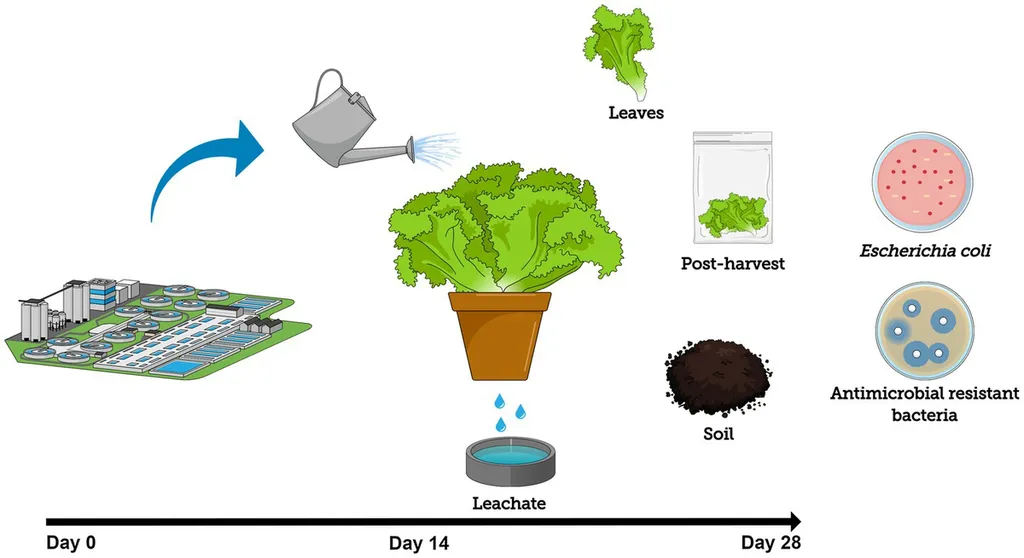
In a groundbreaking study published in *Frontiers in Microbiology*, researchers have shed light on the potential risks and mitigation strategies associated with the reuse of treated wastewater in agriculture. The study, led by Anicia Gomes of LAQV-REQUIMTE at the University of Porto, investigates how irrigation with treated wastewater of varying quality can influence the transfer of antimicrobial-resistant bacteria (ARB) and antimicrobial resistance genes (ARGs) to edible crops, specifically lettuce.
The research team evaluated the presence of bacterial indicators such as *Escherichia coli* and extended-spectrum β-lactamase-producing *E. coli* (ESBL-E. coli), as well as specific ARGs (blaCTX–M–1, blaTEM, sul1, tetA) in both irrigation water and lettuce plants. Using culture-based methods and quantitative PCR (qPCR), they quantified these markers to assess the efficiency of secondary- and tertiary-treated wastewater in reducing the transmission of ARBs and ARGs.
The findings reveal a significant reduction in the presence of *E. coli* and ESBL-E. coli in crops irrigated with tertiary-treated water, bringing levels down to those observed with potable water. “Tertiary treatment substantially reduces but does not completely eliminate ARGs,” noted Gomes. This indicates that while advanced treatment processes are effective, they are not foolproof.
The study also found that the relative abundance of ARGs in lettuce was considerably lower than in the corresponding irrigation waters, suggesting limited transfer and persistence of these genes on the plant surface. This is a crucial insight for the agriculture sector, as it highlights the potential for advanced wastewater treatment to mitigate risks associated with antimicrobial resistance in fresh produce.
The commercial implications of this research are profound. As the agriculture sector increasingly turns to reclaimed water to address water scarcity and sustainability goals, understanding the risks and implementing effective treatment strategies becomes paramount. “Our study provides valuable insights into the role of poor-quality irrigation water in driving ARGs dissemination to fresh produce,” Gomes explained. “It shows that advanced tertiary treatments significantly reduce AMR-related risks, thereby supporting the safe and sustainable use of reclaimed water in agriculture.”
This research not only underscores the importance of advanced wastewater treatment but also paves the way for future developments in sustainable agriculture. By adopting best practices and leveraging innovative technologies, the agriculture sector can continue to utilize reclaimed water safely, ensuring food safety and public health. As the global demand for water continues to rise, these findings will be instrumental in shaping policies and practices that promote the responsible use of water resources.
The study, led by Anicia Gomes of LAQV-REQUIMTE at the University of Porto, was published in *Frontiers in Microbiology*, offering a comprehensive analysis of the impact of treated wastewater reuse in agriculture. This research is a significant step forward in our understanding of antimicrobial resistance and its implications for food safety and sustainable agriculture.