
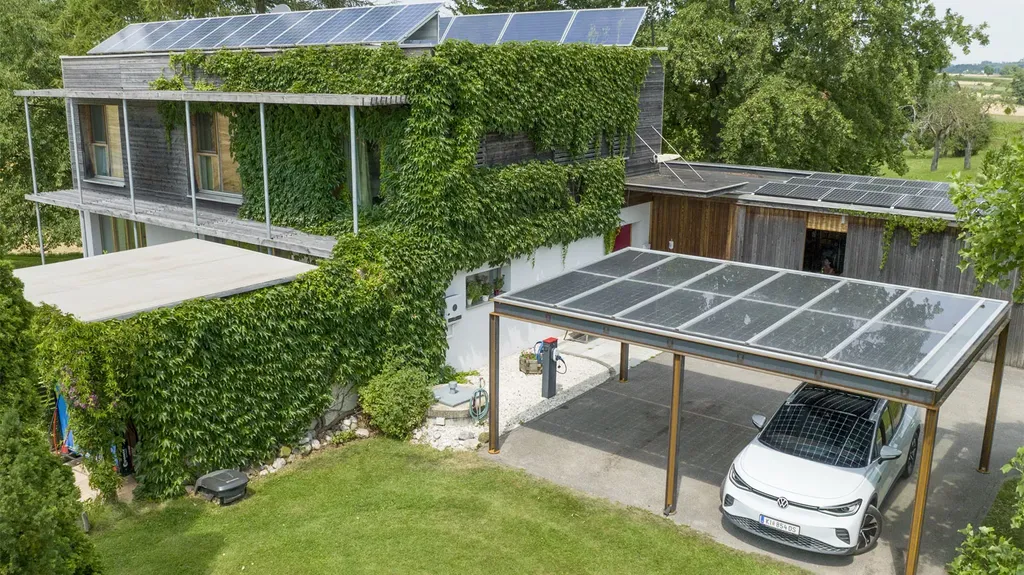
For agricultural businesses, the decision to install photovoltaic (PV) systems is increasingly becoming a strategic move to combat rising energy costs and leverage the ample roof space available on farm buildings. However, the effectiveness of these solar installations hinges on the ability of power electronics to convert and manage the energy for practical use on the farm.
To ensure dependable and efficient operation, power electronics must be tailored to the specific system and the distinct energy requirements of each farm. This process begins with a careful assessment of on-site electricity use. Key considerations include grid connection capacity, the likelihood of load peaks, and the presence of major energy consumers that can be flexibly managed. Andreas Seltenhammer, Product Manager at Fronius, highlights the unique challenges faced by many farms: “Many farms operate with weaker grid connections and are often situated far from the nearest transformer station. Nevertheless, they must guarantee a secure power supply on site.”
Recognizing these challenges, the Austrian manufacturer Fronius has launched two solutions designed specifically for agriculture: the Verto commercial inverter and the Verto Plus hybrid inverter. When combined with a battery storage system, the Verto Plus ensures a reliable supply for large consumers around the clock. “A stable power supply is crucial, especially for farms with livestock operations, where animal welfare depends on uninterrupted service,” Seltenhammer explains. “Cooling systems for milk, barn ventilation, and feeding equipment all need to keep running, even if the grid fails.”
To meet these requirements, Fronius has fitted the Verto series with a robust backup power function. Instead of integrating the switchover within the inverter, the company uses an external device to switch between grid and backup power. “Our approach is to isolate the grid directly at the building or site’s main connection,” Seltenhammer explains. “This way, there’s no need to install additional cabling throughout the facility, which simplifies the process considerably.”
This setup relies on Fronius backup controllers, available in both three-pole and four-pole versions. Mounted on the DIN rail, these controllers automatically switch over if the grid fails. The inverter then establishes an independent on-site grid, supplying up to 20 kilowatts of power, either directly from the solar array during the day or from a connected battery storage system.
For farms with higher demands on backup power, a manual transfer switch offers a compelling solution. With this option, the system can maintain the power supply at up to 63 amperes, supporting grid connection capacities as high as 43 kilowatts at the standard three-phase voltage of 400 volts. “The transfer switch provides an additional benefit: it puts control in the farmer’s hands, allowing them to decide exactly when backup power is needed and to activate it themselves,” says Andreas Seltenhammer.
The inverter’s performance is crucial in agricultural settings. “Many farms are equipped with a 63-ampere power connection,” Seltenhammer notes. At the standard three-phase voltage of 400 volts, this provides around 43 kilowatts of available grid power – a limit the inverter must not exceed. With its 30-kilowatt output, the Verto stays well within this boundary. This power class is a natural fit for agricultural businesses, as it prevents grid overload while providing enough capacity to consistently utilize rooftop solar energy.
As the agricultural sector continues to embrace solar energy, the role of advanced power electronics becomes increasingly vital. Solutions like those offered by Fronius not only enhance energy independence but also ensure the reliability and efficiency of farm operations, ultimately contributing to the sustainability and profitability of agricultural businesses.