
In the bustling aisles of German supermarkets, a silent struggle is unfolding. Despite a growing public appetite for transparency and animal welfare, pork products from higher-welfare systems remain a tough sell. A recent study published in the *Journal of Agriculture and Food Research* delves into the minds of German pork consumers, uncovering the intricate web of information needs and preferences that could hold the key to bridging the gap between consumer expectations and market reality.
Led by Christian Achilles from the University of Göttingen, the study employed a novel approach: online focus groups. By recruiting a diverse panel of 25 consumers, the research aimed to capture a broad spectrum of opinions and behaviors. The findings reveal a complex landscape where information preferences vary widely, but certain themes emerge as critical.
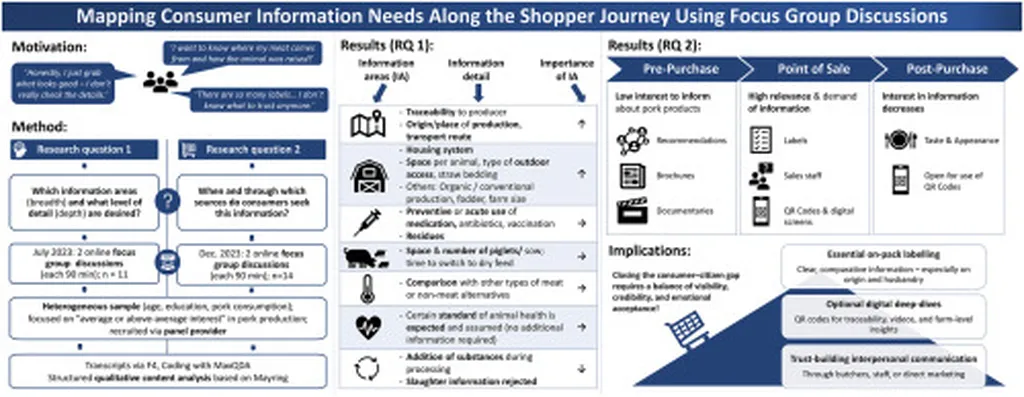
“Animal husbandry and origin were the only attributes consistently linked to a detailed information demand,” Achilles explains. This suggests that consumers are keen to know more about how pigs are raised and where their food comes from. However, topics like slaughter, medication use, and environmental impacts were often avoided, highlighting a phenomenon known as cognitive dissonance—where consumers grapple with information that conflicts with their values or preferences.
The study also sheds light on the shopper journey, revealing that most information seeking occurs at the point of sale. On-pack labels dominate due to their visibility and immediacy, but consumers criticized their ambiguity. “Participants desired relational framing with benchmarks or ratings,” Achilles notes, indicating a need for clearer, more comparative information.
Digital tools like Quick Response (QR) codes and in-store displays were seen as promising but underutilized. Barriers such as low trust, usability issues, and emotional resistance hinder their adoption. “These tools have the potential to provide more detailed information, but they need to be designed in a way that resonates with consumers,” Achilles suggests.
The commercial implications for the agriculture sector are significant. By understanding and addressing these information needs, producers and retailers can enhance transparency and build consumer trust. This could not only boost the market share of higher-welfare pork but also drive innovation in labeling and digital communication tools.
As the study points out, the findings are exploratory but provide a crucial foundation for future research. By continuing to investigate consumer information behavior, the industry can develop more effective strategies to meet consumer demands and foster a more transparent and trustworthy food system.
In an era where consumers are increasingly conscious of their food choices, this research offers a roadmap for the agriculture sector to navigate the complexities of consumer information needs. By embracing transparency and leveraging innovative communication tools, the industry can bridge the consumer-citizen gap and create a more sustainable future for pork production.