
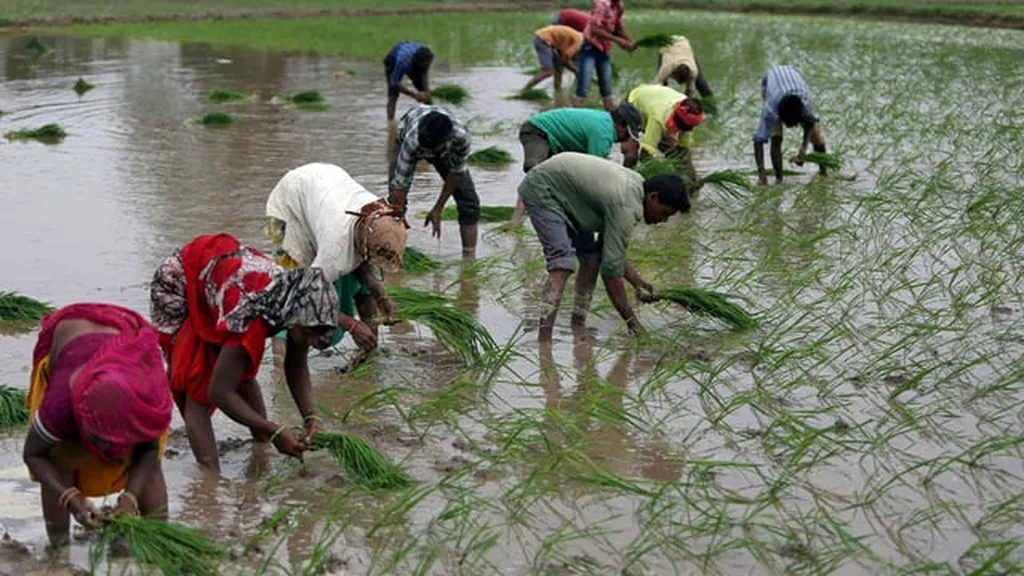
In the heart of India’s rice fields, a silent battle is unfolding. The adversary? The Southern rice black-streaked dwarf virus (SRBSDV), a minuscule yet formidable foe that has been raising alarms since its first outbreak in 2022. A recent study published in the *Journal of Agriculture and Food Research* has shed new light on this viral threat, offering crucial insights that could shape the future of rice production and pest management.
The research, led by Malyaj R. Prajapati from the Advanced Centre for Plant Virology at ICAR-Indian Agricultural Research Institute in New Delhi, delves into the genomic landscape of SRBSDV, comparing its presence in rice and nearby weeds. Using high-throughput sequencing and RT-PCR, the team uncovered a stark contrast in viral loads between the two hosts. “We found significantly higher SRBSDV accumulation in rice than in weeds,” Prajapati explains. “This suggests that while rice is the primary battleground, weeds might be playing a stealthier, yet equally critical role in the virus’s lifecycle.”
The study revealed that SRBSDV’s complete genome was present in rice samples, while only seven near-complete segments were identified in weeds. This discrepancy hints at the virus’s preference for rice but also underscores the potential of weeds as reservoirs, allowing the virus to persist and potentially reinfect rice crops. “The limited genetic variation in weeds suggests that the virus is stable there, possibly lying in wait,” Prajapati notes.
The implications for the agriculture sector are profound. Understanding the virus’s behavior in different hosts can inform more effective disease management strategies. For instance, targeting both rice and weed hosts could disrupt the virus’s lifecycle, reducing its impact on rice yields. Moreover, the study’s findings could drive the development of more robust rice varieties resistant to SRBSDV.
The research also highlights the role of the white-backed planthopper (WBPH) as a vector, confirming its crucial role in viral transmission. This underscores the need for integrated pest management strategies that consider both the virus and its vectors.
Looking ahead, this study opens new avenues for research. Further exploration of the virus’s behavior in different ecological contexts could reveal additional hosts or environmental factors influencing its spread. Additionally, the genetic diversity observed in Indian isolates compared to Chinese populations raises intriguing questions about the virus’s evolutionary history and potential future adaptations.
As the world grapples with the challenges of feeding a growing population, safeguarding staple crops like rice is more critical than ever. This research offers a beacon of hope, providing the tools and knowledge needed to protect these vital crops and ensure food security for millions. In the words of Prajapati, “Our findings underscore the importance of a holistic approach to disease management, one that considers the complex interplay between crops, weeds, and vectors.” This approach could very well define the future of agriculture, ensuring that we stay one step ahead in the ongoing battle against viral threats.