
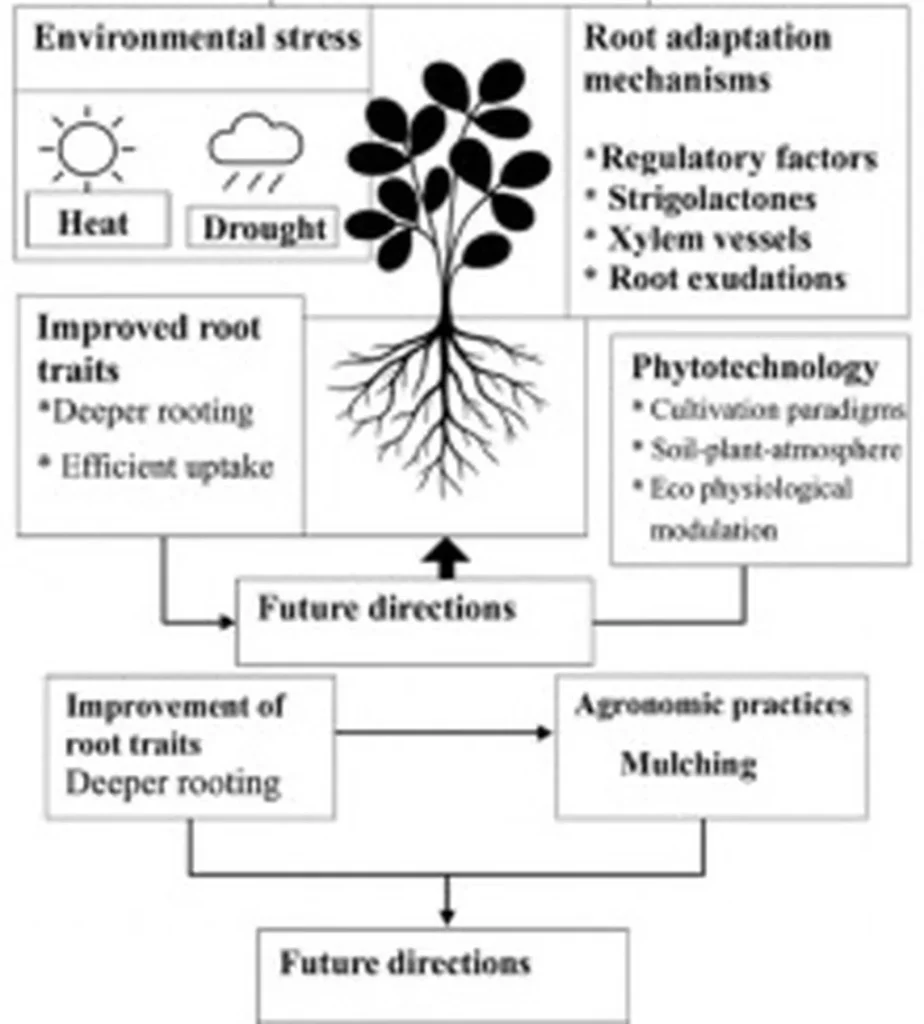
In the ever-evolving landscape of agriculture, the humble peanut is facing an increasingly complex web of environmental stresses. A recent review published in *Applied and Environmental Soil Science* challenges the traditional single-stress paradigm, shedding light on how peanut roots adapt to combined environmental pressures. Led by Yohannes Gelaye of the Key Laboratory of Biology and Genetic Improvement of Oil Crops, this research could reshape our approach to crop resilience and sustainable agriculture.
Peanuts, a vital food and oilseed legume, are often cultivated in marginal environments where they encounter multiple stressors simultaneously—drought, salinity, nutrient imbalances, toxic metals, and pathogens. These combined stresses pose significant challenges to root development and overall crop productivity. “The root system is the plant’s primary interface with its environment,” Gelaye explains. “It plays a central role in sensing and integrating multifactorial signals, orchestrating responses that underpin stress resilience.”
The review highlights the nonlinear and often unpredictable nature of stress interactions, emphasizing that single-stress studies fail to capture the complexity of real-world agricultural systems. This insight is crucial for the agriculture sector, where understanding and mitigating these combined stresses could lead to more resilient and productive crops.
Advances in high-throughput phenotyping, multiomics integration, and artificial intelligence-driven predictive modeling are presented as transformative tools for decoding root adaptation under compound stress scenarios. These technologies could revolutionize how we approach crop improvement, enabling breeders and agronomists to develop strategies that enhance root system resilience.
The review also discusses breeding strategies and agronomic interventions aimed at bolstering root resilience within the broader context of climate-smart agriculture. By advocating for a system-level, multifactorial framework, the research seeks to inform future efforts to secure sustainable peanut production amid escalating environmental challenges.
As the agriculture sector grapples with climate change and resource constraints, this research offers a timely reminder of the need for a more holistic approach to crop resilience. By understanding and leveraging the complex interactions between roots and their environment, we can pave the way for more sustainable and productive agricultural systems.