
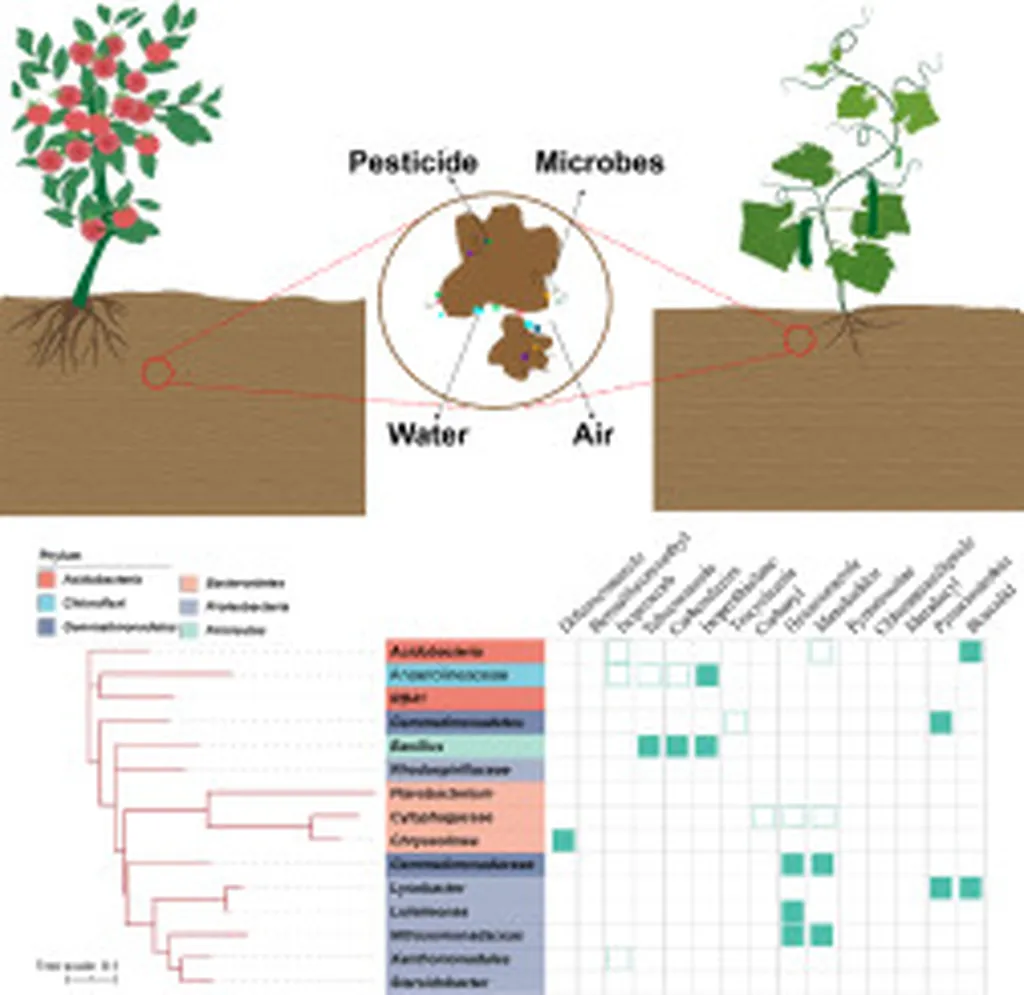
In the intricate dance of agriculture, where every element plays a crucial role, a new study has shed light on the often-overlooked impact of pesticides on soil microbial communities. Published in *Frontiers in Microbiology*, the research led by Ema Némethová from the Czech Agrifood Research Center in Prague, reveals that the effects of pesticides on soil bacteria are far from uniform, with soil pH emerging as a significant mediator.
The study, which investigated the short-term impacts of five herbicides and three fungicides commonly used in legume protection, found that the changes in bacterial diversity and community composition were highly context-dependent. “We observed significant changes in bacterial diversity in one soil, while in another soil, no significant differences among individual pesticides and the untreated control were found,” Némethová explained. This variability underscores the complexity of soil ecosystems and the challenges of predicting pesticide impacts.
The findings have significant implications for the agriculture sector. The study revealed that certain pesticides, particularly those based on CORUM and pendimethalin, consistently reduced bacterial diversity in some soils. This reduction could potentially affect soil health and productivity, as bacteria play vital roles in nutrient cycling and plant health. On the other hand, some pesticides had a neutral effect, suggesting that careful selection could minimize ecological disruption.
One of the most striking findings was the resilience of rhizobial diversity, which remained largely unaffected by the pesticides. Rhizobia are crucial for nitrogen fixation in legumes, making this resilience a promising note for sustainable agriculture. However, the study also highlighted that bacterial community composition was significantly altered by some pesticides, with the specific effects varying among soils.
The research also revealed that pH was a stronger driver of bacterial community structure than soil type or pesticide identity, explaining over 60% of community variability. This finding could guide future pesticide selection and application strategies, with soil pH being a key consideration.
The study’s lead author, Ema Némethová, emphasized the need for a nuanced understanding of these interactions. “Our results support considering soil pH when selecting pesticides to support sustainable soil management and minimize ecological disruption,” she said. This insight could lead to more targeted and effective use of pesticides, reducing their environmental impact while maintaining agricultural productivity.
As the agriculture sector grapples with the dual challenges of feeding a growing population and preserving the environment, this research offers valuable insights. It highlights the need for a more holistic approach to pesticide use, one that considers the complex interplay between chemicals, soil characteristics, and microbial communities. By doing so, farmers and agronomists can make more informed decisions, balancing the need for pest control with the preservation of soil health.
The study also opens up new avenues for research. Understanding how different pesticides interact with soil microbes under varying conditions could lead to the development of more eco-friendly agricultural practices. It could also pave the way for the use of microbial inoculants to mitigate the negative impacts of pesticides on soil health.
In the end, this research is a reminder of the intricate web of life beneath our feet. It’s a call to look closer, to understand better, and to act more responsibly. As we strive to feed the world, we must also strive to protect the delicate balance of ecosystems that sustain us.