
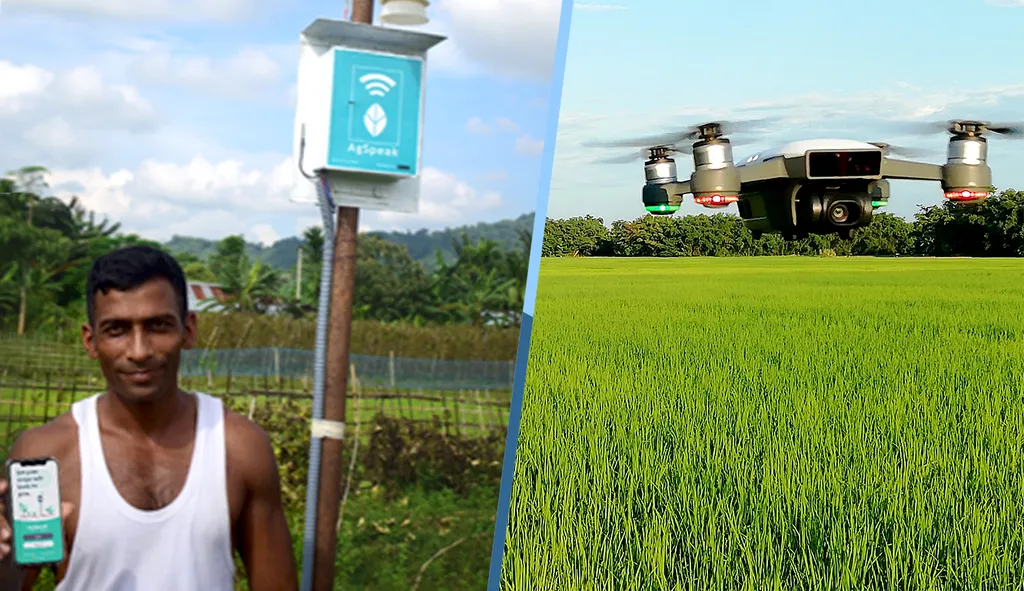
In the heart of Assam, India, a quiet revolution is brewing in the fields of precision agriculture. Researchers, led by Mrutyunjay Padhiary from the Department of Agricultural Engineering at Assam University, are pioneering the integration of 3D printing, the Internet of Things (IoT), and artificial intelligence (AI) to transform traditional farming practices. Their work, recently published in *Academia Engineering*, offers a glimpse into a future where technology and agriculture converge to create smarter, more sustainable farms.
Precision agriculture is not a new concept, but the tools and technologies available to farmers are evolving rapidly. Padhiary and his team are exploring how 3D printing can be used to create customized sensors and components tailored to specific agricultural needs. These sensors, once deployed in the field, can monitor soil health, crop conditions, and environmental factors with unprecedented accuracy. “The ability to fabricate sensors on-demand and at a lower cost is a game-changer,” Padhiary explains. “It allows farmers to deploy precise monitoring systems without the high costs typically associated with off-the-shelf solutions.”
The integration of IoT takes this a step further. By connecting these sensors to a network, farmers can collect real-time data on key agricultural parameters such as soil moisture, nutrient levels, and pest infestations. This data is then analyzed using AI algorithms, which can detect early signs of nutrient deficiencies, diseases, and stress conditions in crops. “AI and image-processing techniques enable us to deliver advanced analytics that were previously unavailable,” Padhiary notes. “This allows for early intervention and more effective management of crops.”
The commercial impacts of this research are profound. For farmers, the ability to optimize inputs such as seeds, fertilizers, and irrigation can lead to significant cost savings and increased yields. “By reducing waste and improving efficiency, these technologies can make farming more profitable and sustainable,” Padhiary says. “This is particularly important in regions where resources are limited and farmers are often at the mercy of unpredictable weather patterns.”
Moreover, the environmental benefits are substantial. Precision agriculture reduces the need for excessive use of chemicals and water, minimizing the environmental footprint of farming. “By using data-driven practices, we can ensure that resources are used more efficiently, reducing pollution and conserving natural resources,” Padhiary explains.
However, the path to widespread adoption is not without challenges. Cost, technical expertise, and the durability of these technologies remain significant hurdles. “While the potential is enormous, we need to address these limitations to make these technologies accessible to a broader range of farmers,” Padhiary acknowledges. “This includes developing more robust and affordable solutions that can withstand the rigors of agricultural environments.”
The research published in *Academia Engineering* by Padhiary and his team at the Department of Agricultural Engineering, Triguna Sen School of Technology, Assam University, Silchar, India, highlights the transformative potential of integrating digital technologies with agricultural practices. As these technologies continue to evolve, they promise to reshape the future of farming, making it more efficient, sustainable, and resilient. The journey towards smarter farming is just beginning, and the possibilities are as vast as the fields they aim to transform.