
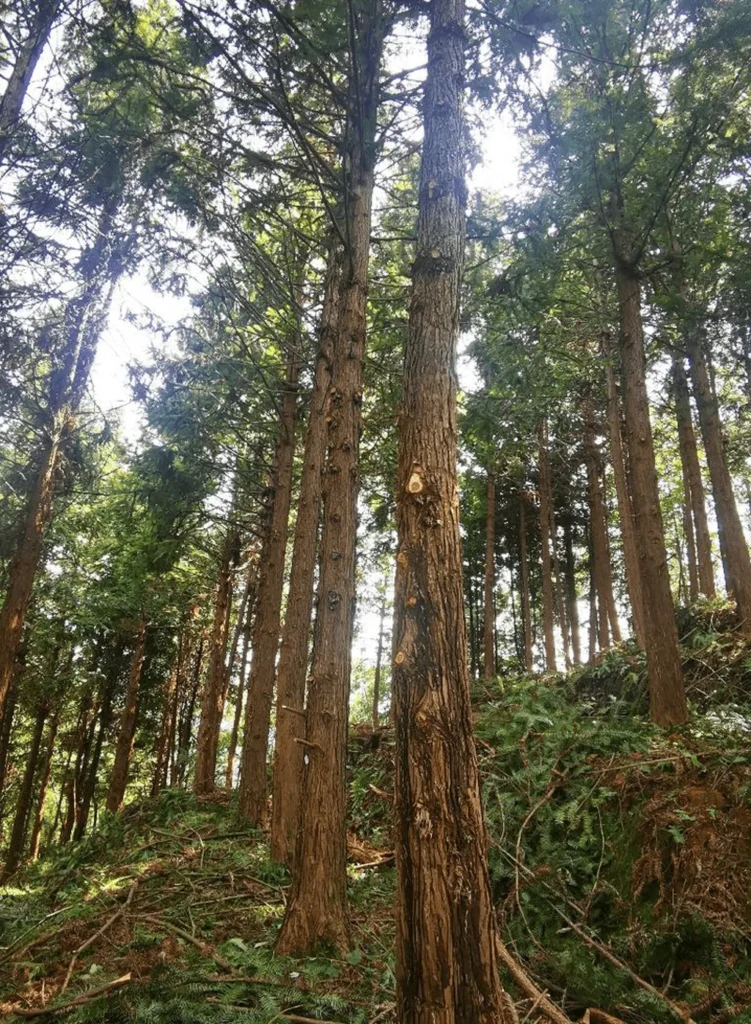
In the heart of China’s forestry industry, a groundbreaking study has shed new light on the composition of Chinese fir wood, a species critical to the country’s timber production. The research, led by Haizhao Xi from the State Key Laboratory of Tree Genetics and Breeding at Nanjing Forestry University, delves into the intricate world of secondary wall polysaccharides and the role of Fasciclin-like arabinogalactan-proteins (FLAs) in the development of this important tree species.
Chinese fir, known scientifically as Cunninghamia lanceolata, is one of China’s most valuable fast-growing timber trees. Understanding its wood composition and the genetic factors influencing its growth is crucial for improving breeding programs and enhancing the quality of timber produced. The study, published in the journal *Industrial Crops and Products*, provides a comprehensive analysis of the monosaccharide linkages in Chinese fir wood cell walls, offering insights that could revolutionize the forestry sector.
The research team discovered that cellulose, heteroxylan, and mannan are the most abundant polysaccharides in Chinese fir wood, accounting for 71.13%, 10.71%, and 8.04% of total sugars, respectively. “These findings are significant because they give us a clearer picture of the molecular architecture of Chinese fir wood,” Xi explained. “By understanding the distribution and function of these polysaccharides, we can better manipulate the genetic traits that influence wood quality and growth rates.”
One of the most intriguing aspects of the study is the role of FLAs in regulating vascular development. The team identified 16 FLA genes in Chinese fir and found that two of them, ClFLA2 and ClFLA13, were highly expressed in xylem tissues. Overexpressing these genes in Arabidopsis plants led to notable changes in stem development, including reduced xylem vessel numbers, increased lignin content, and decreased crystalline cellulose. “This suggests that ClFLA2 and ClFLA13 play crucial roles in the development of secondary walls,” Xi noted. “By manipulating these genes, we could potentially enhance the quality and yield of timber from Chinese fir and other tree species.”
The implications of this research extend far beyond the laboratory. For the agriculture and forestry sectors, the findings open up new avenues for genetic breeding and biotechnology. By understanding the genetic and molecular mechanisms underlying wood formation, researchers can develop trees with improved traits, such as faster growth rates, higher lignin content, and enhanced resistance to pests and diseases. This could lead to more sustainable and efficient forestry practices, benefiting both the environment and the economy.
The study also highlights the importance of interdisciplinary research in advancing our understanding of plant biology. By combining genetic analysis, molecular biology, and advanced imaging techniques, the team was able to uncover the complex interactions between polysaccharides and FLAs in Chinese fir wood. “This research is a testament to the power of collaboration and the integration of different scientific disciplines,” Xi said. “It’s only by working together that we can tackle the complex challenges facing the forestry industry today.”
As the world grapples with the impacts of climate change and the need for sustainable resources, studies like this one are more important than ever. By unlocking the secrets of Chinese fir wood, researchers are paving the way for a future where forestry is not only more productive but also more environmentally friendly. The work of Haizhao Xi and his team at Nanjing Forestry University is a shining example of how science can drive innovation and shape the future of agriculture and forestry.