
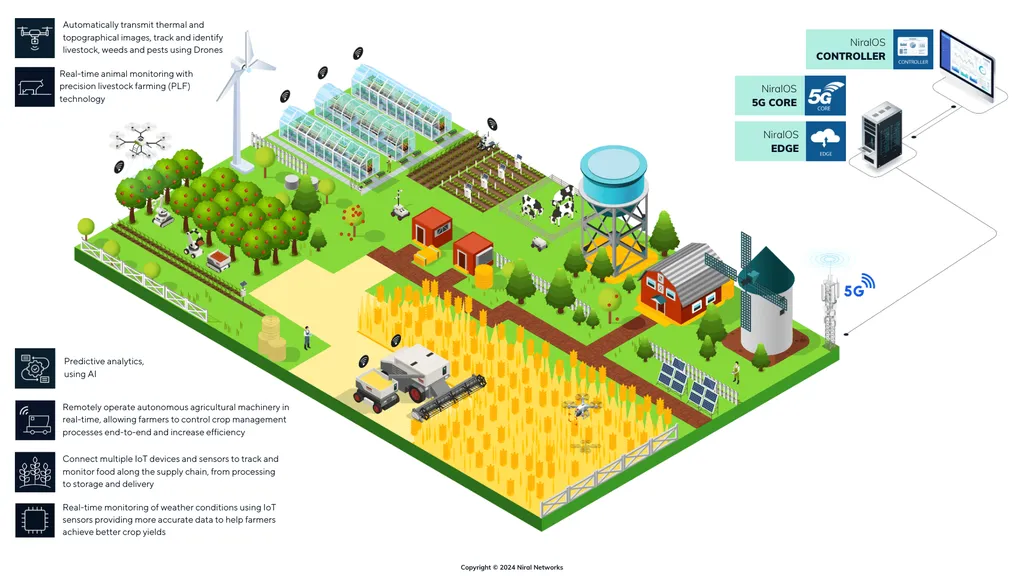
In the heart of the agricultural revolution, a new player is emerging: 5G networks. As the global population grows and environmental concerns mount, farmers and agribusinesses are turning to technology to boost efficiency and productivity. But what’s the real value of 5G in agriculture, and is it worth the investment? A recent study published in the *Proceedings of the Conference on Production Systems and Logistics* delves into these questions, offering a comprehensive cost-benefit analysis of 5G networks for agricultural applications.
The study, led by Tim Benedikt Walter, explores the economic feasibility of implementing 5G networks in agriculture, weighing the benefits against the costs of deployment and maintenance. The research highlights several 5G-specific use cases, including precision agriculture, livestock monitoring, and swarm robotics, which promise to transform the way we farm.
“5G networks can enable new digital agricultural processes, increase productivity, and improve sustainability,” Walter explains. The study quantifies these benefits using industry reports and case studies, painting a picture of a future where 5G technology drives agricultural innovation.
One of the key advantages of 5G is its ability to support precision agriculture. With high-speed, low-latency connectivity, farmers can deploy autonomous vehicles and drones for tasks like planting, monitoring, and harvesting. This not only increases efficiency but also reduces the environmental impact of farming by optimizing resource use.
Livestock monitoring is another area where 5G can make a significant difference. By providing real-time data on animal health and behavior, 5G networks enable farmers to intervene early in cases of illness or distress, improving animal welfare and reducing losses.
Swarm robotics, a concept that involves coordinating multiple robots to work together, is also explored in the study. This technology has the potential to revolutionize tasks like weeding, pruning, and harvesting, making them faster, more accurate, and less labor-intensive.
However, the study also acknowledges the challenges of deploying 5G networks in rural areas, where infrastructure is often limited. The costs associated with equipment and infrastructure are significant, and the study emphasizes the need for careful consideration of these factors when assessing the economic feasibility of 5G networks.
The research provides a valuable overview of the cost factors involved in implementing 5G networks for agricultural applications. It demonstrates that while there are significant upfront costs, the long-term benefits can outweigh these expenses, making 5G a worthwhile investment for agricultural businesses.
As the agricultural industry continues to evolve, the insights from this study will be crucial in shaping future developments. By understanding the cost-benefit dimensions of 5G networks, farmers and agribusinesses can make informed decisions about technology adoption, paving the way for a more efficient, productive, and sustainable future.
The study, led by Tim Benedikt Walter and published in the *Proceedings of the Conference on Production Systems and Logistics*, offers a comprehensive analysis of the economic feasibility of 5G networks in agriculture. As the industry grapples with the challenges of feeding a growing population while minimizing environmental impact, the insights from this research will be invaluable in guiding future developments.