
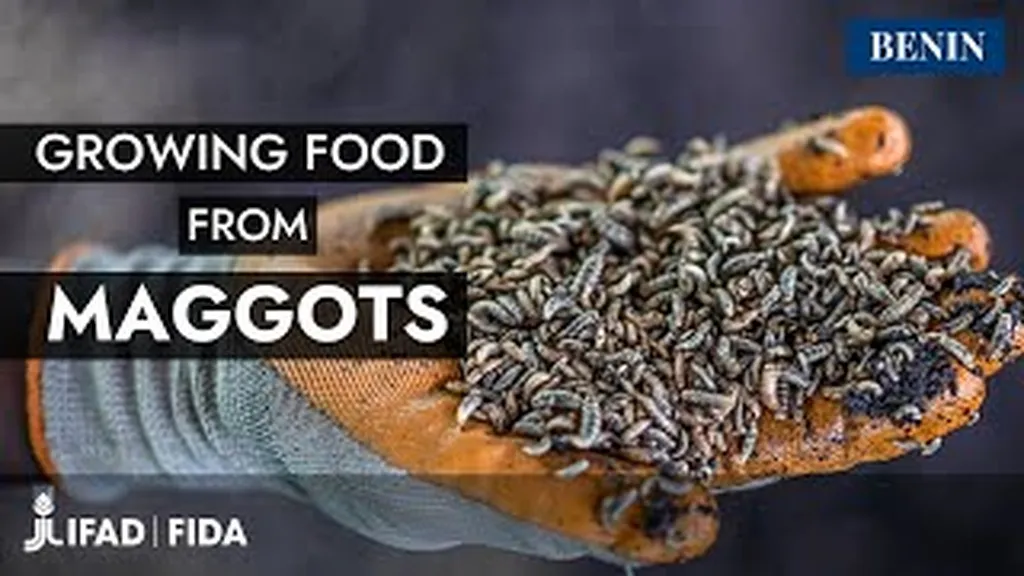
In the heart of Benin, a humble insect is making waves in the world of sustainable agriculture. The black soldier fly (Hermetia illucens), often overlooked, is emerging as a key player in the quest for eco-friendly farming practices. Researchers from the AgroEcoHealth Platform at the International Institute of Tropical Agriculture in Cotonou, Benin, have published a study in *Frontiers in Plant Science* that highlights the potential of black soldier fly frass—a nutrient-rich byproduct of insect farming—as a sustainable organic fertilizer.
The study, led by Carline C. J. Santos, explored the effects of composted black soldier fly (BSF) frass on the growth and yield of Solanum macrocarpon (African eggplant) and Lactuca sativa (lettuce). The results are promising, to say the least. “BSF frass at 20 t/ha and 10 t/ha significantly outperformed other fertilizers in promoting plant growth and increasing yield in lettuce and African eggplant,” Santos explained. The yield improvements reached approximately 50% compared with inorganic fertilizer treatments, a finding that could revolutionize the way farmers approach soil nutrition.
The experiments involved comparing BSF frass with poultry manure and inorganic fertilizers (NPK and urea). For lettuce, treatments included various combinations of BSF frass, poultry manure, and urea. For African eggplant, the study tested different concentrations of BSF frass against poultry manure and inorganic fertilizers. The results showed that BSF frass not only enhanced plant growth but also improved soil health, with significant differences in soil nutrient composition post-harvest.
The implications for the agriculture sector are substantial. As soil nutrient depletion threatens food systems worldwide, the need for sustainable and effective fertilizers has never been greater. BSF frass offers a viable alternative to both inorganic and organic fertilizers, providing a sustainable solution for improving crop productivity and soil health. “This research opens up new avenues for farmers to adopt more sustainable practices,” Santos noted. “It’s not just about increasing yields; it’s about doing so in a way that benefits the environment and ensures long-term agricultural productivity.”
The study’s findings suggest that BSF frass could play a crucial role in the future of agriculture. As the global population continues to grow, the demand for food will only increase. Sustainable farming practices, such as those highlighted in this research, will be essential in meeting this demand while minimizing environmental impact. The use of BSF frass as a fertilizer could also reduce the reliance on inorganic fertilizers, which often have negative environmental consequences.
Moreover, the commercial potential of BSF frass is significant. Farmers and agricultural companies could benefit from the development of new products and markets centered around this sustainable fertilizer. The study’s results provide a strong foundation for further research and commercialization efforts, paving the way for a more sustainable and productive agricultural future.
As the world grapples with the challenges of climate change and food security, innovative solutions like BSF frass offer hope. The research conducted by Santos and her team at the AgroEcoHealth Platform is a testament to the power of scientific inquiry and its potential to drive positive change in the agriculture sector. With further exploration and adoption, BSF frass could become a cornerstone of sustainable farming practices, benefiting farmers, consumers, and the environment alike.