
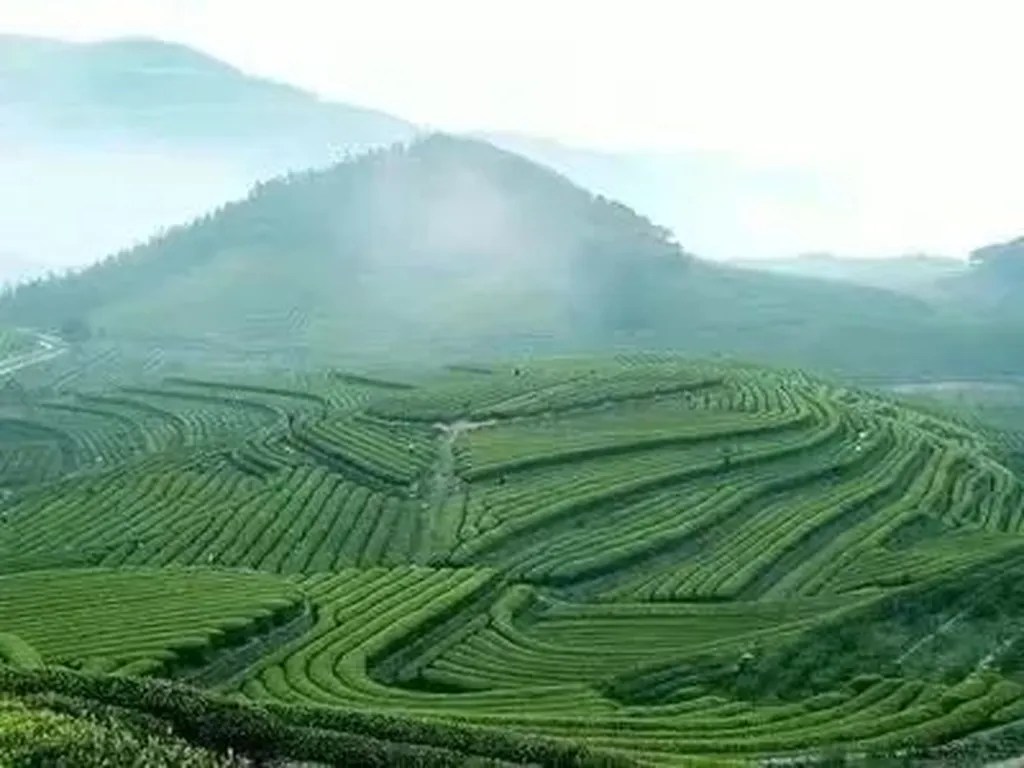
In the heart of China’s Fujian province, a delicate dance of tradition and innovation is unfolding, one tea leaf at a time. The Oolong tea making skills, a cherished intangible cultural heritage (ICH), are being passed down through generations, but not without challenges. A recent study published in *Scientific Reports* sheds light on the intricate mechanisms that drive practitioners to transmit these ancient techniques, offering valuable insights for the agriculture sector and cultural tourism.
The research, led by Youcheng Chen from the Business School at Quanzhou Normal University, employs a mixed-methods approach to understand the motivations and behaviors of Oolong tea making skill inheritors. By integrating grounded theory with partial least squares structural equation modeling, the study reveals a complex interplay of factors that influence the transmission of ICH.
At the core of the study is the Motivation-Opportunity-Ability (MOA) framework, which posits that behavior is driven by a combination of internal and external factors. The research findings indicate that inheritance behavior is directly influenced by inheritance motivation, intrinsic capability, and external opportunity. “We found that external opportunities first enhance the intrinsic capabilities of practitioners, which in turn boosts their inheritance motivation, ultimately leading to inheritance behavior,” explains Chen.
The study also introduces a novel moderating factor: local cultural vitality. It suggests that a vibrant local cultural environment strengthens the conversion of motivational intent into actual transmission practices. “A lively cultural scene can act as a catalyst, encouraging practitioners to share their knowledge and skills more actively,” says Chen.
The implications of this research extend beyond the realm of cultural preservation. For the agriculture sector, understanding the mechanisms that drive the transmission of traditional skills can open up new avenues for commercialization and tourism. By fostering a supportive environment that enhances practitioners’ capabilities and motivations, the agriculture sector can tap into the rich cultural heritage of Oolong tea making, creating unique products and experiences that attract both domestic and international tourists.
Moreover, the study’s findings can inform policy decisions aimed at preserving and promoting ICH. By providing actionable guidance for supporting the continuity of living cultural heritage, the research offers a roadmap for policymakers, educators, and practitioners to work together towards a sustainable future for intangible cultural heritage.
As the world grapples with the challenges of globalization and cultural homogenization, the preservation of intangible cultural heritage has never been more critical. The Oolong tea making skills, with their rich history and cultural significance, offer a compelling case study for understanding the complex dynamics of heritage transmission. By shedding light on the motivations and behaviors of practitioners, this research paves the way for a more nuanced and effective approach to cultural preservation, one that harnesses the power of local cultural vitality and external opportunities to drive inheritance behavior.
In the words of Chen, “Our hope is that this research will not only advance the theoretical application of the MOA model but also contribute to the broader discourse on ICH sustainability, offering practical recommendations for strengthening the intergenerational transmission capacity of ICH practitioners.” As the world continues to grapple with the challenges of cultural preservation, the insights gleaned from this study offer a beacon of hope, guiding us towards a future where traditional skills and knowledge are cherished, celebrated, and passed down to future generations.