
In the vast network of the East Asian-Australasian Flyway (EAAF), a critical lifeline for migratory birds, wetlands are vanishing at an alarming rate. Land cover changes, unsustainable use, and climate change are taking a toll, threatening the very existence of these vital ecosystems. However, a recent study published in *Scientific Reports* offers a beacon of hope, identifying priority wetland sites that could shape the future of migratory bird conservation and sustainable agriculture in the region.
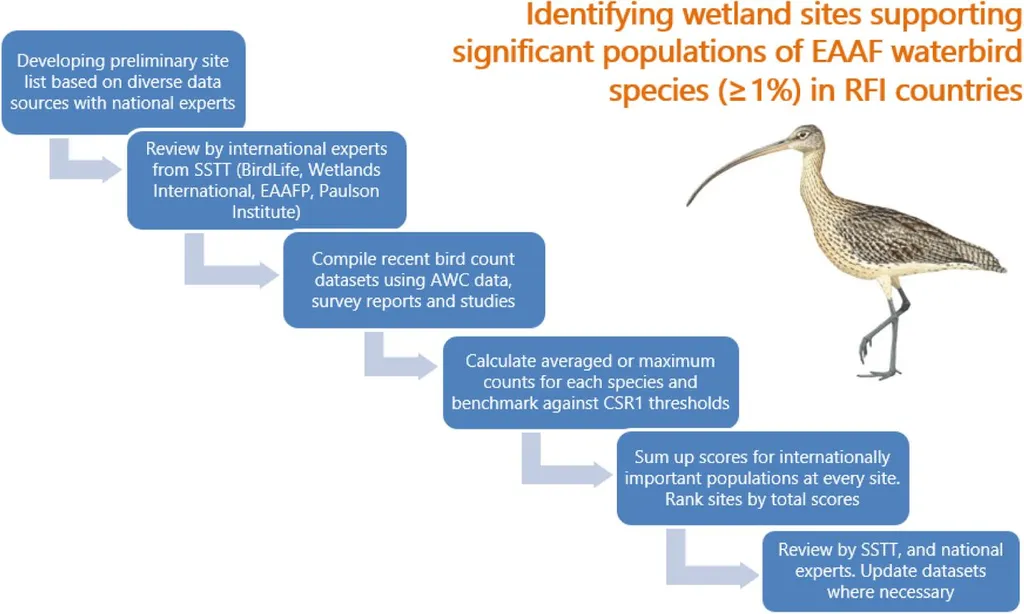
The study, led by Mike Crosby of BirdLife International, aims to bolster the EAAF Regional Flyway Initiative (RFI). This initiative seeks to protect, manage, and restore priority wetlands across 10 Asian countries while promoting sustainable livelihoods for local communities. The research team meticulously analyzed modern waterbird count data from wetlands across Asia, applying international criteria to identify sites of high conservation priority.
“Through existing analyses and expert consultations, we short-listed a minimum of 270 internationally important wetlands as candidate localities for further assessment,” Crosby explains. The team then assessed count data of EAAF waterbird species against criteria aligned with the Convention on Wetlands (Ramsar Convention), the EAAF Partnership’s Flyway Site Network, and Important Bird and Biodiversity Areas. This iterative process identified a subset of priority sites, drawing on newly available species population thresholds.
The result? A total of 147 wetland sites across the 10 countries, both freshwater and coastal, were identified as high conservation priorities. These sites host at least 34 threatened species, including significant proportions of their global populations. The study underscores the need to reconcile selected sites and landscapes with each country’s conservation and development priorities, ecological connectivity, and ecosystem services.
For the agriculture sector, this research opens doors to innovative, sustainable practices. Wetlands play a crucial role in maintaining ecological balance, supporting pollinators, and mitigating climate change impacts. By protecting these priority sites, farmers can benefit from enhanced agricultural productivity and resilience. Moreover, the study’s emphasis on sustainable agriculture, aquaculture, and ecotourism presents opportunities for diversifying livelihoods and fostering economic growth in local communities.
The research also highlights the importance of international collaboration and data-driven decision-making. By leveraging modern waterbird count data and expert consultations, the study provides a robust framework for identifying and prioritizing wetland sites. This approach can be replicated in other regions, shaping future developments in migratory bird conservation and sustainable agriculture.
As the world grapples with the impacts of climate change and biodiversity loss, this study offers a timely reminder of the interconnectedness of ecosystems and human livelihoods. By protecting priority wetland sites, we can safeguard migratory birds, support sustainable agriculture, and build resilient communities. The journey is just beginning, but with concerted efforts and innovative solutions, the future of the EAAF and its wetlands can be secured.
The study, led by Mike Crosby of BirdLife International, was published in *Scientific Reports*, providing a comprehensive roadmap for the conservation of migratory birds and the promotion of sustainable agriculture in the East Asian-Australasian Flyway.