
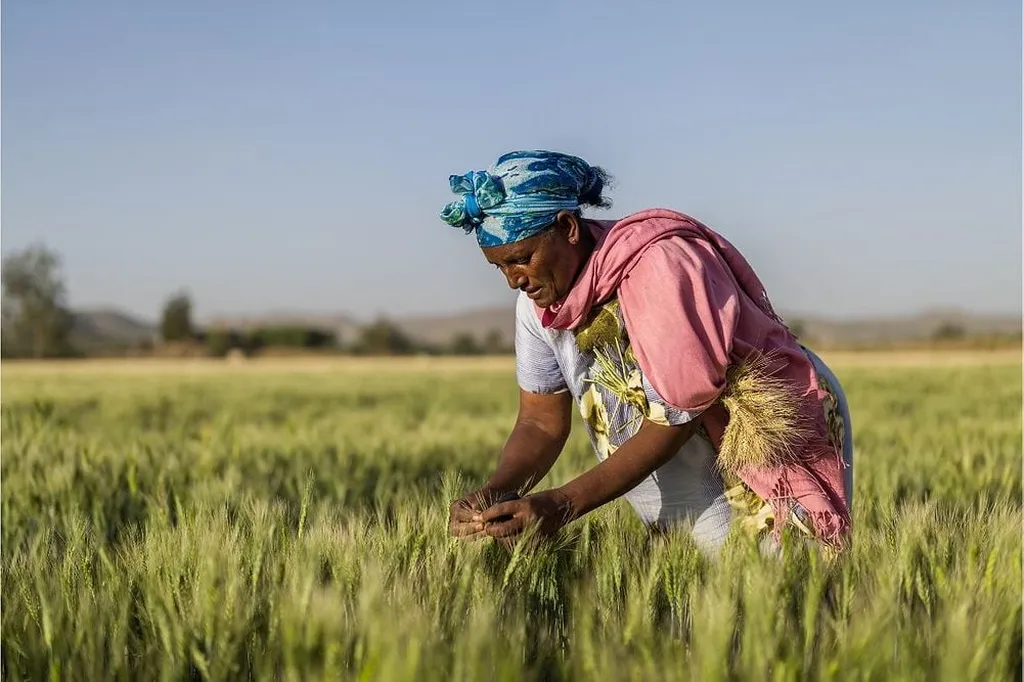
In the heart of Ethiopia, where smallholder farmers till their land with animal draft power and rely on the whims of rainfall, a new study offers a beacon of hope for boosting agricultural productivity. Published in *Scientific Reports*, the research led by Yadeta Bedasa from the Department of Agricultural Economics at Jimma University, delves into the impacts of climate-smart agriculture (CSA) practices on technical efficiency and yield gaps.
The study, which surveyed 385 randomly selected households, examined the effects of three key CSA practices: crop diversification, agroforestry, and adjusted planting dates. Using a multinomial endogenous switching regression (MESR) model, the researchers found that these practices significantly enhance farmers’ technical efficiency. Adjusted planting dates increased efficiency by 25%, crop diversification by 57%, and agroforestry by 54%.
“These findings underscore the transformative potential of CSA practices when combined with high farmer efficiency,” said Bedasa. “However, the adoption of these practices can be compromised if farmers lack the technical capability to be effective.”
The research also revealed that adopting adjusted planting dates and agroforestry decreases the efficiency yield gap by 2.52 t/ha and 1.16 t/ha, respectively. Compared to non-adoption, adopting these practices results in a greater average technical efficiency score and a smaller average efficiency yield gap per hectare.
The commercial implications of these findings are substantial. For the agriculture sector, this research highlights the importance of integrating CSA practices to maximize productivity and close yield gaps. It also emphasizes the need for policies that enhance farmers’ technical efficiency as a cornerstone of CSA policy.
As the world grapples with the challenges of climate change and food security, this study offers valuable insights into how smallholder farmers in Ethiopia and similar regions can adapt and thrive. By combining CSA practices with efforts to improve technical efficiency, policymakers and agricultural stakeholders can pave the way for a more sustainable and productive future.
The study, led by Yadeta Bedasa from the Department of Agricultural Economics at Jimma University, was published in *Scientific Reports*, providing a robust foundation for future developments in the field of climate-smart agriculture.