
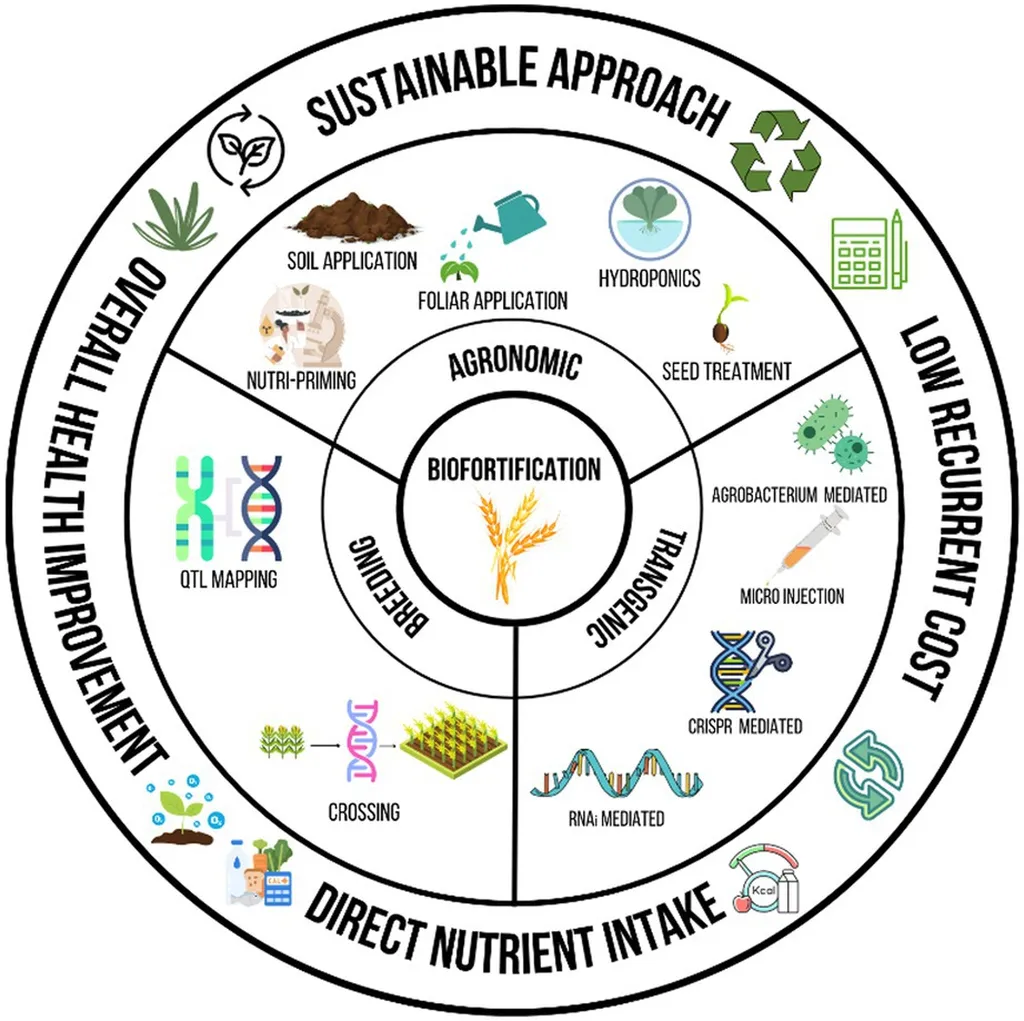
In the quest to enhance crop nutritional quality and combat global micronutrient deficiencies, a recent study published in *Scientific Reports* offers promising insights. Researchers, led by Rahman Farzadifar from the Department of Horticultural Science at Yas.C., Islamic Azad University, investigated the effects of foliar biofortification with selenium (Se) and iodine (I) on Ocimum basilicum L., commonly known as basil. The findings suggest that strategic application of these micronutrients could significantly boost the nutritional profile of basil, with potential ripple effects across the agriculture sector.
The study employed a factorial randomized complete block design, testing various combinations of selenium (as Na₂SeO₄) and iodine (as KI) on basil plants. The most effective treatment, identified as Se3-I0.4 (3 mg/L Se + 0.4 µM I), resulted in a 91% increase in leaf iodine content and a notable rise in selenium content. “The combined application of selenium and iodine not only enhanced the micronutrient profile but also improved the plant’s antioxidant capacity,” Farzadifar explained.
The research revealed significant increases in chlorophyll a (∼40%), chlorophyll b (∼43%), and carotenoids (∼195%), which are crucial for plant health and human nutrition. Additionally, the activity of antioxidant enzymes like superoxide dismutase and ascorbate peroxidase saw a marked improvement. This enhancement in antioxidant properties could make basil a more attractive crop for health-conscious consumers and the functional food industry.
One of the most intriguing findings was the alteration in the essential oil profile of basil. The treatment increased the concentration of linalool, a desirable aroma compound, by ∼58%, while decreasing less favorable compounds like 1,8-cineole and eugenol. This could have significant implications for the culinary and aromatic industries, where the quality and composition of essential oils are paramount.
From a commercial perspective, the study highlights the potential for farmers to adopt foliar biofortification techniques to enhance the nutritional and market value of their crops. “This approach could open new avenues for farmers to produce high-value crops that meet the growing demand for nutrient-dense foods,” Farzadifar noted. The findings could also drive innovation in agricultural practices, encouraging the development of new biofortification strategies and products tailored to specific crops and market needs.
The research not only underscores the importance of micronutrient biofortification but also paves the way for future studies exploring the synergistic effects of different micronutrients on various crops. As the global population continues to grow, the need for nutrient-rich foods becomes increasingly critical. This study offers a glimpse into how advanced agricultural techniques can help meet these challenges, shaping the future of sustainable and nutritious food production.