
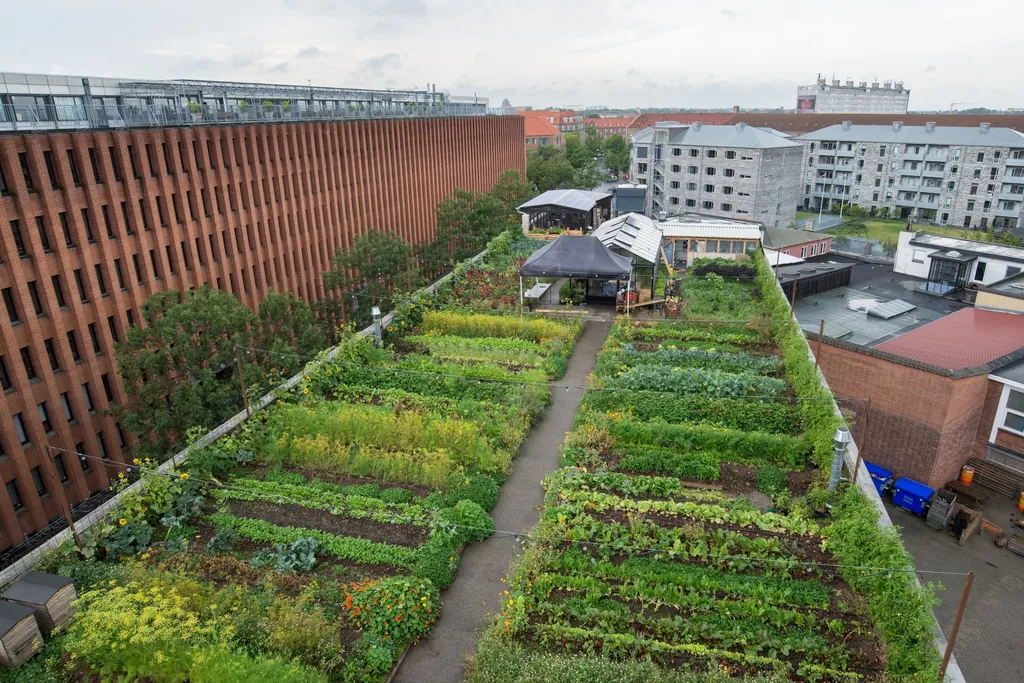
In the heart of bustling cities, where space is a premium, terrace farming has emerged as a sustainable solution for urban agriculture. However, traditional terrace farming methods often struggle with inconsistent water use and unstable microclimatic conditions, leading to reduced productivity. A recent study published in *Scientific Reports* offers a promising solution to these challenges, potentially revolutionizing urban farming and boosting agricultural yields.
The research, led by Komathi J. from the Department of Production Technology at Anna University MIT Campus, introduces an automatic drip-irrigation control system based on a Fuzzy Logic Controller (FLC). This innovative system integrates multi-sensors, including temperature-humidity and soil moisture sensors, to ensure precise water delivery. “The key to our system is the fusion of multiple sensors and the application of fuzzy logic,” explains Komathi J. “This allows us to create an intelligent, adaptive system that responds to the unique microclimatic conditions of terrace farming.”
The study involved a 12-week cultivation period using Okra (Abelmoschus esculentus). The results were impressive: a 50% increase in yield and a 7.7% reduction in water use compared to traditional irrigation methods. “We saw a significant improvement in both productivity and water efficiency,” says Komathi J. “This demonstrates the potential of our system to support sustainable urban agriculture.”
The commercial implications of this research are substantial. As urbanization continues to rise, the demand for locally grown, sustainable produce will only increase. This smart agricultural approach could help farmers meet this demand more efficiently and sustainably. “Our system reduces human effort and improves productivity, making it an attractive option for commercial urban farmers,” notes Komathi J.
Moreover, the use of fuzzy logic and sensor fusion in this study opens up new possibilities for the future of agriculture. “This technology could be applied to other types of farming, not just terrace farming,” suggests Komathi J. “It’s a versatile tool that can help us create more intelligent, resource-efficient agricultural systems.”
The study’s findings are a significant step forward in the field of smart agriculture. By demonstrating the potential of sensor fusion and fuzzy logic, it paves the way for more innovative, sustainable, and efficient farming practices. As we look to the future, this research could shape the development of next-generation agricultural technologies, helping us meet the challenges of feeding a growing urban population.