
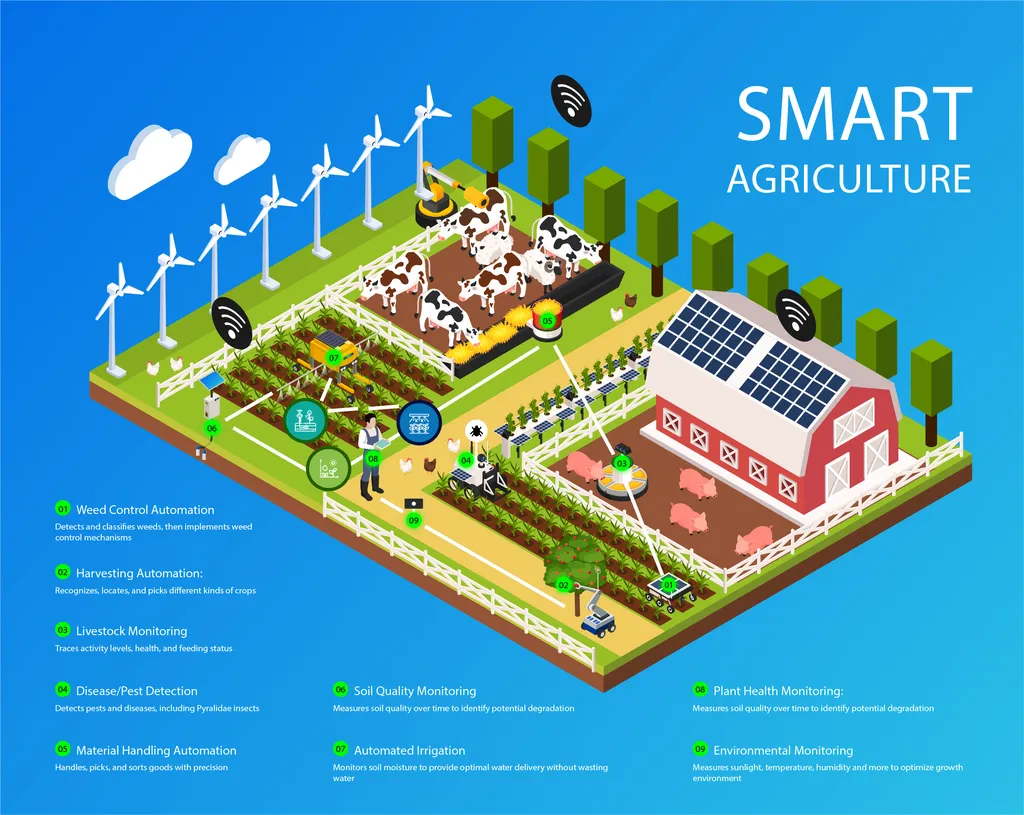
In the heart of Delta, British Columbia, a groundbreaking smart-farming project is taking root, bolstering food security for residents and setting a new standard for agricultural innovation. The project, spearheaded by Delta-based Windset Farms, is leveraging advanced bio-signals and cutting-edge technology to revolutionize greenhouse crop management and ensure a stable, local food supply.
Agriculture and Food Minister Lana Popham recently visited the farm to announce two new training programs aimed at equipping individuals with the skills necessary to thrive in the burgeoning agritech sector. These initiatives are part of a broader effort to integrate technology and agriculture, ensuring that British Columbians can rely on a healthy, locally-grown food supply amidst a changing climate and global uncertainties.
“With a changing climate and uncertainty from the U.S., it’s critical that two of British Columbia’s greatest strengths, technology and agriculture, come together to ensure British Columbians can rely on healthy food grown here at home,” said Ravi Kahlon, Minister of Jobs and Economic Growth, in a joint news release with the Agriculture and Food Ministry.
The smart-farming system being developed by Windset Farms, with support from the B.C. Centre for Agritech Innovation (BCCAI), utilizes sensors to monitor plant stress and automate decision-making processes. By employing advanced data analytics and machine learning, the project aims to optimize climate control, nutrient uptake, and early disease detection in hydroponic tomatoes. This innovative approach not only enhances production efficiency but also minimizes resource use, ensuring consistent, high-quality produce year-round.
“This partnership helps us develop advanced smart-farming systems that improve real-time greenhouse monitoring, optimize climate and nutrient management, and detect potential plant disease earlier,” said Tony Kalf, chief technology officer at Windset Farms. “These innovations allow us to make meaningful impacts through job creation, new business opportunities, and by ensuring the security and stability of B.C.’s food supply.”
The project is a collaborative effort involving Simon Fraser University (SFU), Koidra (AI-powered automation), Vivent (plant biosensors), and Wageningen University & Research (WUR) in the Netherlands. This partnership emerged from a 2023 letter of intent between SFU and WUR to address agricultural sustainability challenges, such as food production and climate change.
In addition to the smart-farming initiative, two new training programs are being developed to support the adoption of more resilient crop production systems. Through Kwantlen Polytechnic University (KPU) in Surrey, a program will train participants in dry farming, a method that uses specific agro-ecological measures to cultivate crops with minimal additional water. This initiative is a collaboration between the Ministry of Agriculture and Food’s Regional Extension Program, KPU’s Institute for Sustainable Food Systems, local farmers, and industry groups.
“We’re engaging dozens of farmers, professionals, and students on soil health, agro-ecology, soil and weather data collection, and advancing drought-resilient farming,” said Kent Mullinix, director of KPU’s Institute for Sustainable Food Systems.
Furthermore, the University of the Fraser Valley (UFV) is developing a training program to demonstrate new robotic-weeding technology. This project aims to reduce labor reliance, minimize herbicide use, and improve sustainability by efficient resource management. “The partnership with BCCAI enables new opportunities for students on current agricultural issues and shows them the types of skills and work opportunities available in agricultural robotics, such as the robotic-weeder demonstration,” said Renee Prasad, department head and associate professor of agriculture technology at UFV.
The three new projects and training programs represent a total investment of approximately $658,000, with $280,000 from BCCAI, $204,000 from industry, and an in-kind industry contribution valued at $174,000. These initiatives are examples of how B.C. is supporting the agritech sector, enabling companies to commercialize their technologies and create cleaner, more resilient, and more productive agriculture, food, and seafood industries.
“It is anticipated the new project and training opportunities will give more than 350 people advanced training in areas such as horticulture, regenerative agriculture, data management, and agri-business management, and create three new jobs and increase business opportunities through commercialization,” said Minister Popham.
This work is part of the Province’s Look West plan for jobs and industry, which outlines B.C.’s vision to deliver jobs and opportunities by strengthening the workforce and developing a more independent economy. The investment by Pacific Economic Development Canada (PacifiCan) in BCCAI is scaling up homegrown innovation and boosting B.C. business growth, key steps in building a strong Canadian economy.
As these initiatives take root, they promise to strengthen food security, create jobs, and foster a more sustainable and resilient agricultural sector