
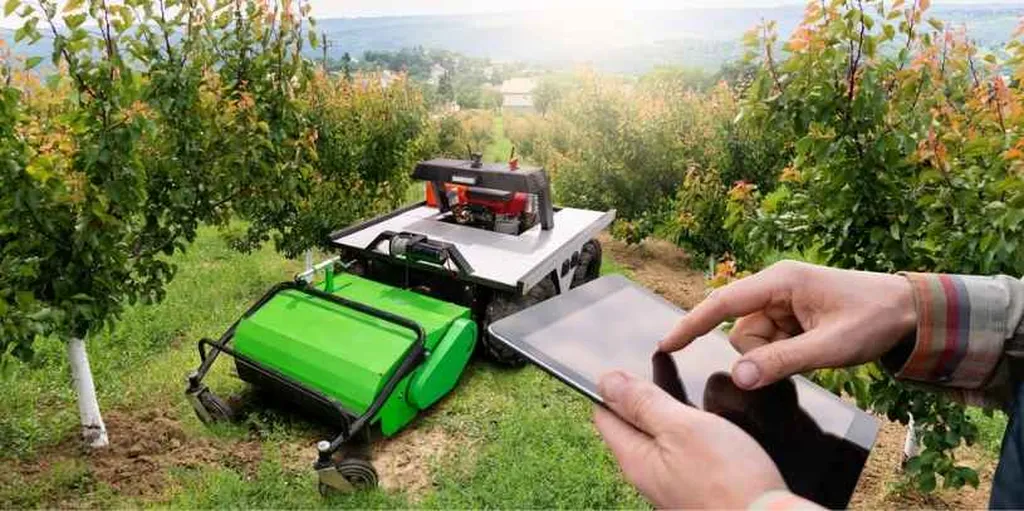
In the ever-evolving landscape of agricultural technology, a new review published in *Smart Agricultural Technology* is shedding light on an often-overlooked yet critical task: autonomous mowing. Led by Nassim Bessaad of the Agricultural Research and Development Program (ARDP) at Central State University, the research delves into the current state, challenges, and future opportunities of autonomous mowing in agriculture, offering a roadmap for innovation in this understudied area.
Autonomous mowing in orchards, vineyards, and specialty crop systems presents a significant opportunity to reduce labor costs, enhance safety, and boost farm productivity. Yet, despite its importance, this technology has lagged behind other agricultural automation advancements like weeding and harvesting. “Autonomous agricultural mowing remains understudied and underdeveloped compared to other agricultural operations,” Bessaad notes, highlighting a critical gap in the market.
The review underscores the unique challenges of agricultural mowing, including unstructured terrain, crop variability, and the need for robust sensing and navigation systems. Current commercial mowers, primarily designed for urban or highly managed environments, fall short in meeting the demands of agricultural settings. This mismatch between technological progress and field-ready requirements is a significant hurdle that the industry must overcome.
One of the most promising aspects of the research is its exploration of multi-functional agricultural mowers. These platforms could integrate mowing with other essential tasks such as weed detection, spraying, soil sampling, and plant-health monitoring. “The potential for autonomous, multi-functional mowers to enhance farm efficiency and profitability is immense,” Bessaad explains. This integration could revolutionize farm operations, making them more efficient and cost-effective.
The review also highlights recent advances in intelligent hardware, software frameworks, and artificial intelligence relevant to mowing systems. These advancements, though general in nature, offer a foundation upon which agricultural-specific solutions can be built. By synthesizing fragmented research and clarifying development pathways, the study provides a comprehensive reference for advancing autonomous mowing systems in real agricultural settings.
For the agriculture sector, the implications are profound. As farms increasingly adopt precision agriculture techniques, the demand for reliable, efficient, and versatile autonomous mowing solutions will grow. This research not only identifies the current gaps but also points towards future opportunities, paving the way for innovative solutions that can transform farm operations.
In conclusion, Bessaad’s review serves as a call to action for researchers, developers, and industry stakeholders to invest in and advance autonomous mowing technologies. By addressing the identified challenges and leveraging emerging opportunities, the agriculture sector can unlock new levels of productivity and profitability, ensuring a sustainable and efficient future for farming.