
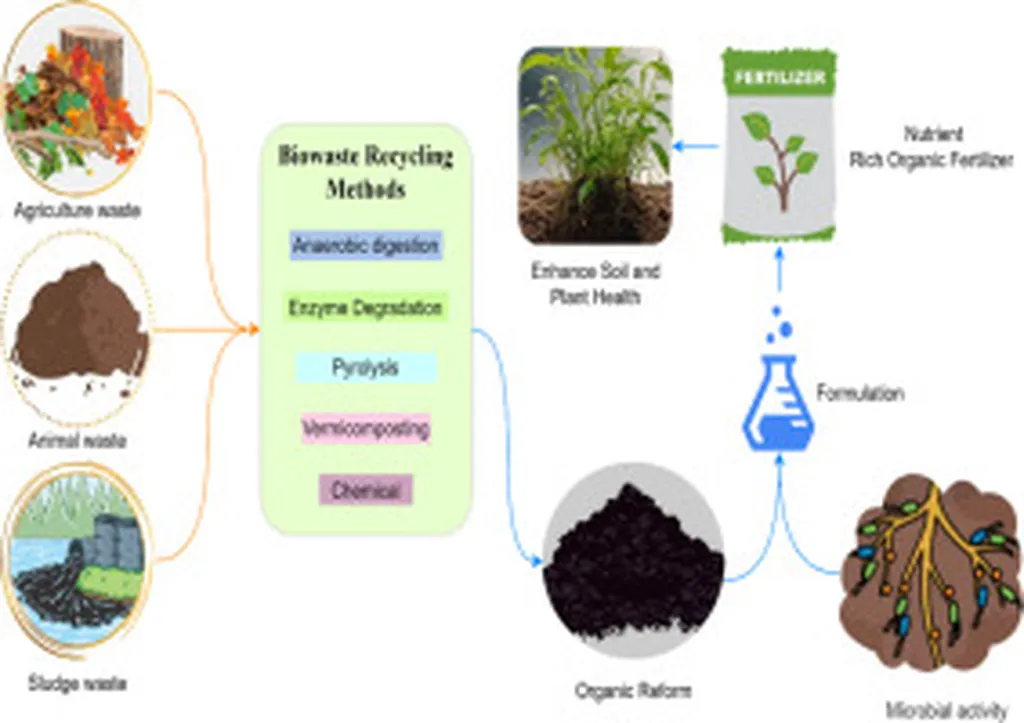
In a significant stride towards sustainable agriculture, a recent study published in *Environmental Microbiome* has demonstrated the potential of biofertilizers enriched with plant growth-promoting bacteria (PGPB) to enhance soil health and crop yields while reducing reliance on chemical fertilizers. The research, led by Marina Robas-Mora from the Department of Health and Pharmaceutical Sciences at CEU San Pablo University, explored the effects of ORGAON®PK, an organic fertilizer derived from horticultural waste and enriched with Bacillus pretiosus and Pseudomonas agronomica, on Lupinus albus (white lupin) plants.
The study compared the performance of ORGAON®PK and its sterilized version against traditional chemical fertilizers and a water control. After three months of treatment, the results were promising. Metagenomic analyses revealed that the PGPB strains remained active in the rhizosphere, increasing metabolic diversity without disrupting the microbial structure. This is a crucial finding, as it suggests that biofertilizers can enhance soil health without causing ecological imbalances.
One of the most striking outcomes was the significant reduction in the minimum inhibitory concentration against clinical antibiotics. “This highlights the potential of biofertilizers to decrease microbial resistance in the soil,” Robas-Mora noted, pointing to a broader environmental benefit that could have far-reaching implications for both agriculture and public health.
Principal component analysis further underscored the differences between treated and control groups, with ANCOM-BC revealing changes in non-culturable bacteria. Biometric analyses showed substantial improvements in plant growth, with increases of 70–88% in shoot weight, approximately 80% in total biomass, and up to 36% in shoot elongation compared to the control. These findings suggest that biofertilizers could offer a sustainable and efficient alternative to chemical fertilizers, potentially revolutionizing agricultural practices.
The commercial implications for the agriculture sector are substantial. As the global push towards sustainable and regenerative agriculture gains momentum, biofertilizers like ORGAON®PK could become a cornerstone of modern farming. By reducing dependence on chemical fertilizers, farmers can lower input costs, improve soil health, and enhance crop yields—all while contributing to environmental sustainability.
This research not only provides a viable solution to the challenges posed by intensive agricultural practices but also opens new avenues for the valorization of organic waste. As Robas-Mora’s work gains traction, it could inspire further innovation in the field, driving the development of more effective and environmentally friendly biofertilizers. The future of agriculture may well lie in harnessing the power of beneficial microbes, and this study is a significant step in that direction.