
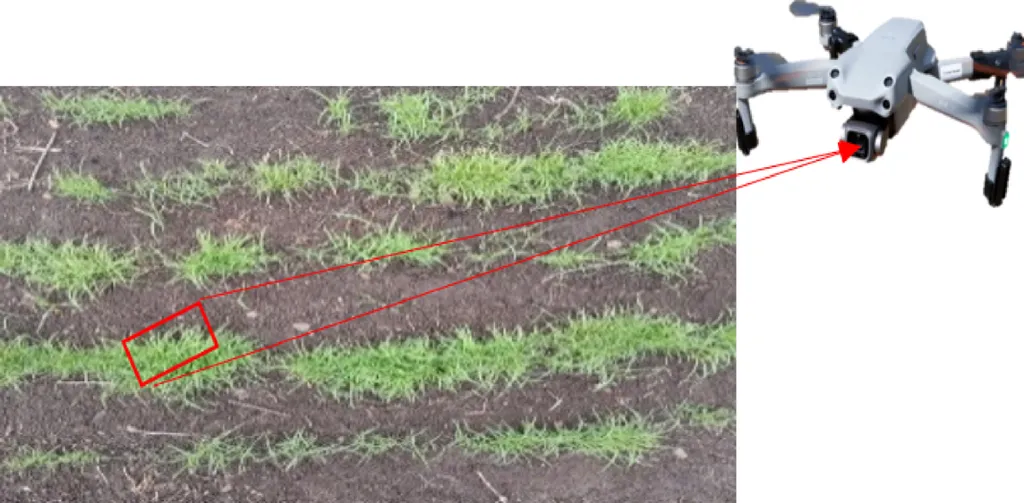
In the ever-evolving landscape of precision agriculture, a groundbreaking review published in *Discover Agriculture* is set to redefine how farmers tackle one of their most persistent challenges: weed management in rice fields. Led by Muhammad Nasar Ahmad from the School of Information and Artificial Intelligence at Anhui Agricultural University, the research delves into the transformative potential of deep learning methods combined with Unmanned Aerial Vehicles (UAVs) for precise weed and rice classification.
Weeds are a global menace, causing significant yield losses and environmental harm due to excessive herbicide use. Traditional methods of weed management are often labor-intensive and imprecise, leading to inefficiencies and increased costs. However, the integration of UAVs equipped with advanced remote sensing technologies and deep learning algorithms is poised to revolutionize this sector.
The review synthesizes recent advancements in deep learning techniques, highlighting the use of diverse vegetation indices and multiple sensor modalities, including RGB, multispectral, hyperspectral, thermal, and LiDAR. These technologies enable farmers to detect and classify weeds with unprecedented accuracy, supporting site-specific weed management strategies.
“By leveraging UAVs and deep learning, we can achieve a level of precision that was previously unattainable,” says Ahmad. “This not only enhances crop yields but also reduces the environmental impact of herbicide use.”
The research also addresses persistent challenges in the field, such as data scarcity, limited model generalizability across varying environmental conditions, and the computational demands for real-time deployment. These issues are critical for translating experimental research into scalable, field-ready solutions.
Looking ahead, the review proposes several future research directions. One promising avenue is the use of synthetic data generation via generative adversarial networks to overcome data scarcity. Additionally, advanced attention mechanisms and the integration of UAVs with ground-based robotic platforms could enable more autonomous, efficient, and sustainable agricultural practices.
The commercial implications of this research are vast. Farmers can expect to see significant improvements in crop yields and reduced operational costs, thanks to more precise and timely weed management. The environmental benefits are equally compelling, as reduced herbicide use will lead to healthier ecosystems and lower carbon footprints.
As the agriculture sector continues to embrace technological advancements, this research provides a roadmap for the future of precision weed management. By integrating UAV-based weed detection into mainstream agricultural practices, farmers can achieve greater efficiency and sustainability, ultimately shaping a more resilient and productive agricultural landscape.
For those interested in the technical details, the full review is available in *Discover Agriculture*, authored by Muhammad Nasar Ahmad and his team at Anhui Agricultural University. This work not only offers a comprehensive synthesis of current advancements but also provides a forward-looking perspective on the future of precision agriculture.