
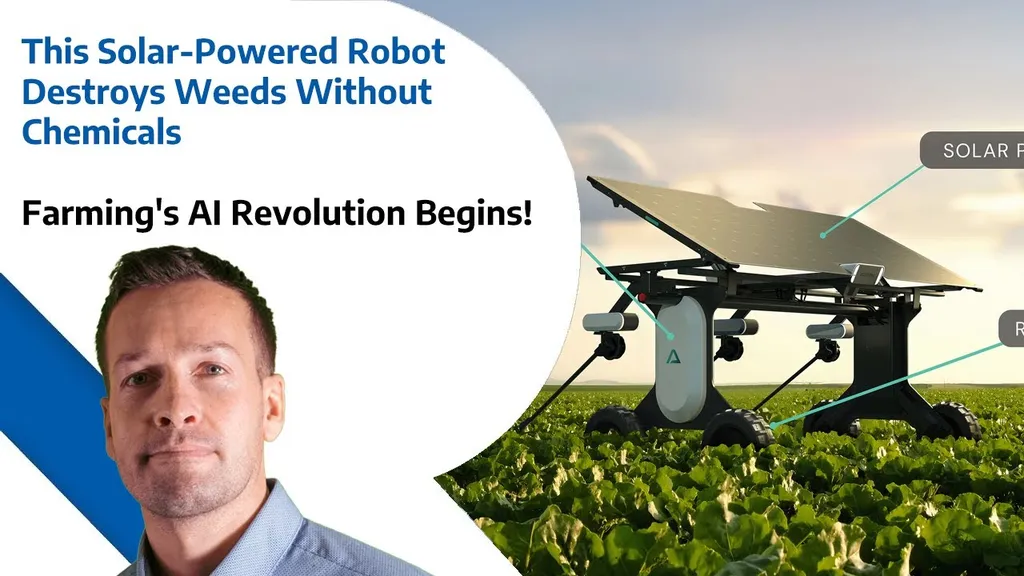
In the heart of Egypt’s agricultural landscape, a groundbreaking innovation is taking root, promising to revolutionize how farmers detect and manage plant diseases. A team of researchers, led by Fatma M. Talaat from the Faculty of Artificial Intelligence at Kafrelsheikh University, has developed a solar-powered autonomous robotic system that combines deep learning and Internet of Things (IoT) technologies to monitor crops and identify diseases in real time. This cutting-edge system, detailed in a recent study published in *Scientific Reports*, could significantly enhance agricultural productivity and sustainability.
The robotic system is designed to address the critical challenges posed by plant diseases, which threaten global food security and farmer livelihoods, particularly in regions with limited access to advanced diagnostic tools. Traditional disease detection methods rely heavily on manual inspections, which are not only time-consuming but also prone to human error. “Our system aims to bridge this gap by providing an automated, accurate, and efficient solution for disease detection,” Talaat explains.
The robot is equipped with a high-resolution imaging unit and IoT-based environmental sensors, allowing it to capture detailed images of plants and collect data on soil moisture and temperature. This information is processed using deep convolutional neural networks (CNNs), trained on diverse datasets including PlantVillage, to classify diseases with remarkable accuracy. The system’s mobility, powered by solar energy, enables continuous field monitoring with minimal human intervention.
The experimental results are impressive. The system achieved a training accuracy of 99.39%, validation accuracy of 97.47%, and testing accuracy of 97.13%. It also demonstrated an overall accuracy of 99.63%, with a precision of 99.40%, recall/sensitivity of 99.56%, an F1-score of 99.46%, and a specificity of 99.99% across multiple disease classes. These metrics highlight the system’s robustness and reliability in real-world agricultural conditions.
One of the most significant advantages of this technology is its potential to transform precision agriculture. By enabling early disease detection, the system can help farmers reduce pesticide overuse, which is not only cost-effective but also environmentally sustainable. “This technology has the potential to change the way farmers approach disease management,” says Talaat. “It provides real-time insights and alerts, allowing for timely interventions that can save crops and improve yield.”
The integration of cloud-based monitoring further enhances the system’s utility. Farmers can receive real-time alerts and insights, supporting informed decision-making and proactive disease management. This cost-effective, scalable, and environmentally sustainable solution could be a game-changer for the agriculture sector, particularly in regions where access to advanced diagnostic technologies is limited.
The implications of this research extend beyond immediate disease detection. The successful integration of IoT and deep learning technologies in agriculture opens up new avenues for innovation. Future developments could include more sophisticated robotic systems capable of not only detecting diseases but also applying targeted treatments. Additionally, the use of AI and IoT in agriculture could lead to more efficient resource management, further enhancing sustainability and productivity.
As the world grapples with the challenges of feeding a growing population while minimizing environmental impact, technologies like the one developed by Talaat and her team offer a beacon of hope. By harnessing the power of AI and IoT, we can create smarter, more sustainable agricultural systems that support both farmers and the environment. This research not only highlights the potential of these technologies but also paves the way for future innovations that could redefine the future of agriculture.