
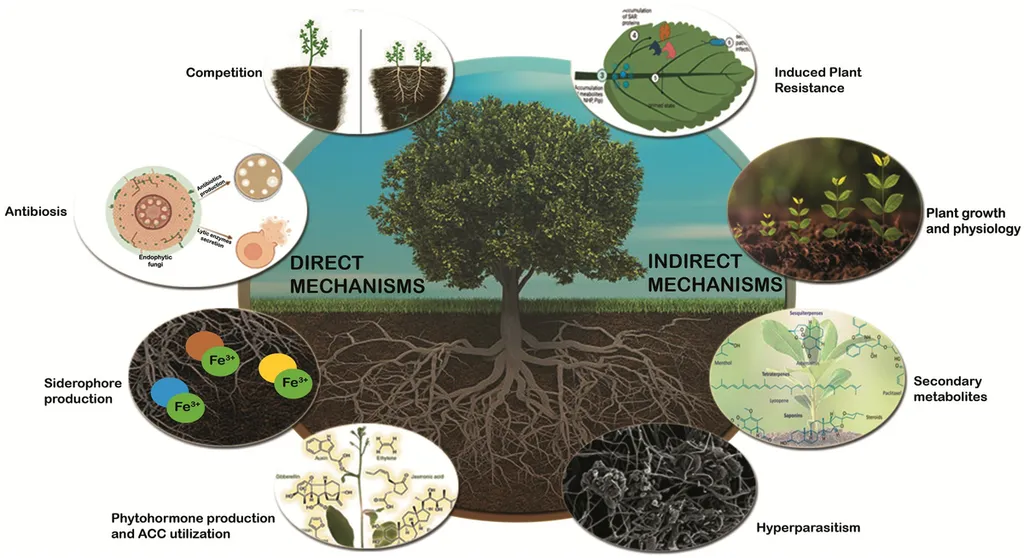
In the quest for sustainable agriculture, scientists are increasingly turning to nature’s own defenses, and a recent systematic review published in the *Egyptian Journal of Biological Pest Control* sheds light on the multifaceted roles of endophytic fungi. These microscopic allies, which live within plant tissues without causing harm, are emerging as a powerful tool in pest management, plant defense, and growth promotion. The study, led by Yolma Hendra of the Islamic University of Riau, analyzed 47 research articles published between 2020 and 2025, offering a comprehensive look at how these fungi can revolutionize agricultural practices.
Endophytic fungi are not just passive inhabitants of plant tissues; they actively enhance plant resistance against pathogens and insect pests while simultaneously promoting growth. “These fungi are like tiny bodyguards and gardeners for plants,” Hendra explains. “They not only protect plants from pests but also help them grow better by improving nutrient uptake and producing growth-promoting hormones.”
The review highlighted that *Beauveria bassiana* was the most extensively studied species, particularly in food crops like rice, corn, and legumes. This fungus was found to activate induced systemic resistance (ISR) and systemic acquired resistance (SAR) pathways in plants, boosting their defenses. Additionally, *B. bassiana* demonstrated high efficacy against target insects through cuticle colonization and toxin production. “The dual role of these fungi as both plant growth promoters and biocontrol agents makes them incredibly valuable for sustainable agriculture,” Hendra notes.
One of the most significant findings of the review was the potential for a systemic approach that integrates all aspects of endophytic fungi’s capabilities. However, the study noted that only 21.27% of the reviewed articles discussed this integrative approach, indicating a gap in current research. “Integrating these multifunctional roles can provide more effective and sustainable pest control solutions,” Hendra emphasizes. “But we need more research to fully explore this potential.”
The effectiveness of endophytic fungi was found to be highly dependent on environmental factors and plant genotype, suggesting that tailored approaches may be necessary for different crops and regions. The study recommends exploring indigenous isolates from different ecosystems, integrating multifunctional approaches, and developing more stable bioformulations to enhance their practical application.
The commercial implications of this research are substantial. As the agricultural sector seeks to reduce its reliance on chemical pesticides and fertilizers, endophytic fungi offer a promising alternative. By enhancing plant resistance and growth, these fungi can improve crop yields while reducing environmental impact. “This is a game-changer for the agriculture sector,” says Hendra. “It’s not just about controlling pests; it’s about creating healthier, more resilient crops.”
The study’s findings provide an important foundation for utilizing endophytic fungi as multifunctional biocontrol agents. As research continues to expand, the integration of these fungi into agricultural practices could shape the future of sustainable farming, offering a more holistic and effective approach to pest management and crop production. With further exploration and development, endophytic fungi could become a cornerstone of modern agriculture, benefiting farmers and consumers alike.