
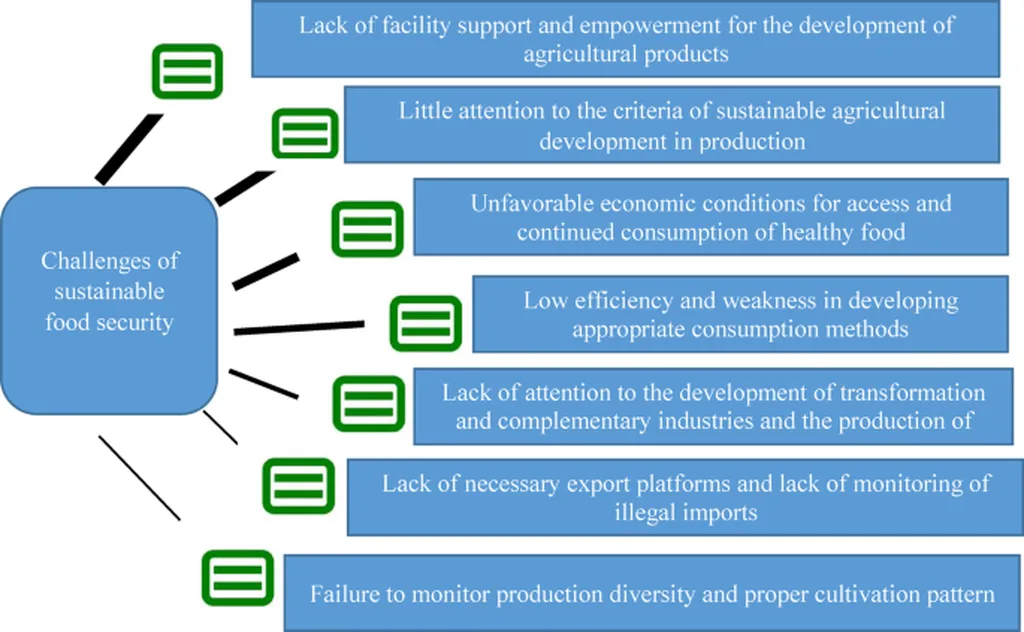
In the heart of Iran’s agricultural sector, a complex web of challenges is threatening food security, and a recent study published in *Global Transitions* sheds light on the intricate factors at play. Led by Pouria Ataei from the Department of Socio-Economic and Agricultural Extension Research at the Fars Agricultural and Natural Resources Research and Education Center, the research employs a grounded theory approach to dissect the obstacles and propose actionable strategies.
The study, which involved in-depth interviews with 38 agricultural experts, reveals a multifaceted landscape. Climate change, water scarcity, and dependence on imports are among the primary obstacles. “The interplay of these factors creates a fragile ecosystem that is susceptible to economic fluctuations and international pressures,” Ataei explains. This fragility is further exacerbated by weak infrastructure and contradictory policies, which hinder the sector’s ability to adapt and thrive.
The commercial impacts of these challenges are profound. Iran’s agricultural sector, a significant contributor to the national economy, faces reduced productivity and increased costs. The dependence on imports not only strains the national budget but also makes the sector vulnerable to global market volatility. “The lack of resilience in the face of these challenges poses a significant risk to the commercial viability of agriculture in Iran,” Ataei notes.
However, the study also offers a ray of hope. By improving water and soil resource management, developing new agricultural technologies, and reducing food waste, the sector can enhance its resilience. Strengthening farmer support policies and increasing climate change adaptation are also crucial steps. These strategies, Ataei believes, can pave the way for sustainable agricultural development and robust food security.
The insights from this research provide a comprehensive framework for policymakers and practitioners. By understanding the causal, contextual, and intervening factors, they can design evidence-based programs that strengthen national food security. The study’s findings are particularly relevant to agricultural policymaking, food security, and sustainable agriculture, offering a grounded theory approach that could shape future developments in the field.
As the agricultural sector grapples with these challenges, the study’s recommendations could be a game-changer. By addressing the root causes and implementing targeted strategies, Iran can build a more resilient and sustainable agricultural sector, ensuring food security for its population and fostering economic growth. The research, published in *Global Transitions* and led by Ataei from the Fars Agricultural and Natural Resources Research and Education Center, underscores the importance of a holistic approach to tackling food security challenges in developing countries.