
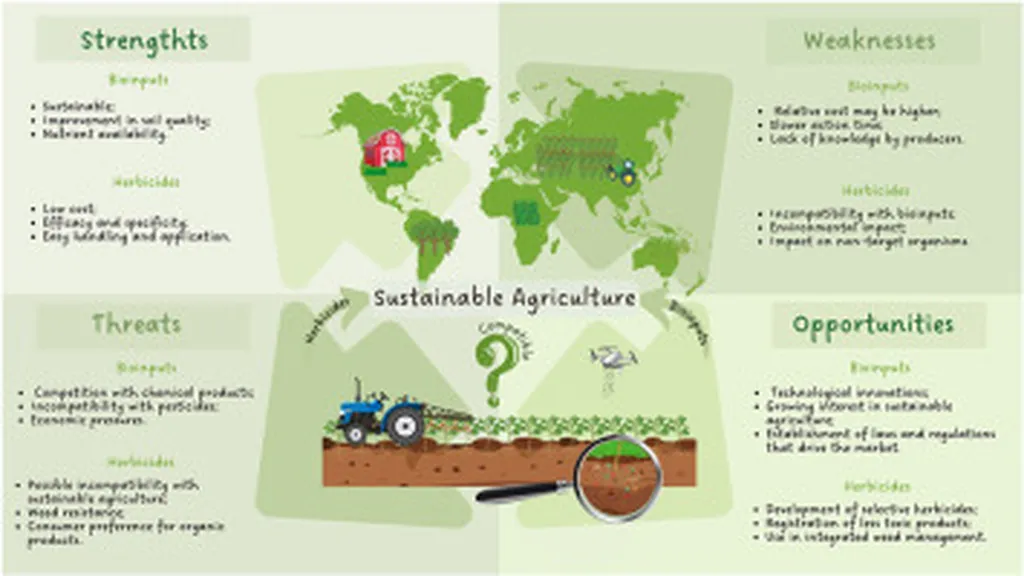
In the quest to make agriculture more sustainable, researchers have long been exploring ways to reduce the environmental impact of farming practices without compromising crop yields. A recent study published in *Frontiers in Agronomy* offers a promising avenue: microbial bioinputs. These biological agents, derived from beneficial microbes, could help farmers cut emissions of nitrous oxide (N2O), a potent greenhouse gas, while maintaining high yields.
Nitrous oxide is a byproduct of nitrogen fertilization, a critical component of modern agriculture. While nitrogen fertilizers boost crop yields, they also contribute significantly to global warming. The study, led by Camille Eichelberger Granada of the Genetics Department at the Federal University of Rio Grande do Sul in Brazil, suggests that microbial bioinputs can enhance nitrogen use efficiency, thereby reducing N2O emissions.
The research builds on the growing body of evidence that beneficial microbes can improve plant health and productivity. “Microbial bioinputs offer a sustainable alternative to conventional fertilizers,” Granada explains. “They can help plants absorb nitrogen more efficiently, reducing the need for synthetic inputs and minimizing environmental harm.”
The study’s findings are particularly relevant for the agriculture sector, which is under increasing pressure to adopt climate-smart practices. By improving nitrogen use efficiency, microbial bioinputs can help farmers reduce their carbon footprint without sacrificing yields. This could be a game-changer for the industry, as it seeks to balance productivity with environmental stewardship.
The commercial implications are substantial. As the demand for sustainable agricultural practices grows, so does the market for microbial bioinputs. Farmers who adopt these technologies could gain a competitive edge, positioning themselves as leaders in climate-smart agriculture.
Moreover, the research could pave the way for future developments in the field. As Granada notes, “Understanding the mechanisms by which microbes enhance nitrogen use efficiency can open up new avenues for innovation.” This could lead to the development of more effective and targeted bioinputs, further boosting their appeal to farmers.
The study published in *Frontiers in Agronomy* by lead author Camille Eichelberger Granada of the Federal University of Rio Grande do Sul offers a compelling case for microbial bioinputs as a tool for reducing N2O emissions while maintaining high yields. As the agriculture sector continues to grapple with the challenges of climate change, these findings could prove invaluable. By embracing microbial bioinputs, farmers can take a significant step towards a more sustainable and profitable future.