
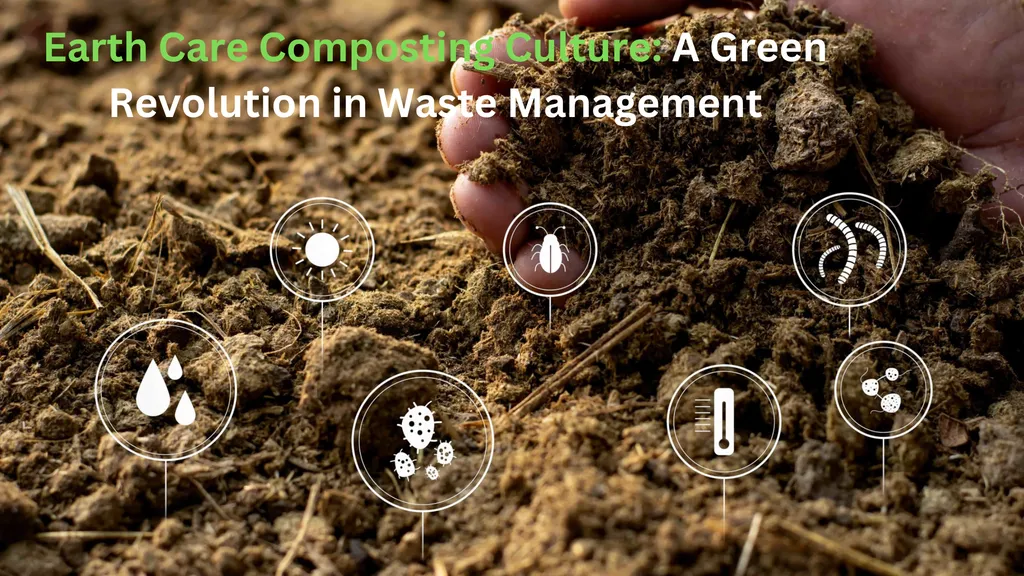
In the quest for sustainable agriculture, scientists are turning to an age-old process with a modern twist: composting. A recent study published in *Discover Agriculture* delves into the microstructural characterization of bio-compost, offering insights that could revolutionize how we think about organic waste and soil enrichment. Led by Dimple Tanwar from the Microbiology Laboratory at Dr. Yashwant Singh Parmar University of Horticulture and Forestry, this research highlights the untapped potential of microbial-mediated composting in creating nutrient-rich, humus-like products that could enhance soil fertility and crop productivity.
The study employs advanced analytical techniques, including Fourier Transform Infrared (FTIR) spectroscopy, Scanning Electron Microscopy (SEM), and High-Resolution Transmission Electron Microscopy (HRTEM), to scrutinize the structural composition of mature bio-compost. “FTIR analysis identified functional groups indicative of organic matter transformation,” Tanwar explains, shedding light on the chemical changes that occur during composting. SEM revealed a heterogeneous microstructure with interconnected aggregates, while HRTEM uncovered nano-scale crystalline features likely formed by microbial degradation. These findings suggest that bio-compost could play a pivotal role in improving soil structure, fertility, and microbial biodiversity.
The implications for the agriculture sector are profound. As organic and agricultural wastes continue to accumulate worldwide, the need for sustainable disposal and resource use becomes increasingly urgent. Bio-compost offers a dual solution: it reduces the environmental burden of landfilling while converting organic residues into a valuable agricultural resource. “This study aligns strongly with SDG 2 (Zero Hunger), SDG 12 (Responsible Consumption and Production), and SDG 13 (Climate Action),” Tanwar notes, emphasizing the broader impact of the research.
The commercial potential is equally significant. Farmers and agritech companies could leverage these findings to develop innovative composting technologies and precision farming practices. By integrating bio-compost into agricultural systems, they could enhance soil health, boost crop yields, and contribute to a circular bioeconomy. “Future studies should emphasize field-scale applications and integration with precision farming,” Tanwar suggests, pointing towards a future where sustainable agriculture is not just a goal but a reality.
As the world grapples with the challenges of climate change and food security, research like this offers a beacon of hope. By unlocking the potential of bio-compost, we can transform organic waste into a valuable resource, paving the way for a more sustainable and productive agricultural future.