
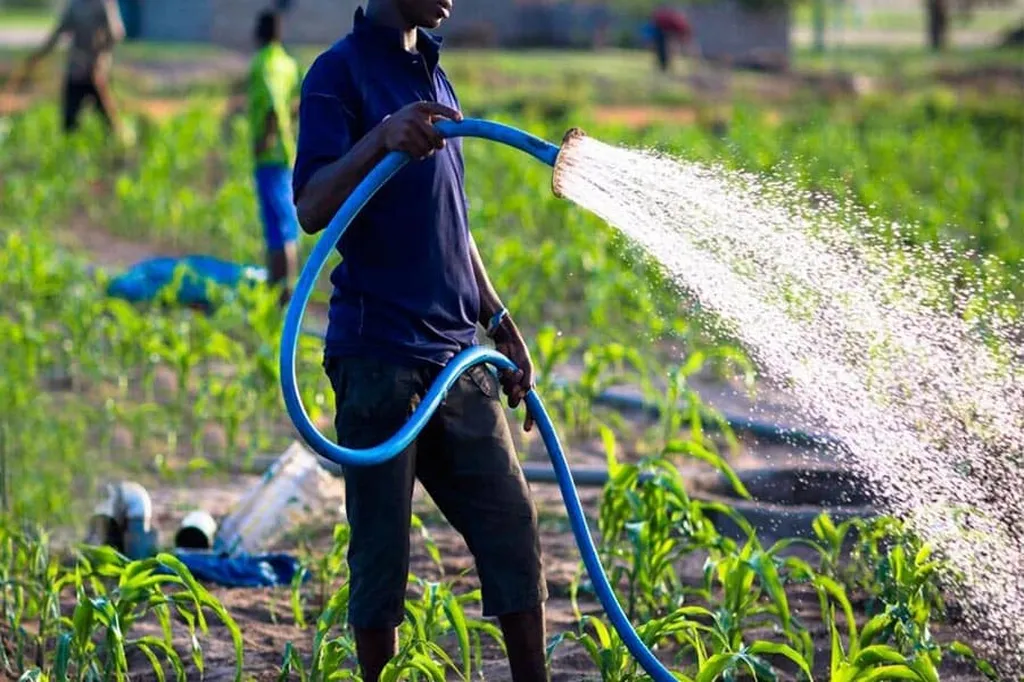
In the arid landscapes of Northern Ghana, where every drop of water is a lifeline for agriculture, a stark reality is unfolding. A recent study conducted at the Bontanga irrigation scheme has revealed alarming levels of water loss, threatening the very foundation of the region’s agricultural productivity. The research, led by Davis Sibale from the West African Centre for Water, Irrigation and Sustainable Agriculture (WACWISA), University for Development Studies, and published in ‘Applied Water Science’, sheds light on a critical issue that could reshape the future of irrigation and water management in the agriculture sector.
The study found that a staggering 68.70% of the seasonal irrigation water supply is lost before it can nourish the crops. This translates to a loss of 5,766,524.23 m³ of water out of the total 8,391,118.37 m³ supplied. The losses occur at various stages: conveyance, distribution, and in-field, with the latter being the most significant. “Such significant water losses were attributed to lack of proper maintenance on canals, under-utilization of flow measuring structures, excessive lateral canal tailwater losses, and poor water management at field level,” Sibale explained.
The commercial implications for the agriculture sector are profound. Water is the lifeblood of agriculture, and these losses directly impact crop yields and farm incomes. As the study projects, without efforts to reduce water losses, unmet water demands are likely to reach 2,482,519 m³ by 2030. This could lead to reduced agricultural output, increased costs of production, and ultimately, lower profitability for farmers.
However, the study also offers a glimmer of hope. By reducing total water losses from 68.70 to 40%, an average seasonal water saving of 3,894,597.86 m³ is projected to be achieved during the simulation period from 2024 to 2030. This could significantly enhance water availability for agriculture, boosting crop yields and farm incomes.
The research underscores the importance of effective water loss management in meeting the competing water demands in the face of a changing climate. It calls for improved maintenance of irrigation infrastructure, better utilization of flow measuring structures, and enhanced water management practices at the field level. These measures could not only mitigate water losses but also enhance the overall efficiency and sustainability of irrigation systems.
The findings of this study could shape future developments in the field of irrigation and water management. It highlights the need for a more holistic approach to water management, one that considers the entire irrigation system from conveyance to in-field application. It also underscores the importance of investing in infrastructure maintenance and adopting technologies that can help monitor and control water usage more effectively.
As the agriculture sector grapples with the challenges of climate change and increasing water demand, studies like this one provide valuable insights and guidance. They offer a roadmap for improving water management practices, enhancing agricultural productivity, and ensuring the sustainability of irrigation systems. In doing so, they contribute to the broader goal of achieving food security and improving livelihoods in water-scarce regions.
In the words of Davis Sibale, “Future studies should investigate an in-depth synergy between crop water productivity and system’s water losses in the study area.” This call for further research underscores the ongoing need for innovation and continuous improvement in the field of water management, a field that is critical to the future of agriculture and food security.