
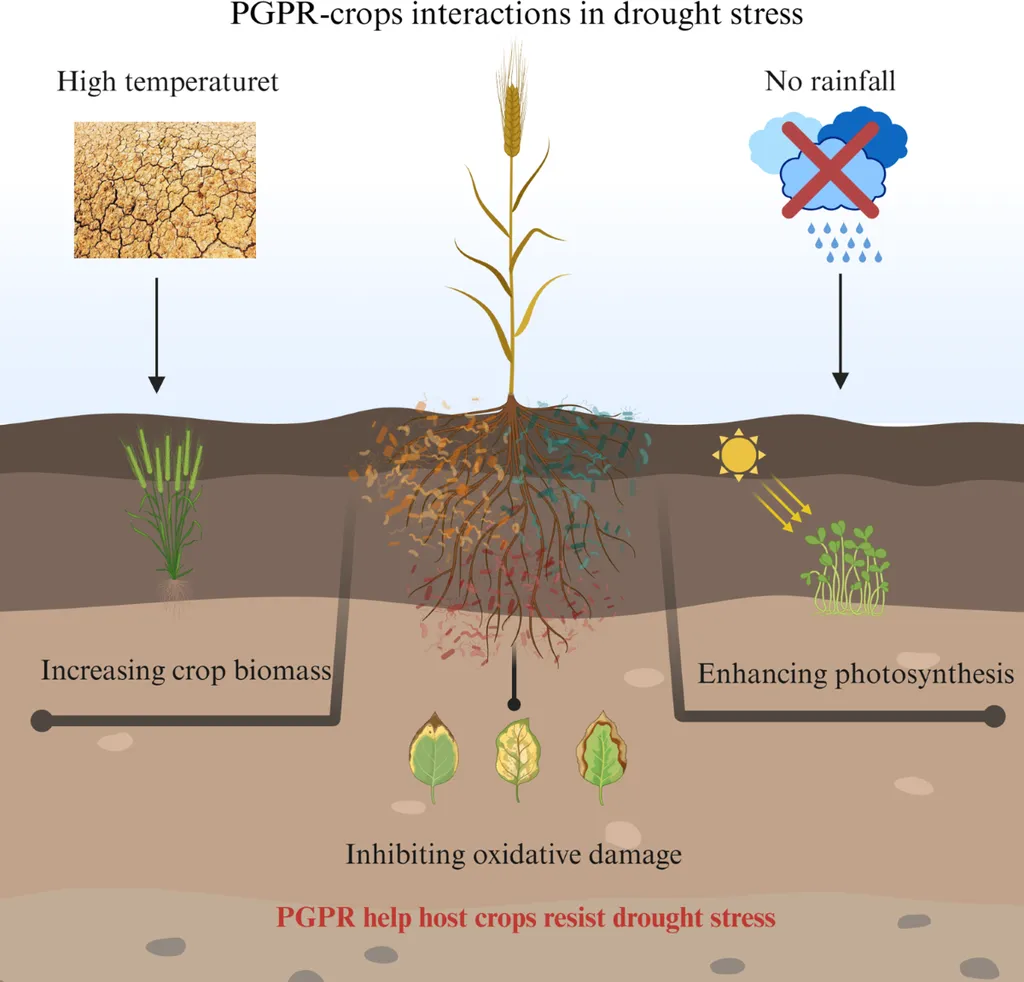
In the face of climate change and water scarcity, farmers are increasingly seeking sustainable solutions to bolster crop resilience. A recent study published in *Discover Applied Sciences* offers a promising avenue: harnessing the power of Plant Growth-Promoting Rhizobacteria (PGPR) to enhance drought tolerance in plants. This research, led by K. Kesavardhini of the PG and Research Department of Microbiology at Sacred Heart College (Autonomous), sheds light on how these beneficial microbes can revolutionize agriculture, particularly in arid and semi-arid regions.
Drought stress is a significant challenge for global agriculture, stifling plant growth and productivity by disrupting physiological and biochemical processes. PGPR, however, offer a natural and effective way to mitigate these effects. These microbes work through a variety of mechanisms, including the modulation of phytohormones, increased nutrient solubility, and the production of exopolysaccharides, siderophores, and ACC deaminase. By promoting root architecture and facilitating better water uptake, PGPR help plants withstand drought conditions more effectively.
“PGPR activate antioxidant defense mechanisms, reducing oxidative damage from reactive oxygen species,” explains Kesavardhini. This systemic tolerance is achieved through complex signal cascades that influence gene expression under drought stress. The symbiotic relationship between PGPR and host plants not only enhances stress tolerance but also supports sustainable growth in water-limited environments.
The study highlights recent advances in molecular biology and omics technologies, which have identified the functional genes and metabolic pathways responsible for PGPR-mediated drought tolerance. These findings open new avenues for developing bio-formulations and precision agriculture techniques, aligning with the goals of sustainable agriculture by reducing chemical reliance and improving soil health.
While the potential of PGPR is evident at the laboratory scale, scaling up for field applications presents challenges. Optimizing environmental conditions and ensuring microbial survival are critical steps. Future research should focus on strain selection, formulation stability, and understanding the intricate interactions between PGPR, plant genotypes, and soil microbiomes.
The commercial implications for the agriculture sector are substantial. As water scarcity becomes more prevalent, farmers will need innovative solutions to maintain productivity. PGPR-based bio-formulations could provide a cost-effective and environmentally friendly strategy for enhancing crop resilience. This research not only offers a glimpse into the future of sustainable agriculture but also underscores the importance of integrating microbial solutions into agricultural practices.
By leveraging the power of PGPR, farmers can achieve higher yields and better resource management, ultimately contributing to food security in a changing climate. As Kesavardhini notes, “The use of PGPR in drought management is a powerful, ecologically friendly strategy for productivity enhancement in areas that are arid or semi-arid.” This research paves the way for a more resilient and sustainable agricultural future.