
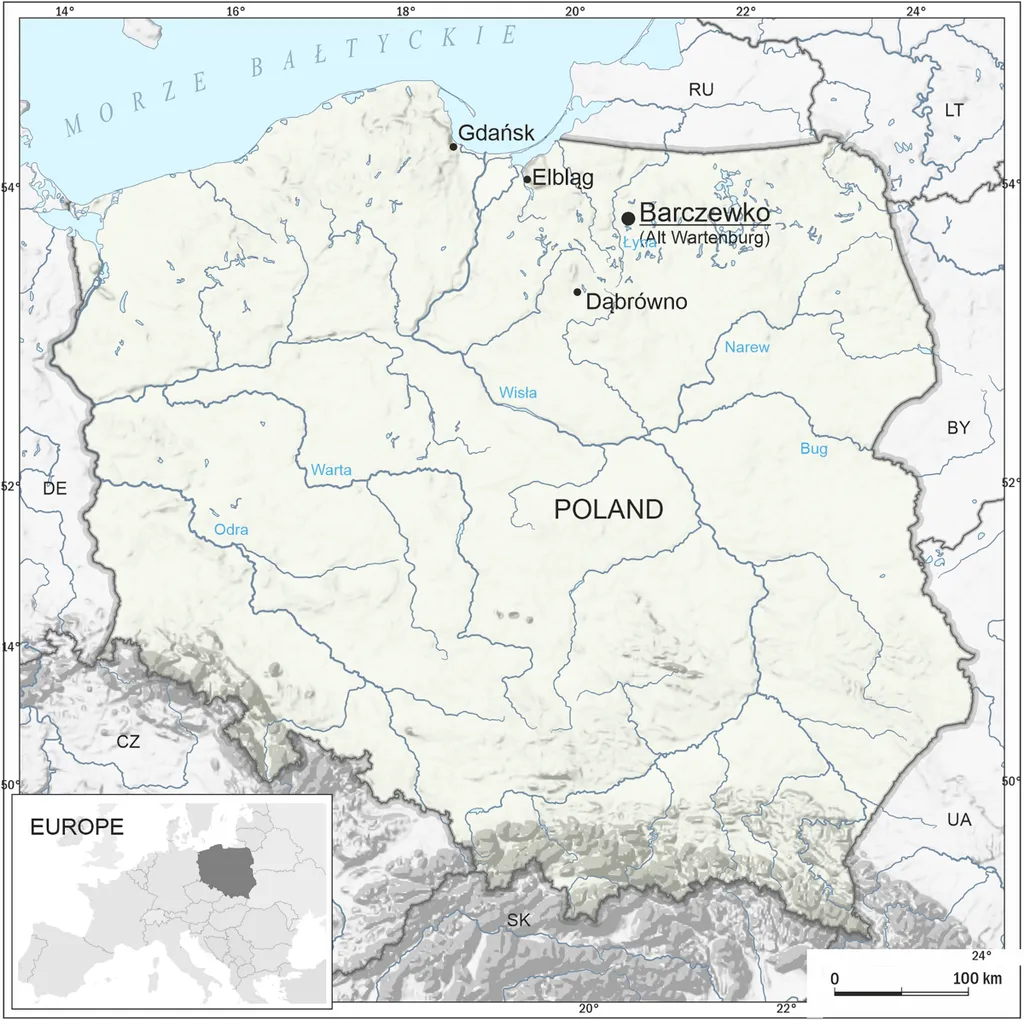
In a groundbreaking study published in *Earth System Science Data*, researchers have unveiled the first comprehensive map of relict charcoal hearths (RCHs) across Poland, offering a unique lens into the country’s historical landscape and potential insights for modern agriculture. Led by M. Słowiński from the Department of Past Landscape Dynamics at the Polish Academy of Sciences, the research utilized high-resolution LiDAR data and advanced digital terrain analysis to identify and classify 634,815 RCHs scattered across forested regions.
The study’s innovative approach combined manual interpretation, GIS-based feature extraction, and *K*-prototypes clustering to categorize each hearth by size, morphological characteristics, slope position, and environmental context. This meticulous process revealed significant regional variations in hearth density, with hotspots in western and south-central Poland, particularly in the Lower Silesian, Stobrawa, and Świętokrzyskie forests.
“These hearths are more than just historical artifacts; they are windows into past human activities and environmental interactions,” Słowiński explained. “By understanding their distribution and characteristics, we can gain valuable insights into historical land use patterns and their long-term impacts on the landscape.”
The research distinguished three major types of RCHs: lowland pine-dominated clusters on gentle terrain, isolated features on steep slopes in mixed forests, and high-density hearth groups in elevated areas. These findings suggest that the apparent absence of RCHs in certain regions may be due to preservation and detection limitations rather than an actual lack of charcoal production.
For the agriculture sector, this research holds significant commercial potential. The spatial distribution of RCHs can inform soil management practices, as these hearths often indicate areas with unique soil properties resulting from historical charcoal production. Additionally, the data can guide land use planning and conservation efforts, ensuring that agricultural activities are sustainable and respectful of historical landscapes.
The resulting ReCHAR database, now openly accessible, is poised to become a valuable tool for interdisciplinary research. Its modular design allows for future expansion, including links to historical settlements and industries reliant on charcoal, such as metallurgy, glassmaking, and tar or potash production.
As we look to the future, this research could shape developments in historical ecology, archaeology, and environmental science. By integrating historical data with modern technology, researchers can uncover new insights into human-environment interactions and inform sustainable land use practices. The study’s findings, published in *Earth System Science Data* and led by Słowiński from the Polish Academy of Sciences, mark a significant step forward in our understanding of Poland’s historical landscape and its implications for contemporary agriculture.