
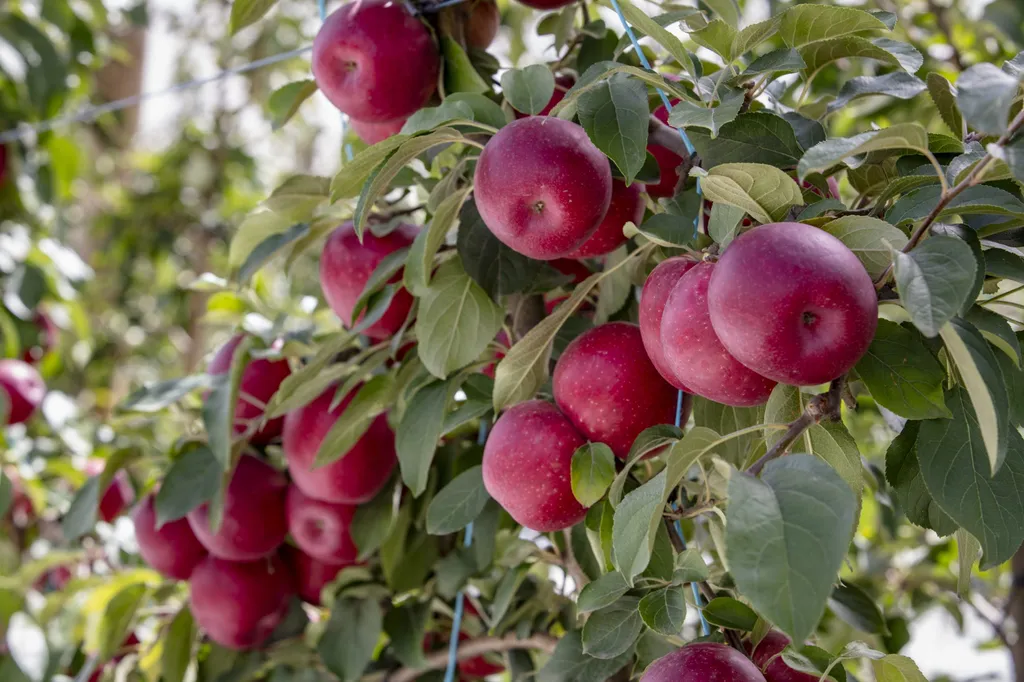
In the heart of Tunisia, where the sun blazes and water is a precious commodity, a novel approach to irrigation is making waves in the agricultural sector. Researchers, led by Mourad Bakri from the National Research Institute for Rural Engineering, Water and Forestry (INRGREF), have been exploring the use of smart tensiometers to monitor different deficit irrigation strategies in young apple cultivars. Their findings, published in *Frontiers in Agronomy*, offer promising insights for farmers grappling with water scarcity and climatic change.
The study focused on two apple cultivars, Galaxy and Richared, subjected to various irrigation treatments: Control Irrigation (CI), Continuous Deficit Irrigation (CDI), and Partial Root-zone Drying (PRD) at different levels. The goal was to strike a balance between water conservation and maintaining fruit quality.
“Understanding the physiological responses of apple trees to different irrigation strategies is crucial for sustainable agriculture,” Bakri explained. The team found that while severe deficit irrigation (CDI50% and PRD50%) significantly reduced shoot growth, a moderate deficit irrigation strategy (PRD75%) showed promising results. This strategy not only conserved water but also improved fruit quality, with increases in firmness and total soluble solids (TSS) in both cultivars.
The commercial implications of this research are substantial. As water scarcity becomes an increasingly pressing issue, farmers need practical, cost-effective solutions to maintain productivity without compromising quality. Smart tensiometers, which are low-cost and easy to use, offer a viable tool for precision irrigation. By adopting strategies like PRD75%, farmers can optimize water use and potentially enhance fruit marketability.
“This study provides a roadmap for farmers to navigate the challenges posed by climatic change and water scarcity,” Bakri noted. The findings suggest that deficit irrigation strategies, when carefully managed, can be a win-win for both the environment and the agricultural sector.
The research also opens doors for future developments in agritech. As smart tensiometers become more sophisticated and integrated with other technologies, such as IoT and AI, the potential for precision agriculture grows. Farmers could soon have access to real-time, data-driven insights to guide their irrigation practices, further enhancing efficiency and sustainability.
In a world where the stakes for sustainable agriculture are higher than ever, this study shines a light on the path forward. By embracing innovative technologies and adaptive strategies, the agricultural sector can thrive even in the face of adversity.