
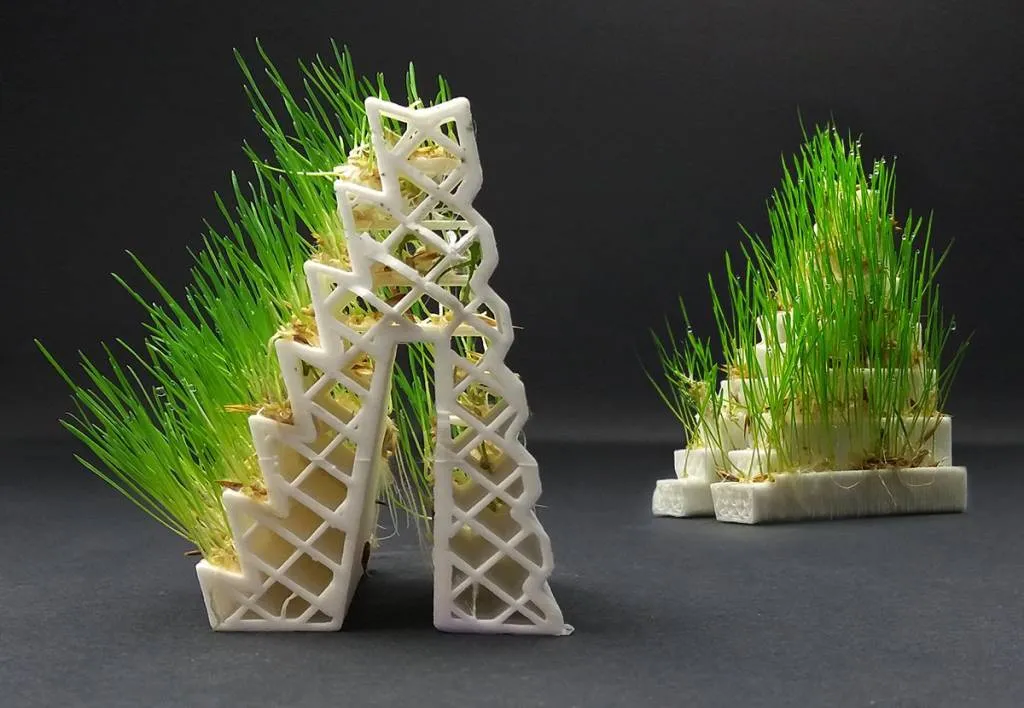
In the rapidly evolving world of 3D printing, researchers are constantly pushing the boundaries of what’s possible, and a recent study published in *Materials Research* offers a glimpse into the future of sustainable and functional filaments. The research, led by Allef Gabriel da Silva Fortes, explores the influence of activated carbon and magnesium oxide on the thermal, mechanical, and degradation properties of 3D printing filaments, with promising implications for the agriculture sector.
The study focuses on the incorporation of magnesium oxide into activated carbon within a commercial PLA/PBAT blend, a combination that has shown significant potential for enhancing the performance of 3D printed materials. “The addition of magnesium oxide increased the elastic modulus by more than 50% without altering tensile strength,” explains Fortes. This means that the material becomes stiffer and more resistant to deformation, which is crucial for applications requiring durability and structural integrity.
One of the most exciting findings is the enhanced soil degradability of the filaments. The combined effect of magnesium oxide and activated carbon led to approximately 8% degradation within 60 days, a notable improvement over formulations containing only activated carbon. This biodegradability is a significant step towards sustainability, addressing the growing concern of plastic waste in the environment.
The study also highlights the thermal properties of the filaments. The crystallization temperature increased from 67.5 °C to 76 °C, which did not compromise processability. This thermal stability is essential for ensuring the quality and reliability of 3D printed parts, especially in applications where they might be exposed to varying temperatures.
Despite some dimensional instability, the researchers were able to print functional parts with good quality. This demonstrates the potential for these advanced filaments to be used in a variety of applications, including those in the agriculture sector. For instance, 3D printed parts could be used for creating custom agricultural tools, sensors, or even scaffolds for plant growth, all while being environmentally friendly.
The commercial impacts for the agriculture sector are substantial. As the world moves towards more sustainable practices, the demand for eco-friendly materials is on the rise. The development of these advanced filaments could revolutionize the way agricultural tools and equipment are manufactured, making them more durable, cost-effective, and environmentally responsible.
This research not only paves the way for innovative applications in agriculture but also sets a precedent for future developments in the field of additive manufacturing. As Fortes notes, “These results demonstrate a sustainable and innovative route for developing advanced filaments tailored for additive manufacturing within the context of Industry 4.0.” The study, published in *Materials Research* and led by Fortes, underscores the importance of continuous innovation and research in creating materials that are both high-performing and sustainable.
In conclusion, the findings of this study offer a promising glimpse into the future of 3D printing, particularly in the agriculture sector. By enhancing the mechanical, thermal, and degradable properties of filaments, researchers are opening up new possibilities for creating sustainable and functional materials that can meet the demands of modern agriculture. As the field continues to evolve, the potential for these advanced filaments to revolutionize various industries, including agriculture, is immense.