
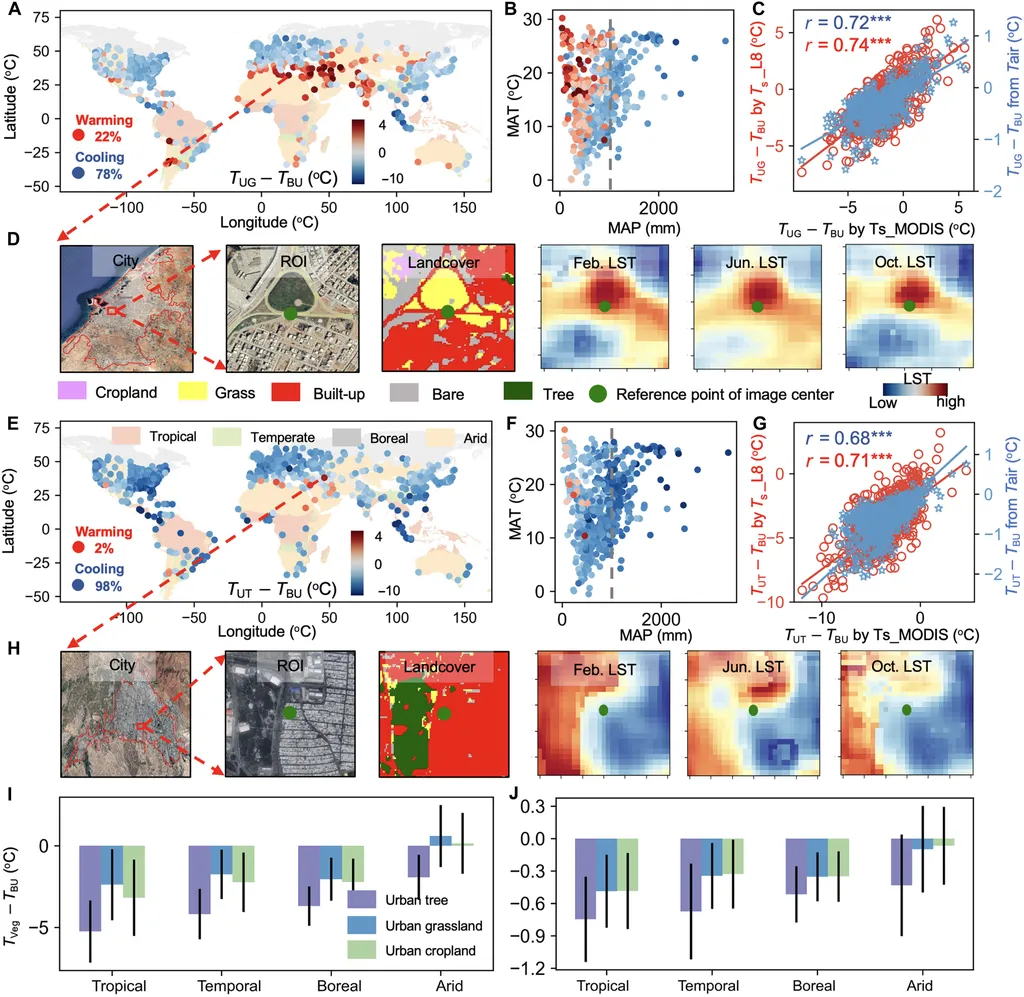
In a counterintuitive finding, a new study published in Science Advances has revealed that grassy areas in arid regions can actually contribute to urban warming, rather than the cooling effect typically associated with green spaces. This discovery has significant implications for urban planners, the agriculture sector, and investors alike.
The study, which analyzed satellite data from over 700 large cities worldwide, found that while green areas generally cool cities, this is not universally true. In 22 percent of cities, particularly those receiving less than 40 inches of rain annually, grassy areas were warmer than built-up areas. This phenomenon occurs because, in dry regions, plants recycle minimal amounts of water, reducing the cooling effect of evaporation. Additionally, the dark green leaves of grasses absorb more heat from the sun than lighter surfaces, such as concrete, leading to a net warming effect.
For the agriculture sector, these findings highlight the importance of water availability and plant selection in urban greening projects. Investors in agritech and urban farming should take note, as the study suggests that traditional grass lawns may not be the most effective or sustainable choice for green urban spaces in arid regions. Instead, the study authors recommend planting hardy trees, which are much more effective at cooling cities. Trees provide shade and can access deeper moisture sources, allowing them to release large volumes of water even during dry spells. Only 2 percent of cities in the study experienced a net warming effect from trees.
Urban planners and investors should consider focusing on drought-resistant tree species and light-colored, reflective materials for roads and rooftops. This approach can help mitigate urban heat island effects and promote more sustainable urban development. The findings also underscore the need for tailored, region-specific strategies in urban planning and agriculture, ensuring that investments in green infrastructure are both effective and environmentally sound.