
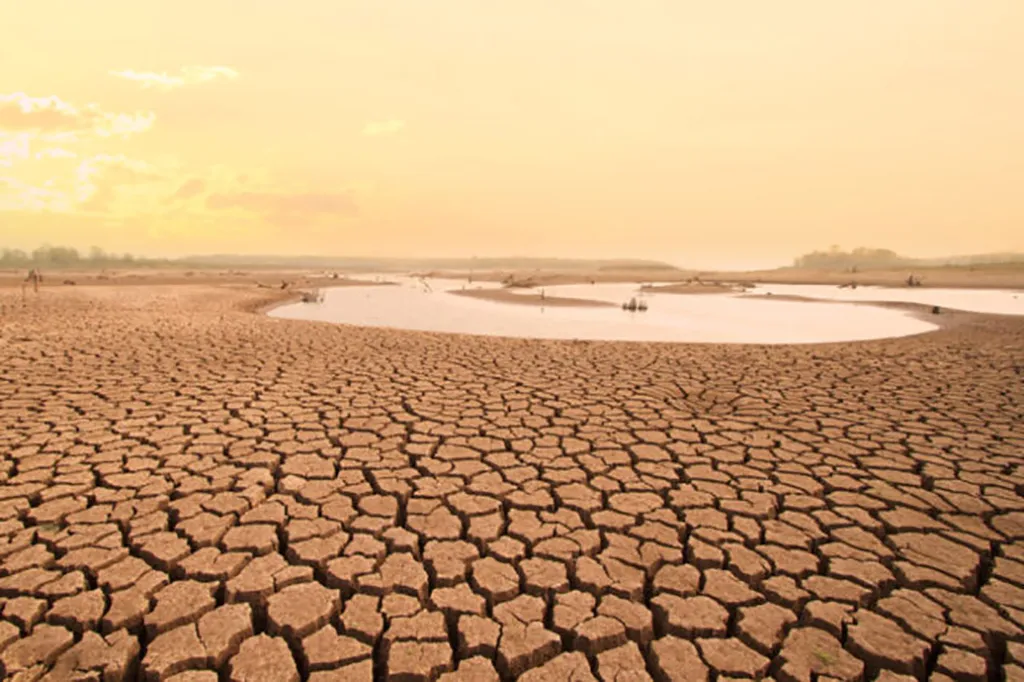
In the heart of South Africa’s uMkhanyakude district, a pressing challenge looms large: meteorological drought. This silent menace threatens water supplies, agricultural productivity, and socio-economic stability, particularly in regions where rainfall is the lifeblood of the land. A recent study published in *Natural Hazards and Earth System Sciences* offers a beacon of hope, combining advanced trend analysis and forecasting techniques to tackle this pressing issue.
The research, led by S. Sibiya from the School of Mathematics, Statistics, and Computer Science at the University of KwaZulu-Natal, delves into the dynamics of meteorological drought using the Standardized Precipitation Index (SPI) at 6-, 9-, and 12-month timescales. The SPI is a widely respected tool for drought monitoring, valued for its simplicity and versatility across different timeframes.
The study employs a sophisticated hybrid model, dubbed SG-CEEMDAN-ARIMA-LSTM, which integrates the Savitzky–Golay (SG) filter, Complete Ensemble Empirical Mode Decomposition with Adaptive Noise (CEEMDAN), Autoregressive Integrated Moving Average (ARIMA), and Long Short-Term Memory (LSTM) networks. This innovative approach aims to enhance the accuracy of drought forecasting, a critical need for regions like uMkhanyakude.
“Our analysis revealed statistically significant declining trends at five monitoring stations,” Sibiya explains. “These trends are characterized by negative Z-scores and p-values, indicating a marked downward trajectory across several SPI scales.” This decline underscores the urgency of effective drought forecasting tools, which can provide early warnings and support sustainable water resource management.
The hybrid model’s performance was impressive, outperforming benchmark models across all temporal scales. With R² values of 0.9839 for SPI-6, 0.9892 for SPI-9, and a staggering 0.9990 for SPI-12, the SG-CEEMDAN-ARIMA-LSTM model demonstrated exceptional accuracy. “The integration of decomposition techniques like SG and CEEMDAN significantly enhances model performance,” Sibiya notes. “This confirms the suitability of our hybrid model for both short-term and long-term drought forecasting.”
For the agricultural sector, these findings are a game-changer. Accurate drought forecasting can inform planting schedules, irrigation strategies, and water management practices, ultimately boosting crop yields and ensuring food security. “This research provides a reliable framework for early warning systems,” Sibiya states. “It offers a robust tool for farmers and policymakers to make informed decisions, mitigating the impacts of drought on agriculture and the broader economy.”
The study’s implications extend beyond the uMkhanyakude district. The hybrid model’s success suggests that similar approaches could be applied in other drought-prone regions, both in South Africa and globally. By merging robust trend analysis with advanced forecasting techniques, this research paves the way for more resilient and sustainable water resource management practices.
As the world grapples with the increasing frequency and severity of droughts, innovative solutions like the SG-CEEMDAN-ARIMA-LSTM model offer a glimmer of hope. They highlight the power of interdisciplinary research and the potential of technology to address some of humanity’s most pressing challenges. In the words of Sibiya, “This work is a testament to the importance of integrating diverse methodologies to tackle complex environmental issues.”
With the agricultural sector facing mounting pressures from climate change, the insights from this study could not be more timely. By providing a reliable framework for drought forecasting, it equips farmers and policymakers with the tools they need to navigate an uncertain future. As we look ahead, the integration of advanced technologies and data-driven approaches will undoubtedly play a pivotal role in shaping a more sustainable and resilient world.