
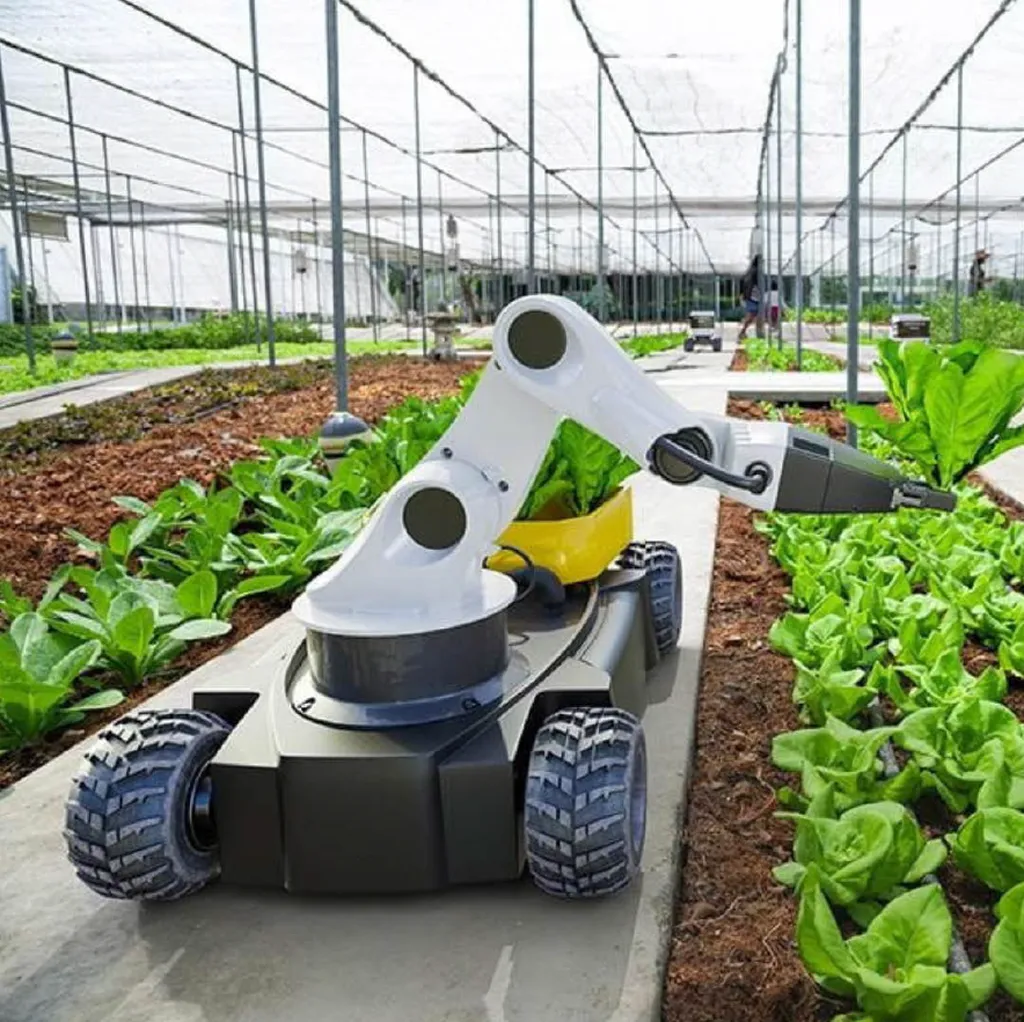
The landscape of American agriculture is undergoing a significant transformation, according to a recent government report. The number of farms in the U.S. is declining, but those that remain are becoming increasingly “tech dense,” embracing a wave of innovative technologies to enhance efficiency and productivity.
This shift is evident in the operations of farmers like Jake Leguee, a third-generation farmer in Saskatchewan, Canada. His family has been farming the same 17,000 acres since 1956, growing crops such as canola, wheat, flax, and green lentils. Leguee has witnessed firsthand the dramatic changes in farming practices over the years.
“Today, technology has vastly improved the job that we do,” Leguee says. He has integrated advanced software and remote cameras into his John Deere tractor, enabling precise weed detection and targeted spraying. This technology not only improves efficiency but also reduces pesticide usage, as the nozzles activate only when weeds are detected.
The return on investment for such technological advancements is often high, Leguee notes. “There are low-cost solutions that won’t be as expensive as new spraying tech, and they could be an app to help you better keep your records, for example,” he adds.
This trend is not confined to Leguee’s farm. A 2024 McKinsey survey found that 57% of North American farmers are likely to try new yield-increasing technologies in the next two years. The US Department of Agriculture’s 2022 report underscores this shift, highlighting the growing adoption of technology in agriculture.
Norah Lake, the owner and farmer at Vermont’s Sweetland Farms, echoes this sentiment. She has transitioned from using Microsoft Excel to manage her crop data to employing software from a company called Tend. This technology allows her to input harvest numbers and receive detailed advice on managing her crops for future harvests.
“We can use Tend to calculate the quantity of seed that we need to order based on the row feet of a particular crop that we want to harvest,” Lake explains.
The array of technological options available to farmers is vast. Syngenta, a Swiss agritech giant, offers Cropwise, a software that uses AI and satellite imagery to guide farmers. Feroz Sheikh, chief information officer of Syngenta Group, explains that the system can alert farmers to issues such as pest outbreaks and provide weather pattern data to help them make informed decisions.
In Germany, Jean-Pascal Lutze founded NoMaze to help farmers understand how different crops will perform under varying climate conditions. His software, set to roll out this year, aims to provide better insights into water usage and maximizing yield.
The impact of these technologies on consumers could be significant. Heather Darby, an agronomist and soil specialist at the University of Vermont, suggests that increased food production could lead to lower prices at the register. “When farmers get help to avoid crop failures, that could lead to a more controlled farm environment and a reliable and secure food system,” Darby says.
As the agricultural sector continues to evolve, younger farmers like Leguee are at the forefront of embracing these technological advancements. Older farmers may be more resistant to change, but the need to adapt is clear. “After all, when you think about it, some of these farms are multi-million-dollar businesses that are supporting multiple families. We need to embrace technology that works for us,” Leguee concludes.
The future of farming lies in its ability to integrate technology, ensuring that the industry remains viable and sustainable for generations to come.