
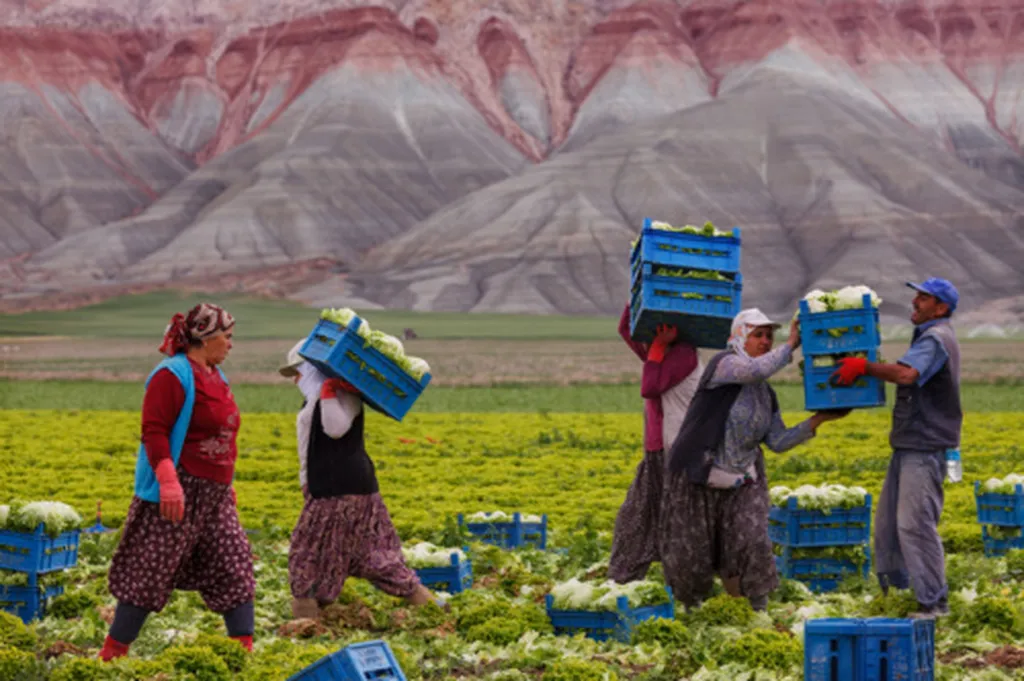
In the heart of Ankara, Turkey, a complex interplay of climatic and political factors is reshaping the nation’s agricultural landscape, with significant implications for agritech and investors. Unseasonably dry weather is expected to lower Turkey’s wheat and barley production, while the nation’s flour exporters are grappling to regain market share lost due to a temporary suspension of a duty-free wheat import program.
The inward processing regime (IPR), which allowed millers to import wheat duty-free for processing and re-exporting as flour, was halted to reduce the country’s record-sized inventory of domestic wheat. This decision, coupled with import restrictions introduced in June 2024 and loosened in October, has led to a 41% drop in flour exports from July 2024 to January 2025. Ahmet Tiryakioğlu, chairman of the Turkey Exporters Assembly, anticipates a rebound in full-year 2025 flour shipments, exceeding 3.5 million tonnes.
However, the road to recovery is fraught with challenges. A significant drop in flour exports to Iraq, Turkey’s top buyer, has been attributed to higher tariffs and new flour mills in Iraq. Turkish flour also faces stiff competition from Egyptian flour in Africa and the Near East. Adding to the woes, a border gate issue with northern Iraq, where one-third of Turkey’s flour exports are destined, has caused significant damage to the sector.
Despite these challenges, Turkey, a perennial leader in flour exports and among the world’s top 10 agricultural producers, is expected to see a return to more historical levels of wheat imports and exports in 2025-26. The Foreign Agricultural Service (FAS) of the US Department of Agriculture predicts a 10-year low in wheat exports and a doubling of wheat imports, driven by a 15% lower year-to-year wheat production forecast.
The dry conditions have also impacted barley production, which is expected to drop by 2 million tonnes in 2025-26. In contrast, corn production is forecast to increase by 12% due to an expansion in harvested area and access to irrigation.
For agritech and investors, these developments present both challenges and opportunities. The need for water conservation and the shift towards less water-intensive crops in water-scarce regions, as prioritized in the government’s Agricultural Production Plan, could spur innovation in agritech. Similarly, the focus on strengthening food security, increasing exports, modernization, and enhancing climate change resilience, as outlined in the 4th Agriculture and Forestry Council’s guide, could attract investors.
However, the challenges faced by the flour export sector and the impact of dry weather on wheat and barley production serve as a reminder of the risks inherent in the agricultural sector. Investors and agritech firms must navigate these challenges carefully, leveraging data and technology to mitigate risks and capitalize on opportunities.