
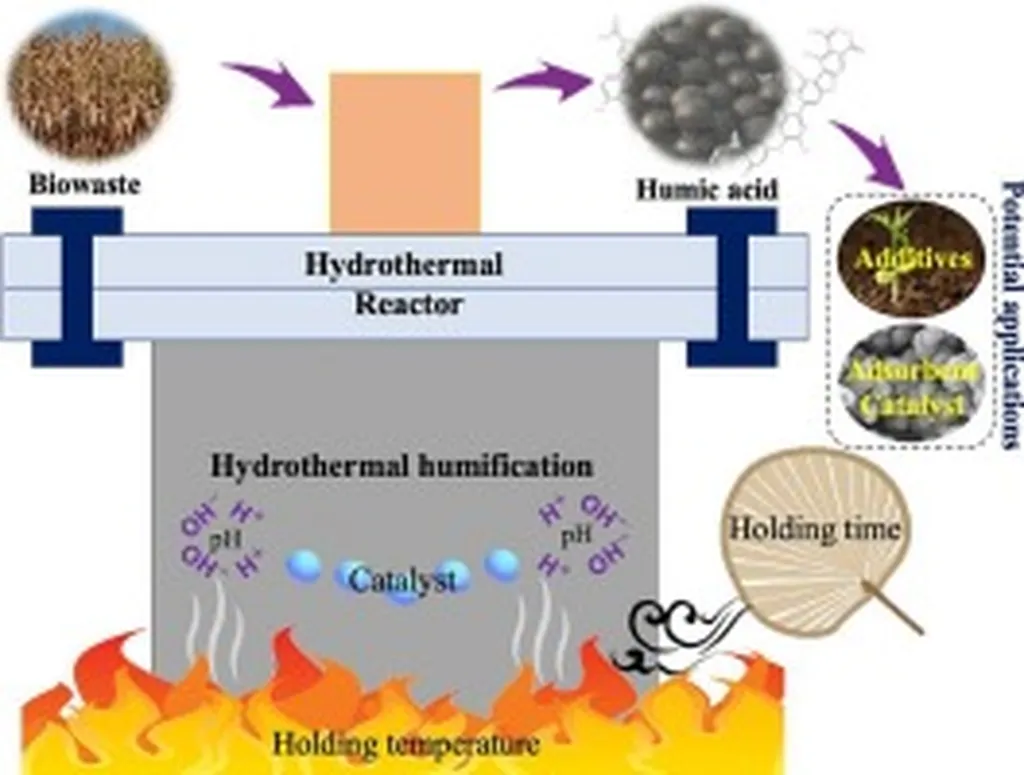
In the quest to transform agricultural waste into valuable resources, a recent study published in *Industrial Crops and Products* has shed new light on the molecular diversity of artificial humic acids (AHAs) derived from real-world biowastes. Led by Ying Bi of the Co-Innovation Center for the Sustainable Forestry in Southern China at Nanjing Forestry University, the research employs advanced analytical techniques to uncover the intricate molecular differences among AHAs, offering promising insights for the agriculture sector.
AHAs have long been recognized for their potential to enhance crop yields and contribute to environmental remediation. However, the variability in their composition and properties has posed challenges to their controlled preparation and practical applications. To address this, the study utilized electrospray ionization Fourier transform ion cyclotron resonance mass spectrometry (ESI-FT-ICR-MS) to systematically analyze AHAs derived from diverse biowastes.
The findings reveal that while AHAs produced from different precursors via hydrothermal humification share similarities in functional groups and thermal stability, their molecular compositions can vary significantly. “We found up to 2000 molecular compositional differences among the AHAs, primarily attributed to CHON compounds,” Bi explains. This heterogeneity is largely driven by the presence of lignin/CRAM-like compounds, which constitute the major components of AHAs.
One of the most intriguing discoveries is that AHAs derived from invasive plants exhibit greater molecular diversity, characterized by a lower molecular weight, reduced aromaticity, and a greater abundance and diversity of heteroatoms. This finding suggests that the choice of biowaste precursor can significantly influence the properties of the resulting AHAs, opening new avenues for tailored production.
The commercial implications for the agriculture sector are substantial. By understanding the molecular-level heterogeneity of AHAs, researchers and industry professionals can optimize the production process to enhance crop yields and environmental remediation efforts. “Substantial AHAs yields and significant molecular diversity were achieved even from precursors with low lignin, cellulose, and hemicellulose contents,” Bi notes, highlighting the potential to utilize a wide range of agricultural wastes effectively.
The study not only provides a molecular-scale perspective on the similarities and differences in AHAs but also offers new insights into their controlled synthesis and understanding their environmental behavior. As the agriculture sector continues to seek sustainable and efficient solutions, this research paves the way for innovative applications of AHAs in crop production and environmental management.
Published in *Industrial Crops and Products*, the study led by Ying Bi of the Co-Innovation Center for the Sustainable Forestry in Southern China at Nanjing Forestry University represents a significant step forward in the field of agritech. By unraveling the molecular complexities of AHAs, this research holds the potential to revolutionize agricultural practices and contribute to a more sustainable future.