
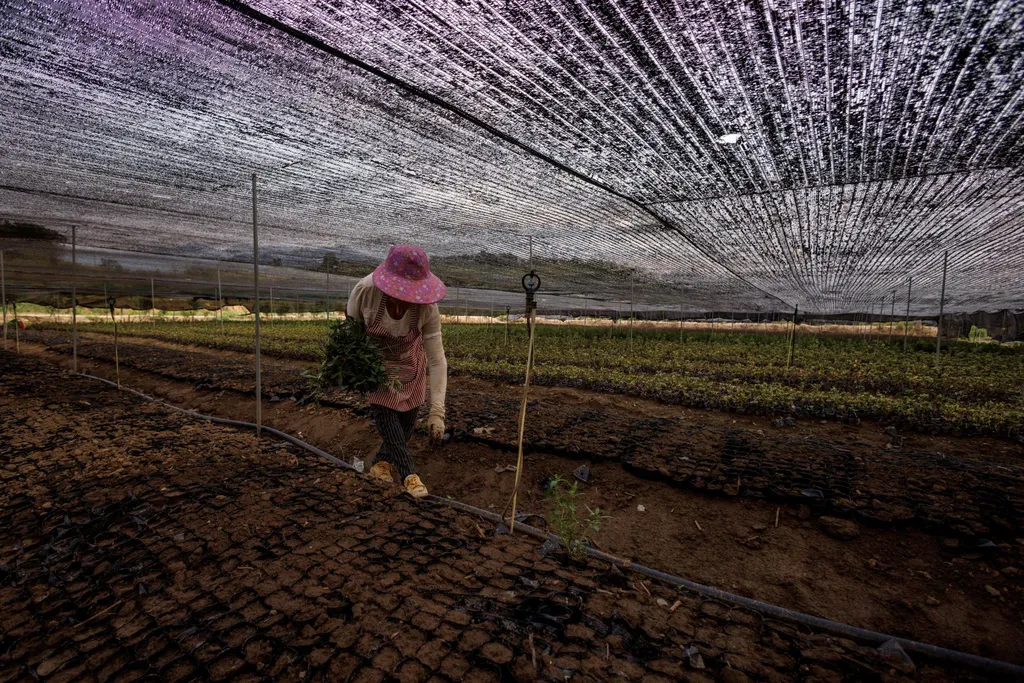
In the vast, fertile expanse of China’s Bohai Rim, a silent threat lurks beneath the surface, one that could reshape the future of agriculture in the region. Soil salinization, a pervasive form of land degradation, is on the march, driven by the ebb and flow of groundwater. A recent study published in *Geomatics, Natural Hazards & Risk* has shed new light on this pressing issue, offering insights that could help farmers and policymakers tackle this creeping crisis.
The research, led by Yao Chang of the Beijing Key Laboratory of Resource Environment and Geographic Information System at Capital Normal University, delves into the intricate dance between groundwater fluctuations and soil health. Over a decade, from 2010 to 2020, the team monitored groundwater levels, soil chemistry, and ecosystem health, armed with a suite of tools ranging from remote sensing to machine learning.
The findings paint a stark picture. “Sixty-four point seven percent of the region experienced groundwater deepening,” Chang explains, with nearly a third of that area seeing a significant drop of at least 0.2 meters per year. As the water table falls, so too do the levels of vital nutrients like total nitrogen (TN) and phosphorus (TP) in the surface soil, while cation exchange capacity (CEC) diminishes with depth. This suggests that water and solutes are on the move, with profound implications for plant growth and soil fertility.
The soil health index (SHI) tells an equally concerning story. At depths of 15 to 30 centimeters, a third of the soils are in poor health, a clear sign that the region’s agricultural productivity is under threat. “The soil health index showed a clear vertical attenuation pattern,” Chang notes, highlighting the need for targeted interventions to restore soil vitality.
For the agriculture sector, the stakes couldn’t be higher. Soil salinization doesn’t just degrade land; it degrades livelihoods. Farmers in the Bohai Rim and similar coastal regions worldwide face the prospect of dwindling yields and increased production costs as they struggle to maintain soil health. The study’s identification of key factors like CEC, TN, and the normalized difference moisture index (NDMI) offers a roadmap for more effective salinization control and soil health improvement strategies.
The research also underscores the importance of a holistic approach to land management. By coupling groundwater dynamics with soil and ecosystem health, the study provides a framework for more sustainable agricultural practices. This could pave the way for precision agriculture techniques that optimize water use and nutrient management, ultimately boosting productivity and resilience in the face of climate change.
As the world grapples with the challenges of feeding a growing population in a changing climate, studies like this one are invaluable. They offer not just a warning but a way forward, a path to preserving the precious resource that is our soil. For the farmers of the Bohai Rim and beyond, the message is clear: understanding the underground world of water and salt is key to securing a bountiful future.