
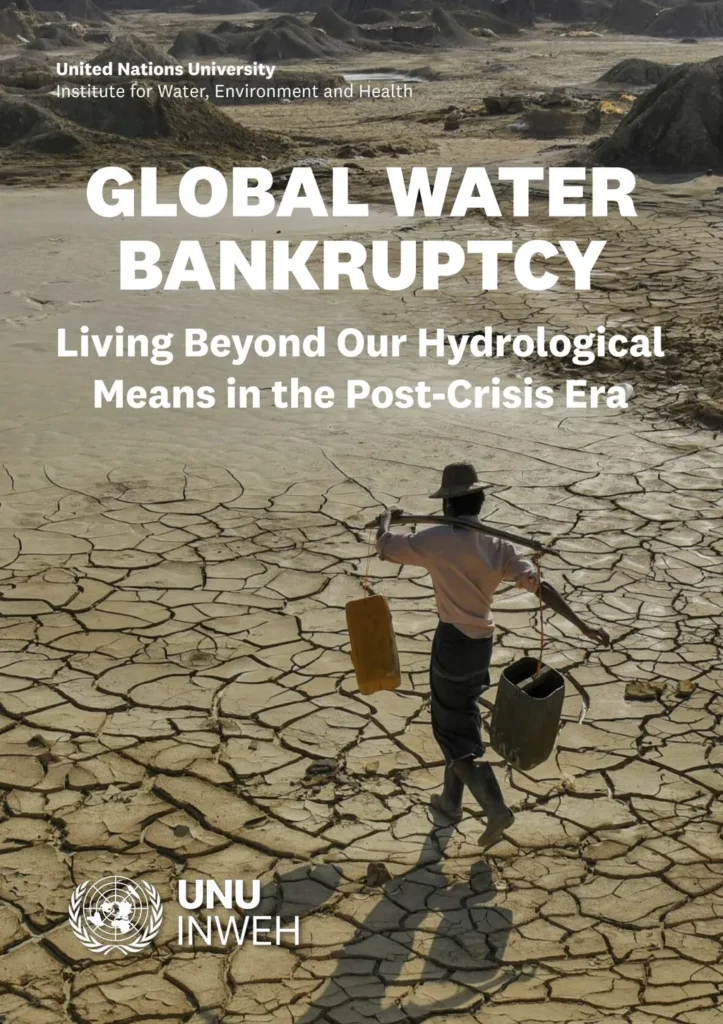
The world is facing an unprecedented water crisis, according to a recent United Nations report, which warns of an era of “water bankruptcy” due to the unsustainable use of fresh water. The report, based on a study published in Water Resources Management, defines “water bankruptcy” as the irreversible loss of natural water reservoirs, including underground aquifers, wetlands, and glaciers.
The implications for the agriculture sector are severe. Agriculture is the largest consumer of water, accounting for more than 70% of global water use. The report notes that more than 40% of water for irrigation comes from aquifers that are being steadily drained. In regions such as the Middle East, South Asia, and the U.S. Southwest, farmers are struggling to grow food with shrinking, polluted, or disappearing water sources.
The report warns that without a shift toward more sustainable farming practices, “water bankruptcy” will spread rapidly, threatening food security and livelihoods. Investors in the agriculture sector should be aware of the risks associated with water scarcity and take steps to support sustainable water management practices.
The report also highlights the need for governments to focus on halting the irreversible loss of natural reservoirs. This includes investing in water infrastructure, enforcing water-use regulations, and promoting water conservation measures. The report comes ahead of a major U.N. meeting on water, to be held next week in Dakar, Senegal, where these issues will be discussed in greater detail.
In conclusion, the agriculture sector and investors must take note of the growing water deficit and the concept of “water bankruptcy.” The report serves as a wake-up call to prioritize sustainable water management practices and invest in solutions that can mitigate the impacts of water scarcity on agriculture and food security.