
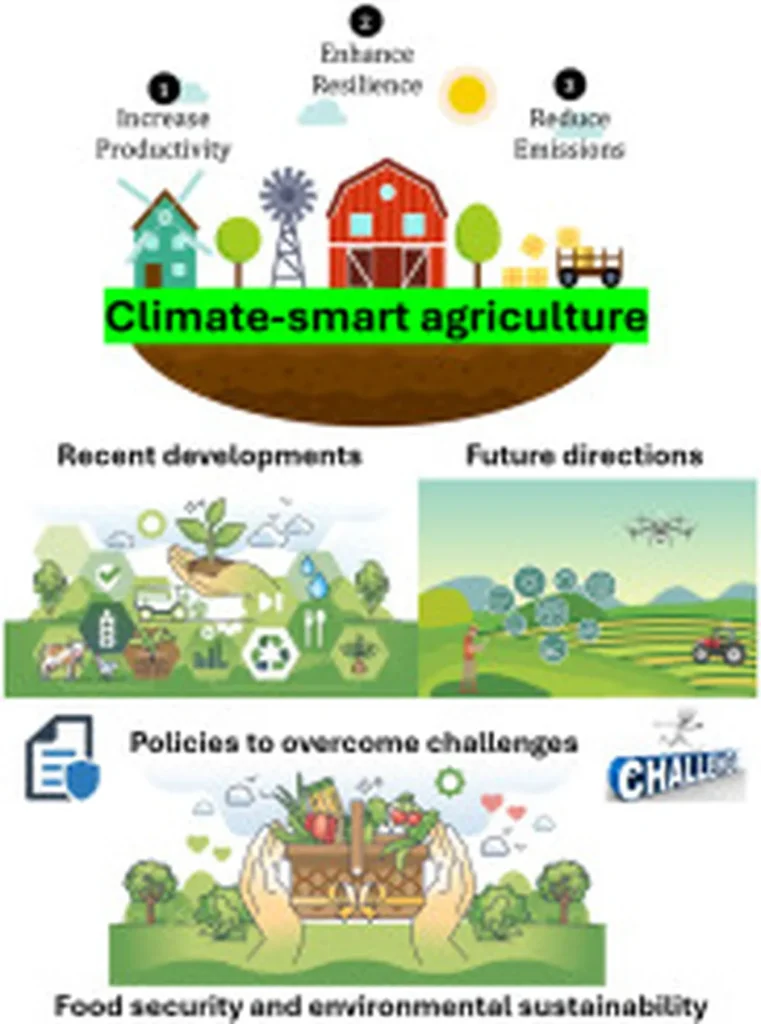
In a world where climate change and agriculture are locked in a delicate dance, a new review published in *Climate Smart Agriculture* offers a promising roadmap for farmers and policymakers alike. The study, led by Muhammad Awais of the Canadian Centre for Climate Change and Adaptation at the University of Prince Edward Island, synthesizes findings from 368 peer-reviewed articles to highlight strategies that could simultaneously reduce emissions and boost agricultural resilience.
Climate-smart agriculture (CSA) has long been touted as a solution to the dual challenges of mitigating greenhouse gas emissions and adapting to a changing climate. This review provides concrete evidence that CSA can deliver on its promises. Four key pathways—soil carbon sequestration, precision fertilization, methane-reducing livestock feed, and agroforestry—were found to consistently cut emissions by 20–40%, increase soil carbon by 0.3–0.8 tons per hectare per year, and improve productivity by 10–25%. These findings are a game-changer for an industry grappling with the economic and environmental costs of climate change.
“These strategies aren’t just theoretical; they’re practical tools that farmers can implement today to make their operations more sustainable and resilient,” Awais said. “The economic benefits are clear—higher yields, lower input costs, and a more stable supply chain.”
The review also highlights regional differences in CSA adoption. Developed countries like the United States and Germany are leaning into technology-driven solutions, such as precision agriculture and carbon management. Meanwhile, developing regions like Kenya, Ethiopia, and India are focusing on low-input, high-impact practices like agroforestry and rainwater harvesting. This regional diversity underscores the adaptability of CSA, offering tailored solutions for different agricultural contexts.
For the agriculture sector, the implications are profound. Farmers can reduce their carbon footprint while improving productivity, a win-win for both the environment and the bottom line. Policymakers and development agencies can use these findings to guide investments in climate-resilient food systems, ensuring food security in an uncertain climate future.
As the world grapples with the realities of climate change, this research provides a beacon of hope. By adopting these climate-smart strategies, the agriculture sector can not only survive but thrive in the face of environmental challenges. The future of farming is not just about adapting to change—it’s about leading the way toward a more sustainable and resilient world.